Is Argan Oil Safe During Pregnancy?
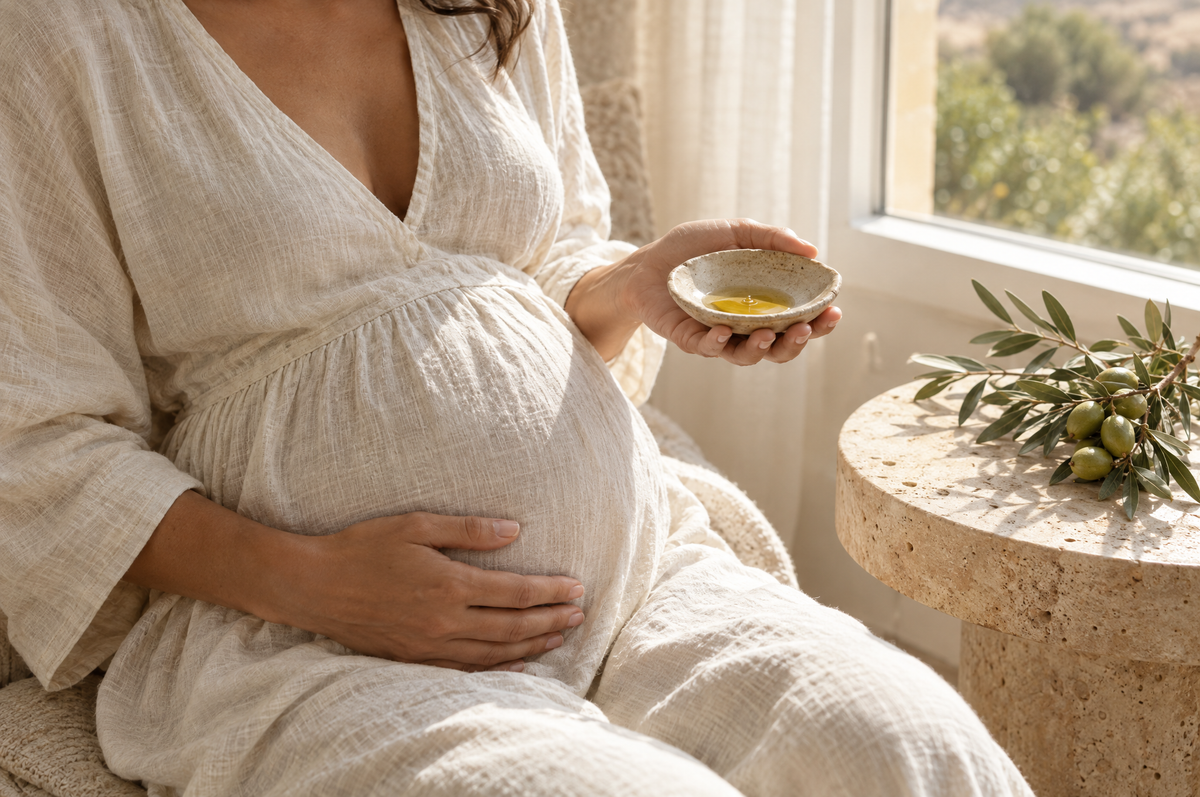
Pregnancy has a way of turning every product in your bathroom into a question. Skin often gets drier, itchier and more sensitive just as you're being told to read labels more carefully. Argan oil comes up a lot because it's simple and plant-based, but "natural" isn't the same as "studied," so here's a careful look at what's known.
The short answer
Pure argan oil used on the skin is generally considered low risk during pregnancy. It's a single plant oil with no retinoids, and most skin care products act locally with minimal absorption. There are no formal pregnancy studies, though, and allergic reactions are possible, so check with your provider, especially if you have nut or seed allergies.
Is argan oil safe during pregnancy? What we actually know
We'll be direct about the gap: there are no clinical studies of argan oil use in pregnant women. What we can do is look at what argan oil contains and what's known about skin care in pregnancy generally.
What's in it. Pure argan oil is made up mostly of fatty acids (around 43 to 49 percent oleic and 29 to 36 percent linoleic), plus vitamin E compounds, plant sterols and a small amount of squalene1. None of these is on the lists of ingredients dermatologists advise avoiding in pregnancy.
How much gets absorbed. A review of skin care products in pregnancy, published in Canadian Family Physician, concluded that with the exception of hydroquinone (which is relatively well absorbed) and tretinoin (where the evidence is debated), the products it reviewed act locally and produce minimal levels in the body2. That review looked at treatments for acne, unwanted hair and similar concerns rather than plant oils specifically, but the general principle supports the view that a topical cosmetic oil is low risk.
What we can't say. "Low risk" isn't "proven safe." Because pregnancy studies of cosmetics are rare, your midwife, doctor or OB-GYN is the right person to weigh in on anything you're unsure about. If you've used the same pure argan oil comfortably for years before pregnancy, that history is reassuring as far as allergy goes, but it's still worth mentioning at your next appointment.
Ingredients to avoid in pregnancy, and how pure argan oil compares
The American Academy of Dermatology lists ingredients to avoid during pregnancy and others to use sparingly3. The point of comparing them with argan oil isn't that argan is special, it's that a single-ingredient product makes this check easy.
| AAD guidance in pregnancy | Examples | In pure argan oil? |
|---|---|---|
| Avoid: retinoids | Isotretinoin, tretinoin, tazarotene; over-the-counter retinol and adapalene | No |
| Avoid: other ingredients | Hydroquinone, plus some prescription medicines | No |
| Use sparingly: certain essential oils | Rosemary, basil, jasmine and sage oils | No |
| Use sparingly | Salicylic acid above 2%, benzoyl peroxide | No |
Table based on the AAD's pregnancy skin care guidance3.
The catch is that many products marketed as "argan oil" aren't pure. Hair serums, body oils and "argan" face treatments can include fragrance, essential oils or, in anti-aging products, retinol. If you're pregnant, check that the ingredient list names only argan (Argania spinosa kernel oil). Our 100% organic argan oil is exactly that one ingredient, with no fragrance, chemicals or dyes. If you were using argan oil alongside a retinoid before pregnancy, our guide to argan oil and retinol explains why the retinoid is the part to pause.
Allergies: the main real risk
The more realistic concern with argan oil isn't the pregnancy itself, it's allergy, which can happen to anyone. Medical case reports describe allergic contact dermatitis caused by argan oil4, and, much more rarely, anaphylaxis: one report describes anaphylaxis to argan oil5, and another describes anaphylaxis after argan oil was applied to the skin6. These are individual case reports rather than a measure of how common reactions are, and reactions appear to be uncommon given how widely argan oil is used. But they are real.
- If you have a known nut or seed allergy, talk to your doctor or allergist before using argan oil. Argan oil is pressed from the kernel of the argan fruit.
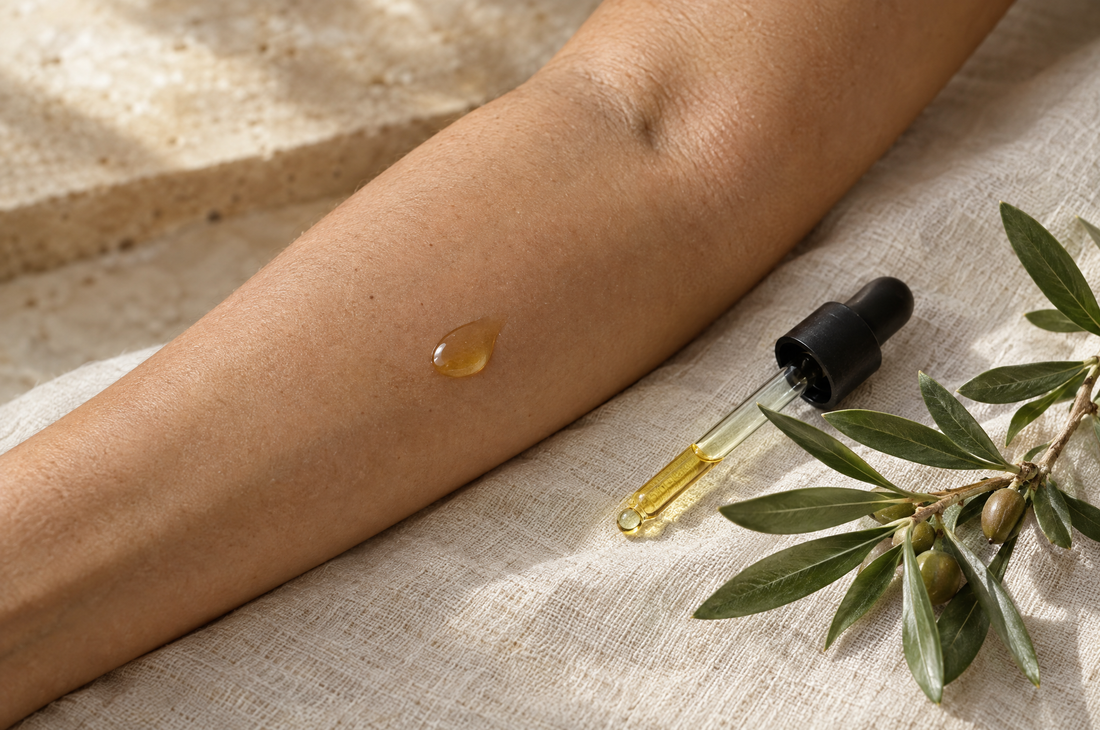
- Patch test any new product: apply it to a quarter-sized spot on your inner arm or elbow twice daily for seven to 10 days and stop if redness, itching or swelling develops7.
- Seek emergency care for swelling of the lips, face or throat, difficulty breathing, or feeling faint after using any product.
For more on how to tell irritation from allergy, see can argan oil irritate skin.
Argan oil during pregnancy for skin: what it can help with
Dry, itchy skin
Itching is common in pregnancy as hormones change and skin stretches. The NHS suggests using an unperfumed moisturizer or emollient regularly, avoiding perfumed products, and taking cool or warm rather than hot baths8. A few drops of pure argan oil on damp skin after bathing fits that advice. See argan oil as an after-shower body oil for a simple routine.
Important: severe itching is different. The NHS advises contacting your maternity unit urgently if itching keeps you awake at night, affects the palms of your hands or soles of your feet, or is worse at night, because these can be signs of intrahepatic cholestasis of pregnancy, a liver condition that needs treatment8.
Stretch marks
This is where expectations need resetting. A Cochrane review found no high-quality evidence that any topical product prevents stretch marks in pregnancy9, and the AAD notes that home remedies such as almond oil, cocoa butter, olive oil and vitamin E haven't faded stretch marks in studies10. Argan oil can keep stretching skin soft and comfortable; it won't decide whether marks appear. We go into the details in argan oil for stretch marks.
Melasma and dark patches
Darker patches on the face are common in pregnancy3. Argan oil won't fade them. Daily broad-spectrum sunscreen of SPF 30 or higher is what dermatologists recommend, ideally a mineral formula with zinc oxide, titanium dioxide or both3.
When you're pregnant, the shortest ingredient list is often the easiest one to trust.
How to use argan oil safely while pregnant
- Ask your provider if you have allergies, a skin condition, or any doubt.
- Choose a single-ingredient oil with no fragrance, essential oils or added actives.
- Patch test for seven to 10 days before wider use7.
- Body: warm five to six drops between your palms after a warm shower and smooth over damp skin on the belly, hips, thighs and breasts.
- Face: press two to three drops into clean skin as the last step at night; follow with mineral sunscreen in the morning if you use it by day.
- Hair and nails: a drop through dry ends or on the nail beds is fine for most people.
- Stop if anything changes: new redness, itching, bumps or swelling.
What about after the baby arrives?
Many people keep using the same oil postpartum for dry skin and hair. If you're breastfeeding, ask your midwife or a lactation consultant before applying any product to the breast or nipple area, since a baby will be in direct contact with it. And talk to your pediatrician before using argan oil on your newborn; our article on argan oil for babies covers that separately.
Frequently asked questions
Can I use argan oil on my face while pregnant?
Pure argan oil is generally considered low risk on the skin during pregnancy, as it contains no retinoids. Check the label for added fragrance or actives, patch test, and ask your provider if you have allergies.
Is argan oil safe for hair during pregnancy?
A pure argan oil used on the hair is generally considered low risk. Many hair serums sold as argan oil contain fragrance and other ingredients, so read the label.
Does argan oil prevent pregnancy stretch marks?
There is no good evidence that it does. A Cochrane review found no high-quality evidence that any topical product prevents stretch marks in pregnancy, though oil can keep skin comfortable.
Is argan oil a tree nut allergy risk?
Argan oil is pressed from the kernel of the argan fruit, and allergic reactions, including rare anaphylaxis, have been reported. If you have a nut or seed allergy, check with your doctor or allergist before using it.
Sources
- Serrafi A, Chegdani F, Bennis F, Kepinska M. The importance of argan oil in medicine and cosmetology. Nutrients. 2024;16(20):3573. Link
- Bozzo P, Chua-Gocheco A, Einarson A. Safety of skin care products during pregnancy. Can Fam Physician. 2011;57:665–667. Link
- American Academy of Dermatology. Dermatologist-approved pregnancy skin care. Link
- Foti C, Romita P, Ranieri LD, Bonamonte D. Allergic contact dermatitis caused by argan oil. Contact Dermatitis. 2014;71(3):183–184. Link
- Astier C, et al. Anaphylaxis to argan oil. Allergy. 2010;65(5):662–663. Link
- de las Marinas Álvarez MD, et al. Anaphylaxis after cutaneous application of argan oil. J Investig Allergol Clin Immunol. 2021;31(4):332–334. Link
- American Academy of Dermatology. How to test skin care products. Link
- NHS. Itching and intrahepatic cholestasis of pregnancy. Link
- Brennan M, Young G, Devane D. Topical preparations for preventing stretch marks in pregnancy. Cochrane Database Syst Rev. 2012;11:CD000066. Link
- American Academy of Dermatology. Stretch marks: Why they appear and how to get rid of them. Link
This article is for general information and isn't medical advice. If you are pregnant or breastfeeding, check with your doctor, midwife or OB-GYN before trying something new, and seek urgent care for severe itching or any sign of an allergic reaction.