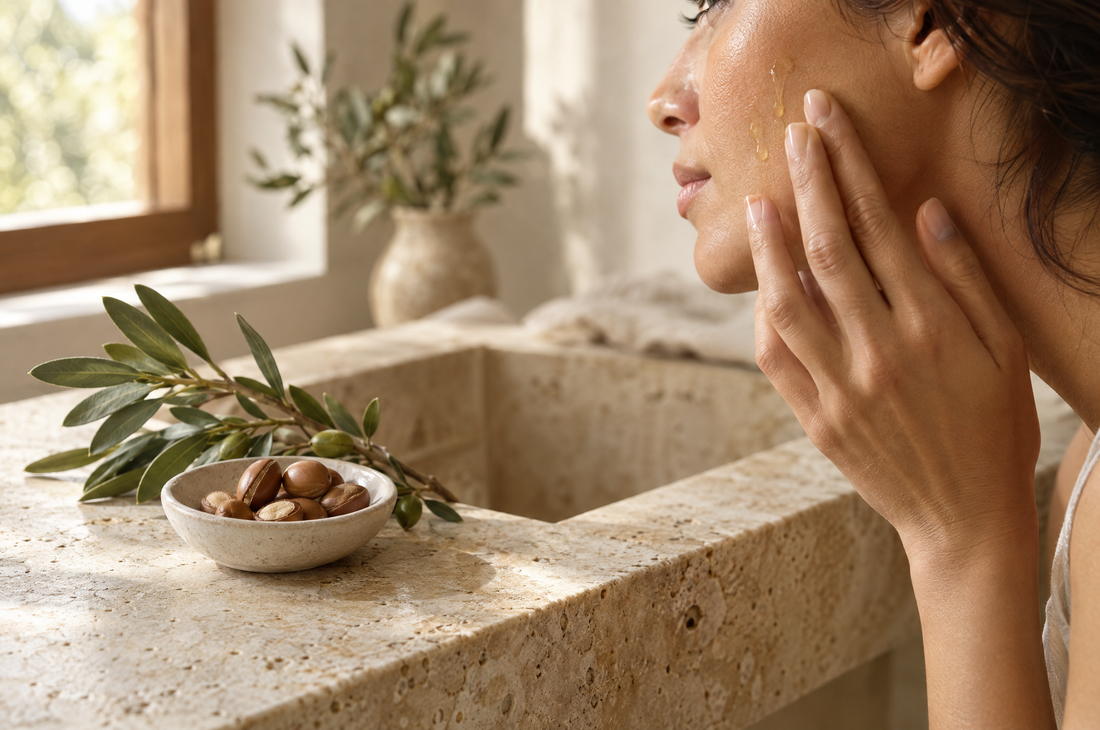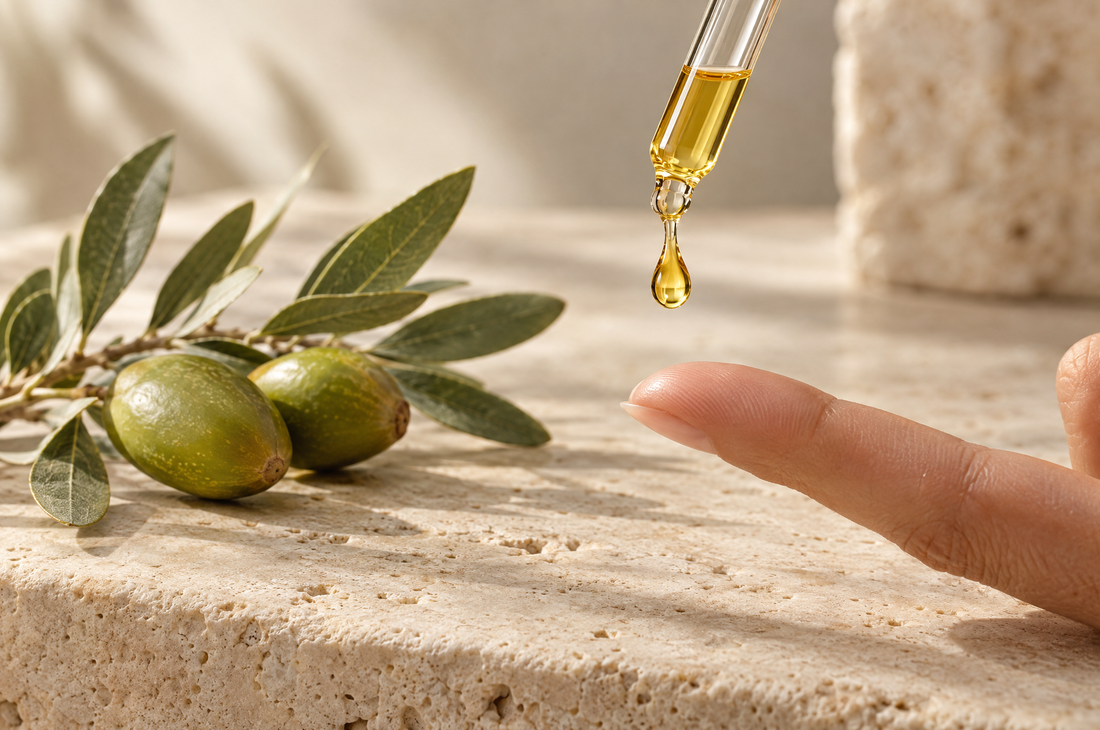
Is Argan Oil Safe for Babies?
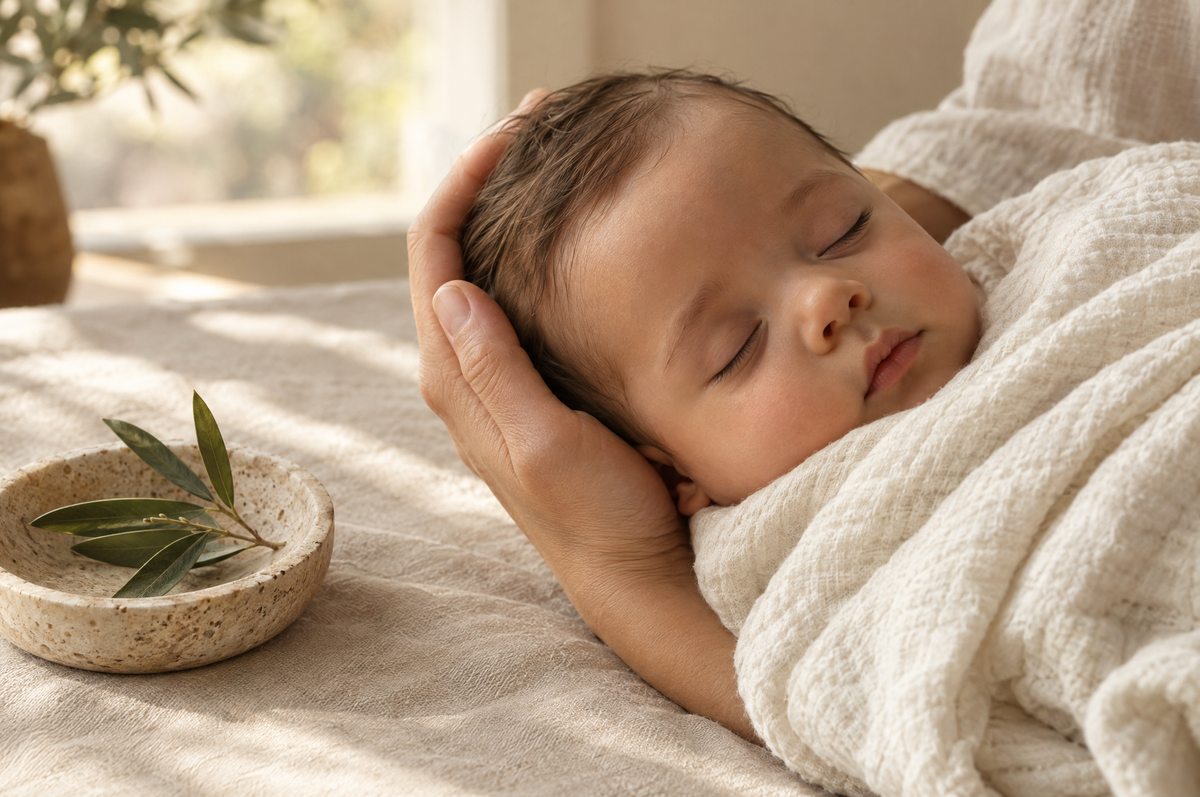
New parents get handed a lot of advice about baby skin, and much of it involves an oil: olive oil for cradle cap, coconut oil for dry patches, a little something for massage. If argan oil already lives in your bathroom, it is natural to wonder whether it belongs in the nursery too. The honest answer is more careful than most of what you will read online.
The short answer
Pure argan oil is not known to be harmful to babies, but there is almost no research on it in infants, and baby skin is still maturing. Major health bodies favor plain water and simple, fragrance-free products. If you want to try it, ask your pediatrician first, patch test, and use a drop or two, never on broken skin.
Is argan oil safe for babies? What we actually know
There are no large clinical trials of argan oil on healthy infant skin. That absence matters, because the oils that have been studied in babies did not always behave the way parents expected.
The best-known example is the OBSeRvE pilot trial, which randomly assigned 115 healthy full-term newborns to olive oil, sunflower oil or no oil twice a day for four weeks. Both oil groups had better skin hydration, but they also showed significantly less improvement in the organization of the skin's protective lipids than babies who got no oil at all. The researchers concluded that caution should be exercised when recommending oils for newborn skin until more is known.3 A review of plant oils and the skin barrier points out a related nuance: oleic acid, the main fatty acid in olive oil, can disrupt the barrier with repeated use, while linoleic acid supports it.4 Argan oil sits in between, with roughly 43 to 49 percent oleic acid and 29 to 36 percent linoleic acid.10 Nobody has measured what that particular balance does on a newborn.
The bigger picture is sobering too. A Cochrane review of infant skin care (mostly emollients and moisturizers applied in the first year) found that these routines probably do not change the risk of developing eczema, and that they probably slightly increase the risk of skin infections. It also found low-certainty evidence that they may increase the risk of food allergy.5 None of that is specific to argan oil, but it is a good reason not to assume that putting more product on a baby is automatically better.
The one infant study that used argan oil
A 2023 study from Jordan compared argan oil with 1% hydrocortisone ointment in 140 babies and toddlers with diaper rash. The argan oil group improved faster on several measures, and no adverse effects were reported; each child had a skin sensitivity test before starting.8 It is an interesting result, but it was a single quasi-experimental study in one region, and diaper rash is a condition that deserves a conversation with your pediatrician rather than a home experiment. What it does tell us is that, in that group of young children, argan oil was well tolerated.
The nut question: is argan oil a risk for allergies?
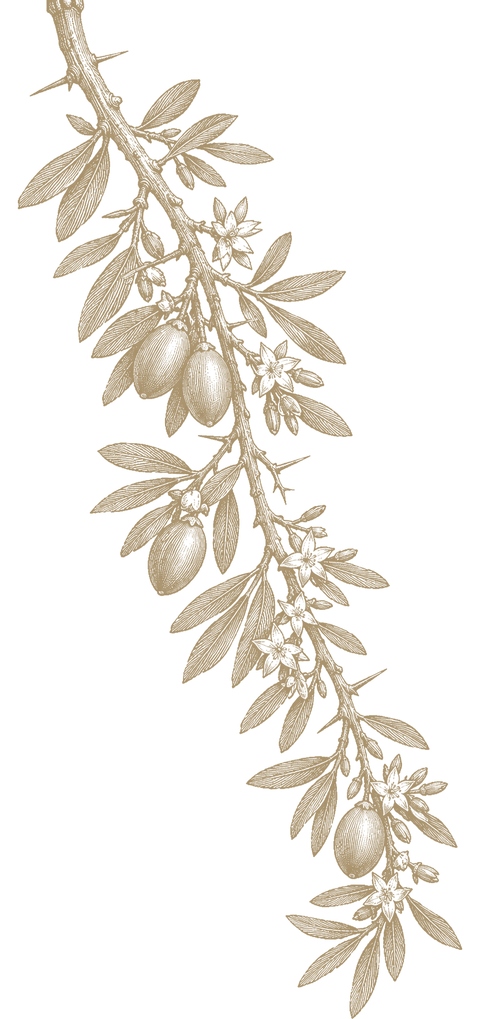
Argan oil is pressed from the kernel inside the fruit of the argan tree, Argania spinosa, which belongs to the Sapotaceae family.10 It is not one of the classic tree nuts such as almond, walnut or cashew, and it does not appear on the FDA's list of tree nuts treated as major food allergens. That list is for food labeling, though, not cosmetics, and botanical family does not guarantee that a person will not react.
Reactions to argan oil itself are uncommon but documented. Dermatologists have published a case of allergic contact dermatitis caused by argan oil in an infant, confirmed by patch testing.7 That is one case, not a trend, but it shows that a "natural" oil can still sensitize a baby.
There is also a broader principle worth knowing. A large UK study found that children whose skin had been treated with preparations containing peanut oil were more likely to develop peanut allergy, and the authors suggested that sensitization can happen when a food protein is applied to inflamed skin.6 Argan is not peanut, and that study does not tell us anything directly about argan. But it is a good reason to be cautious about food-derived oils on cracked or eczema-prone baby skin, and it is why the NHS specifically warns against peanut oil for cradle cap because of allergy risk.2 Argan oil is also sold as a food in Morocco (the roasted, culinary kind),10 so it belongs in that same "ask first" category.
With babies, the most useful skincare principle is the plainest one: less product, fewer ingredients, and a pediatrician in the loop.
Argan oil for baby skin: dryness, peeling and massage
Newborn skin often peels in the first weeks, and that is usually normal shedding rather than a sign of dryness that needs treating. The NHS advice for everyday care is simple: clean your baby with warm water, add a gentle baby-suitable cleanser if you like, and if you want to use any oils or lotions, check they are suitable for babies.9
If your pediatrician is comfortable with you using an oil for a dry patch or for massage, a few things make argan a reasonable candidate compared with many baby products: a single-ingredient, cold-pressed, unroasted oil has no fragrance, no essential oils and no dyes, which are among the most common irritants in skincare. A product like our 100% organic argan oil is just that one ingredient. But "single ingredient" is a reason to consider it, not a guarantee that it suits your child.
When to skip it entirely
- Your baby has eczema, a rash, cracked skin or any open area. Get medical advice first; this is exactly the kind of skin where sensitization is most plausible.
- There is a strong family history of food allergy, and you have not discussed oils with your pediatrician.
- Your baby was born prematurely or is in the first weeks of life, when the skin barrier is especially immature.
- The oil smells strongly roasted or nutty. That usually means a culinary oil, not a cosmetic one (see our guide to culinary versus cosmetic argan oil).
Argan oil for cradle cap: what pediatric and dermatology advice says
Cradle cap, the greasy yellowish scale on a baby's scalp, is harmless and usually clears on its own within a few months. Both major sources of parent guidance suggest using an oil to soften the scale before washing, but they differ in an important way.
The American Academy of Dermatology suggests applying a non-food-based oil, such as baby oil, to the scalp before bathing, then shampooing with a fragrance-free baby shampoo while gently massaging the scale. It advises never picking or scratching the scale, because that can cause infection.1 The NHS suggests lightly massaging an emollient or coconut oil into the scalp, brushing gently with a soft brush and washing with baby shampoo, and it specifically says not to use olive oil or peanut oil.2
Argan oil is not on either list. Because the AAD leans toward non-food oils, and argan is also eaten, the most careful approach is to ask your pediatrician before using it on cradle cap. If they are happy for you to try it, the method is the same as with any softening oil.
How to use argan oil on cradle cap, if your pediatrician agrees
- Patch test first: rub one drop onto a small area of your baby's inner arm or leg and watch it for 24 to 48 hours for redness, bumps or swelling.
- About 15 minutes before a bath, warm one or two drops between your fingertips and massage them gently into the scaly patches only.
- Loosen the scale with a soft baby brush or fine comb. Do not pick or force it off.
- Wash with a fragrance-free baby shampoo and rinse well. Oil left on the scalp can make cradle cap greasier.
- Repeat a few times a week at most, and stop at the first sign of irritation.
Between them, the AAD and NHS advise seeing a doctor if the rash spreads beyond the scalp, seems itchy or painful, bleeds or leaks fluid, looks swollen, or does not improve after a few weeks.1,2
Argan oil for baby hair
Most babies do not need any product in their hair. As hair grows longer and thicker in toddlerhood, some families use a tiny amount of oil to ease tangles, particularly on curly or coily hair. One drop smoothed through the ends, kept off the scalp and away from the face and hands (which end up in mouths), is plenty. The same patch-test and pediatrician advice applies.
A simple checklist if you decide to try argan oil
| Question | What to look for |
|---|---|
| Has your pediatrician okayed it? | Especially important for newborns, eczema or family history of allergy. |
| Is it a single ingredient? | The label should list only Argania spinosa kernel oil. No fragrance, essential oils or added vitamins. |
| Is it cosmetic, not culinary? | Cosmetic oil is unroasted, pale gold and mild-smelling. Read more on what "100% pure" should mean. |
| Did you patch test? | One drop on a small area, checked over 24 to 48 hours. |
| Is the skin intact? | Never apply to broken, weeping or inflamed skin without medical advice. |
| Are you using very little? | One to two drops for an area, not a full massage of the body. |
For adults in the household, argan oil has a longer track record, and you can read about using it during pregnancy or how to recognize an argan oil reaction. If eczema is the concern, our guide to argan oil and eczema covers what helps and what to watch.
Frequently asked questions
Can I put argan oil on my newborn?
There is very little research on argan oil in newborns, and studies of other oils suggest caution in the first weeks. Plain water and a mild baby cleanser are enough for most newborns; ask your pediatrician before adding any oil.
Is argan oil better than olive oil for cradle cap?
No study has compared them. The NHS advises against olive oil for cradle cap, and the AAD suggests a non-food oil such as baby oil, so check with your pediatrician before using argan oil.
Is argan oil a tree nut allergen?
Argan is a kernel from a tree in the Sapotaceae family and is not on the FDA's list of tree nuts considered major food allergens. Rare allergic reactions to argan oil have still been reported, so patch test and speak to your doctor if allergies run in the family.
Can I use argan oil on my baby's eczema?
Talk to your pediatrician or dermatologist first. Eczema-prone and broken skin is where reactions and sensitization are most likely, and a doctor can recommend a tested emollient.
How much argan oil should I use on a baby?
If your pediatrician agrees, one or two drops for a small area is enough. Use less than you would on yourself, and stop if you see any redness or rash.
This article is for general information and isn't medical advice. Babies' skin is still developing, so check with your pediatrician before using argan oil or any new product on your child, especially if they have eczema, a rash or a family history of allergies.
Sources
- American Academy of Dermatology. How to treat cradle cap. Link
- NHS. Cradle cap. Link
- Cooke A, Cork MJ, Victor S, et al. Olive oil, sunflower oil or no oil for baby dry skin or massage: a pilot, assessor-blinded, randomized controlled trial (the Oil in Baby SkincaRE [OBSeRvE] study). Acta Derm Venereol. 2016;96(3):323–330. Link
- Lin TK, Zhong L, Santiago JL. Anti-inflammatory and skin barrier repair effects of topical application of some plant oils. Int J Mol Sci. 2017;19(1):70. Link
- Kelleher MM, et al. Skin care interventions in infants for preventing eczema and food allergy. Cochrane Database Syst Rev. 2022;11:CD013534. Link
- Lack G, Fox D, Northstone K, Golding J. Factors associated with the development of peanut allergy in childhood. N Engl J Med. 2003;348(11):977–985. Link
- Barrientos N, Moreno de Vega M, Dominguez J. Allergic contact dermatitis caused by argan oil in an infant. Contact Dermatitis. 2014;71(5):316–317. Link
- Alsatari ES, AlSheyab N, D'Sa JL, et al. Effects of argan spinosa oil in the treatment of diaper dermatitis in infants and toddlers: a quasi-experimental study. J Taibah Univ Med Sci. 2023;18(6):1288–1298. Link
- NHS. Washing and bathing your baby. Link
- Gharby S, Charrouf Z. Argan oil: chemical composition, extraction process, and quality control. Front Nutr. 2022;8:804587. Link