Argan Oil as a Body Oil: The After-Shower Ritual
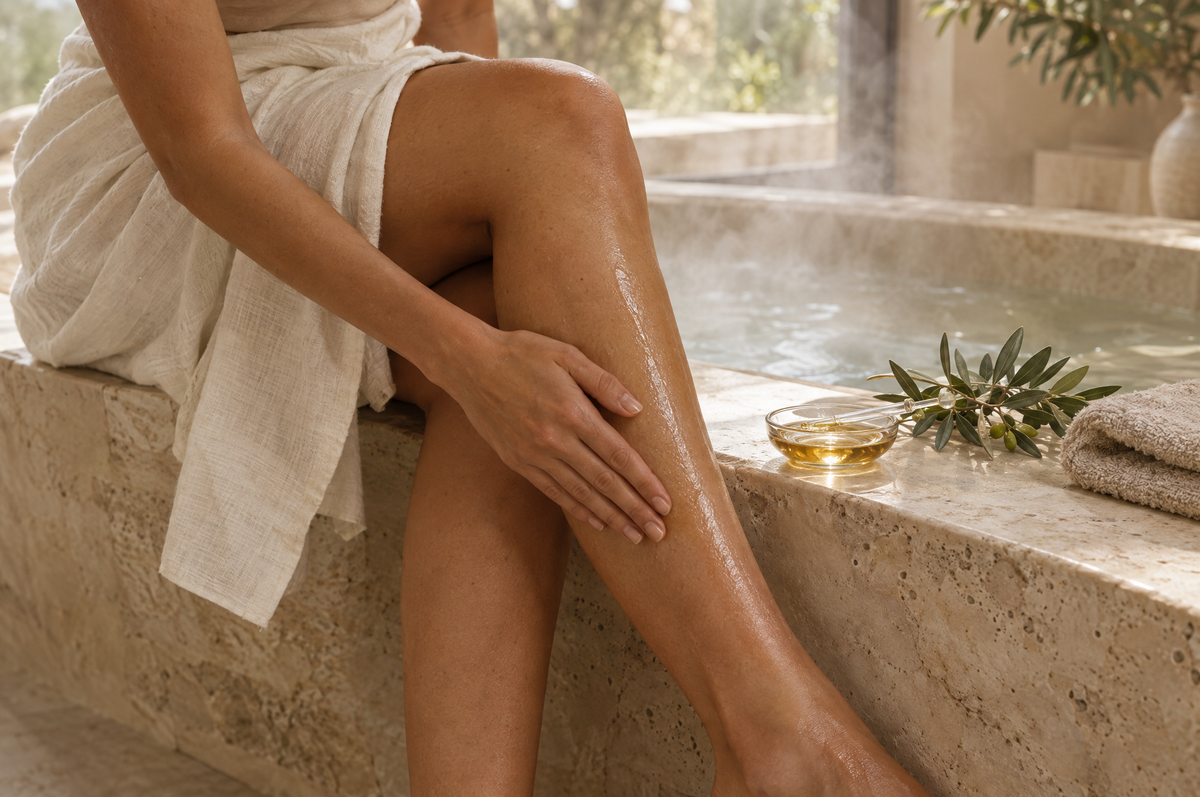
The two minutes after you step out of the shower may be the most useful two minutes in your whole skincare routine. Skin is warm, softened and still holding water, and what you put on it then decides how much of that water stays. Argan oil makes a simple, pleasant body oil for that moment, as long as you know how to use it.
The short answer
Use argan oil after the shower, not before, and apply it while your skin is still slightly damp. Pat yourself half-dry, smooth five or six drops over each area, and let it absorb for a few minutes before dressing. The oil helps slow water loss from freshly washed skin and leaves it soft without a heavy film.
Argan oil before or after shower?
After. Hot water and cleansers strip some of the natural oils from the skin's surface, so anything applied before a shower is mostly washed away. The American Academy of Dermatology recommends keeping showers to five to ten minutes in warm rather than hot water, using a gentle fragrance-free cleanser, and applying moisturizer immediately after bathing while the skin is still damp.1 That last step is where argan oil fits.
There is one exception people ask about: using oil as a pre-shower treatment for very dry or rough skin, then rinsing. It is not harmful, but it is mostly wasted product. You will get more from the same drops applied afterward.
Why damp skin matters: a quick look at water loss
Skin is constantly losing water to the air through a process called transepidermal water loss, or TEWL. Moisturizers work in three ways: humectants such as glycerin pull water into the skin, emollients smooth and soften the surface, and occlusives form a thin water-repelling layer that slows evaporation. A dermatology review notes that occlusives work best when applied to damp skin after showering or bathing, because they trap water that is already there.2
Plant oils act as a light occlusive and emollient. A review of topical plant oils describes how they form a protective layer that helps the skin retain moisture and lowers TEWL.3 Argan oil specifically has been tested in a small human study: in 60 postmenopausal women, applying argan oil to the forearm every night for 60 days significantly reduced TEWL and increased the skin's water content.4 That is a modest study in one group of people, on one area of skin, but it supports what many people notice in practice: skin feels more comfortable for longer when oil goes on straight after washing.
Be realistic about strength. The same dermatology review points out that petrolatum is a far more powerful occlusive than plant oils such as olive oil.2 For very dry or cracked skin, an oil alone may not be enough, and that is where combining it with a cream helps (more on that below).
How to use argan oil as a body oil after the shower
- Keep the shower short and warm. Five to ten minutes, with a gentle cleanser.1
- Pat, don't rub. Blot yourself lightly with a towel so your skin is damp but not dripping.
- Measure it out. Five to six drops is enough for a pair of legs or both arms; start there and adjust. Warm the drops between your palms.
- Press and smooth. Sweep the oil over the skin in long strokes, then press it in. Damp skin helps the oil spread further, so you need less than you think.
- Do the dry spots last. Finish with an extra drop on elbows, knees, shins and heels.
- Give it two or three minutes. Let the oil absorb before you get dressed so it doesn't transfer to clothing.
A practical safety note: apply body oil after you have stepped out of the shower, on a bath mat, not in the tub. Oil on a wet shower floor is a genuine slip hazard.
How much argan oil for the whole body?
For full-body use, most people find 10 to 15 drops covers everything on damp skin. Our usage guide starts at five to six drops after bathing. If you feel greasy after five minutes, you used too much; if your skin feels tight by midday, add a drop or two next time.
Because you are only using a few drops at a time, a pure oil goes a long way. Our 100% organic argan oil is cold-pressed from unroasted kernels with nothing added, so it has only a faint, natural scent and won't compete with your perfume.
Argan oil for body: elbows, knees and heels
These areas have thicker skin, fewer oil glands and plenty of friction, so they tend to get rough first. A drop of argan oil massaged in after every shower helps keep them soft, and many people find it is the simplest way to stay on top of them.
Cracked heels are a different matter. The AAD recommends moisturizing within five minutes of bathing with a cream containing 10 to 25 percent urea, an alpha hydroxy acid or salicylic acid, and applying plain petroleum jelly with socks at night.5 Argan oil is a pleasant addition for maintenance once heels are in better shape, but it is not a substitute for those stronger ingredients when skin has already split. If cracks are deep, painful or slow to improve, or you have diabetes, see a dermatologist or doctor.5
Combining argan oil with body lotion
Oil and lotion are not either/or. A lotion or cream supplies water and humectants; oil seals and softens. You can use them together in two ways:
- Layer: apply your usual body lotion to damp skin, then smooth a few drops of argan oil over the driest areas.
- Mix: add two or three drops of argan oil to a palmful of lotion and apply as one step. This is the easiest way to make a light summer lotion feel richer in winter.
If your skin is very dry, look for a cream with humectants like glycerin or hyaluronic acid, which the AAD lists among ingredients that help dry skin,1 and use argan oil on top. If your skin is normal, oil alone on damp skin is often enough.
Argan oil after shaving your legs or body
Shaving right after a shower, when hair and skin are soft, is the approach dermatologists recommend: wet the skin, use a shaving cream or gel, shave in the direction of hair growth, and rinse the blade after each swipe.6 Once you are done, a few drops of argan oil on the shaved area can make freshly shaved skin feel less tight.
Two cautions. Freshly shaved skin can sting with anything, so if you notice burning, wait a few minutes or apply it later. And if you are prone to ingrown hairs or bumps, use a light hand and see our guide to argan oil after waxing or shaving for a full aftercare routine.
Who should be careful with body oil
- Breakout-prone chest and back: some people find any oil on the torso contributes to bumps. Try it on limbs first. Our article on whether argan oil clogs pores covers the evidence.
- Sensitive or allergy-prone skin: patch test on the inner arm twice a day for seven to 10 days before using it all over. See can argan oil irritate skin.
- Eczema or other skin conditions: ask your dermatologist which moisturizers suit your skin, and don't use oil on broken or weeping areas.
The best body oil routine is the one that happens: a bottle by the towel, a few drops on damp skin, and two minutes before you get dressed.
If dry skin is your main concern, our guide to argan oil for dry skin goes further into routines for winter and hands. And if you'd like one bottle for body, face and hair, see our full list of ways to use argan oil.
Frequently asked questions
Should I put argan oil on wet or dry skin?
Damp skin is best. Pat yourself half-dry with a towel and apply the oil right away so it helps hold in the water already on your skin.
Can I use argan oil as a body moisturizer every day?
Yes, most people can use it daily after showering. If your skin is very dry, you may get better results layering it over a cream with humectants.
Will argan oil stain my clothes or sheets?
Any oil can mark fabric if it hasn't absorbed. Use only a few drops per area and wait two or three minutes before dressing.
Is argan oil better than body lotion?
They do different jobs. Lotion adds water and humectants, while oil softens and slows water loss, so many people get the best results using both.
Sources
- American Academy of Dermatology. Dermatologists' top tips for relieving dry skin. Link
- Purnamawati S, Indrastuti N, Danarti R, Saefudin T. The role of moisturizers in addressing various kinds of dermatitis: a review. Clin Med Res. 2017;15(3-4):75–87. Link
- Lin TK, Zhong L, Santiago JL. Anti-inflammatory and skin barrier repair effects of topical application of some plant oils. Int J Mol Sci. 2017;19(1):70. Link
- Boucetta KQ, Charrouf Z, Derouiche A, Rahali Y, Bensouda Y. Skin hydration in postmenopausal women: argan oil benefit with oral and/or topical use. Prz Menopauzalny. 2014;13(5):280–288. Link
- American Academy of Dermatology. How to care for dry, cracked heels. Link
- American Academy of Dermatology. Hair removal: how to shave. Link