Is It Okay to Use Argan Oil Every Day?
Somewhere along the way, a lot of people picked up the idea that oils are a "treat," something you use once a week or your skin will get lazy or your hair will get weighed down. With argan oil, the opposite question comes up just as often: if it's good, why not use it morning and night, every day, on everything? The real answer depends less on the oil than on where you put it and how much you use.
The short answer
No, it isn't bad to use argan oil every day. Dermatologists recommend moisturizing daily, and the study showing argan oil helps skin hold moisture used daily application. The catch is the amount: two to three drops for the face, one or two for hair ends. Overdoing it, not daily use, causes greasiness, limp hair or breakouts.
Can you use argan oil every day?
Yes. Daily use is actually how argan oil has been tested. In a 60-day trial in postmenopausal women (reported in two papers), participants applied argan oil to one forearm every night; the treated skin lost less water, held more moisture and showed better elasticity measurements by the end1,2. It was a small study in one group of people, but nothing in it suggested daily use was a problem.
It also matches basic dermatology advice. The American Academy of Dermatology (AAD) recommends moisturizing daily, ideally right after bathing or showering while skin is still damp, and reapplying whenever skin feels dry3,4.
So the question isn't really whether daily use is safe. It's how much, how often, and where.
How often to use argan oil, by use
| Where | How often | How much | Notes |
|---|---|---|---|
| Face | Once or twice daily | 2–3 drops | Press in as the last step of your routine. Use sunscreen in the morning. |
| Hair (ends) | Daily or every other day | 1 drop on dry ends; a little more on damp hair | Keep it off the roots if your hair gets oily. |
| Scalp | Occasionally, as a pre-wash treatment | A few drops | Wash out. Not a daily leave-in for most people. |
| Beard | Daily | 2–5 drops | After washing, into the skin then the hair. |
| Body | After showering | 5–6 drops | Best on damp skin. |
| Nails and cuticles | Daily, ideally at night | 1 drop per hand or per nail bed | Reapply after frequent hand-washing. |
Argan oil daily use on your face
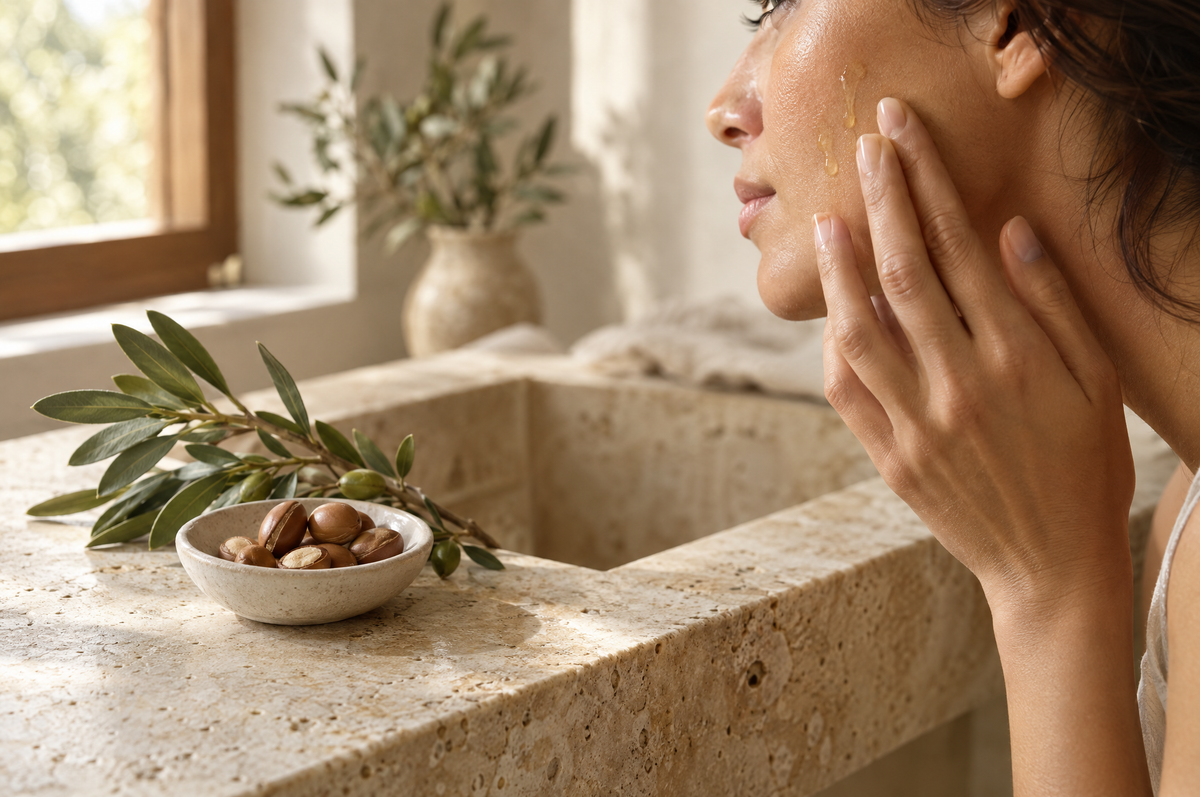
For most skin types, a few drops once or twice a day is fine. Our usage guide suggests 2 to 3 drops, morning and night, pressed in as the last step of your routine. If you use a separate moisturizer, see whether argan oil goes before or after moisturizer.
Morning or night?
- Night is the easiest place to start. There's no sunscreen or makeup to layer over it, and any shine doesn't matter.
- Morning works too, especially for dry skin. Let it absorb for a minute before applying sunscreen, and use a little less if your sunscreen pills or slides.
If you have oily or acne-prone skin
Daily use is still possible, but start with one or two drops at night and watch for a few weeks. If you break out under a beard, the AAD specifically suggests a non-comedogenic beard conditioner instead of beard oil5. More guidance in does argan oil clog pores.
Is it bad to put argan oil in your hair every day?
Not on the lengths and ends, as long as you use very little. The usual issue with daily hair use isn't damage, it's buildup: oil accumulates between washes and hair starts to look flat or stringy.
Some practical rules:
- Fine or straight hair: one drop on the ends, every day or two. Keep it away from the roots.
- Thick, dry, curly or coily hair: can usually take more, more often. The AAD notes that dry or curly hair benefits from conditioning throughout, not just the ends6.
- Damp vs. dry: on damp hair a little more spreads evenly; on dry hair, one drop warmed between the palms is plenty.
How often you wash matters too. The AAD suggests washing based on how oily your hair and scalp get: straight, oily hair may need daily washing, while textured or curly hair may need it much less often6. If you wash infrequently, use less oil between washes. Our guide to using argan oil for hair has technique-by-hair-type details.
Signs you're using too much argan oil
Using a little too much argan oil is usually more of a nuisance than a harm, and it shows up quickly:
- Your face still looks shiny 20 minutes later. Cut back by a drop.
- Makeup or sunscreen slides off. Use the oil at night only, or let it absorb longer.
- Hair looks flat, separated or greasy at the roots by the afternoon. Use less and keep it to the ends.
- Residue on your pillowcase or collar. You're applying more than skin or hair can absorb.
- New breakouts or bumps after starting. Stop for a couple of weeks and reintroduce slowly, or skip oil on that area.
- Redness, itching or a rash. This isn't "overuse"; it may be a reaction. Stop using it (see below).
How to reset after overdoing it
- Hair: shampoo with your scalp as the focus, as the AAD recommends6, and let the suds rinse through the lengths. A clarifying shampoo every so often helps if you use several leave-in products.
- Face: cleanse gently and skip the oil for a night or two, then restart with fewer drops.
- Pillowcases and towels: wash them more often while you find your amount.
Can you be allergic to daily argan oil?
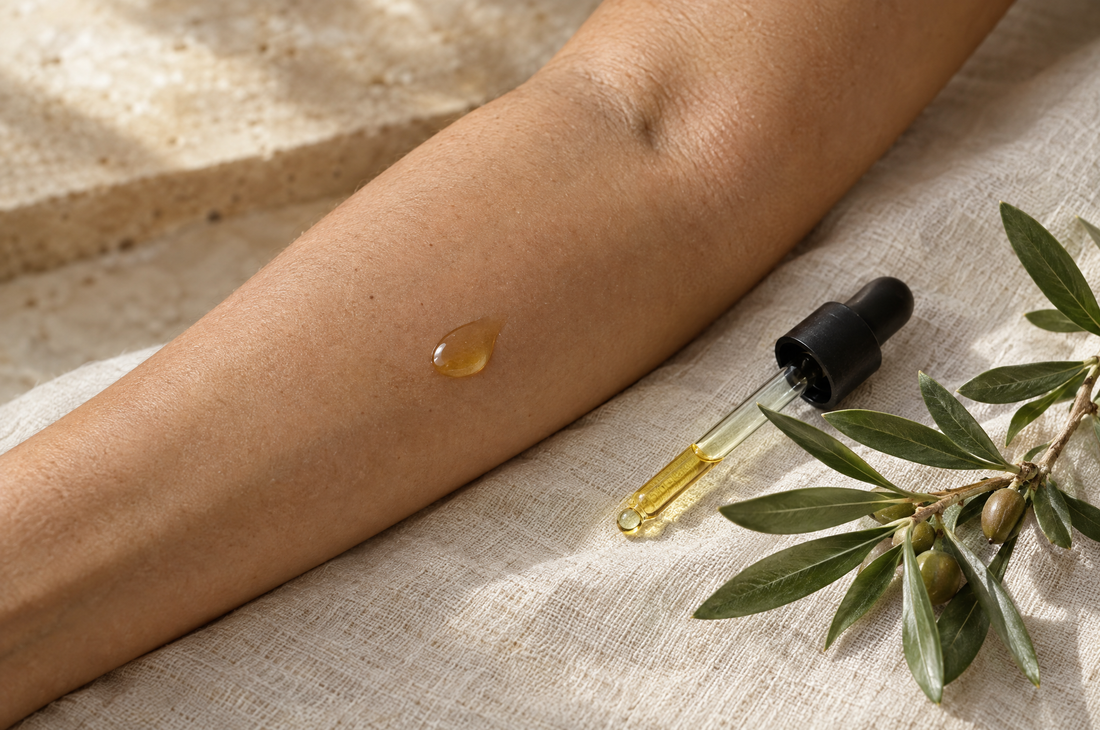
It's uncommon, but yes. Allergic contact dermatitis from argan oil has been documented in medical case reports7, and very rare severe reactions have been reported too8. Using a product every day doesn't create an allergy in most people, but it does mean a reaction would show up sooner. The AAD's patch-test method is a sensible first step: apply a little to a small spot on your inner arm twice a day for 7 to 10 days and watch for redness, itching or swelling9. Read more in can argan oil irritate skin.
Adjusting daily use through the year
The right amount isn't fixed. Skin and hair usually need more in cold, dry months and less in hot, humid ones. The AAD's dry-skin advice includes keeping showers to five to ten minutes in warm (not hot) water, using a humidifier, and protecting your hands from cold, dry winter air3. In practice that might mean:
- Winter: oil morning and night on the face, body oil after every shower, and an extra drop on hands and cuticles.
- Summer: night only on the face if you feel shiny, a lighter touch on hair, and body oil only where skin feels dry.
- Travel and flights: dry cabin air is a good reason to keep a drop handy for hands, lips and face.
Does daily use change how long a bottle lasts?
Of course, but less than people expect, because the doses are tiny. A few drops for the face twice a day, plus a drop for hair and nails, adds up slowly. The more practical point is freshness: once opened, plant oils slowly oxidize, so a bottle you use daily is more likely to be finished while it's at its best. Storage matters too; argan oil keeps best away from heat and light. See does argan oil expire for details.
If you're settling into a daily routine, a single-ingredient oil keeps things simple. Our organic, cold-pressed argan oil has nothing added, so it's easy to see how your skin and hair respond to it on its own.
Who should check before using it daily
- Anyone with an active skin condition such as eczema, rosacea or acne that's being treated by a dermatologist.
- Anyone with a known nut or seed allergy.
- Parents considering it for a baby or young child; ask your pediatrician first.
Frequently asked questions
Can I use argan oil on my face every day?
Yes. Two to three drops once or twice a day, pressed in as the last step of your routine, works for most skin types. If you're acne-prone, start with one or two drops at night.
Is it bad to leave argan oil in your hair every day?
Not if you use a small amount on the lengths and ends. Too much, or oil on the roots, can cause buildup and flat, greasy-looking hair.
How often should I use argan oil on my hair?
Daily or every other day on the ends is typical. Fine hair needs less, and thick, dry or curly hair can usually take more.
Can you use too much argan oil?
Yes. Lingering shine, greasy roots, residue on pillowcases or new breakouts are signs to cut back. Redness or itching is different and may be a reaction, so stop using it.
Should I take breaks from argan oil?
There's no need to schedule breaks; dermatologists recommend moisturizing daily. Pause only if you notice breakouts or irritation.
Sources
- Boucetta KQ, Charrouf Z, Derouiche A, Rahali Y, Bensouda Y. Skin hydration in postmenopausal women: argan oil benefit with oral and/or topical use. Prz Menopauzalny. 2014;13(5):280–288. Link
- Boucetta KQ, Charrouf Z, Aguenaou H, Derouiche A, Bensouda Y. The effect of dietary and/or cosmetic argan oil on postmenopausal skin elasticity. Clin Interv Aging. 2015;10:339–349. Link
- American Academy of Dermatology. Dermatologists' top tips for relieving dry skin. Link
- American Academy of Dermatology. Skin care tips for men. Link
- American Academy of Dermatology. DIY treatment for 5 common beard problems. Link
- American Academy of Dermatology. Tips for healthy hair. Link
- Foti C, Romita P, Ranieri LD, Bonamonte D. Allergic contact dermatitis caused by argan oil. Contact Dermatitis. 2014;71(3):183–184. Link
- Astier C, Benchad Y, Moneret-Vautrin DA, Bihain BE, Kanny G. Anaphylaxis to argan oil. Allergy. 2010;65(5):662–663. Link
- American Academy of Dermatology. How to test skin care products. Link