The Moroccan Hammam Ritual and Where Argan Oil Fits
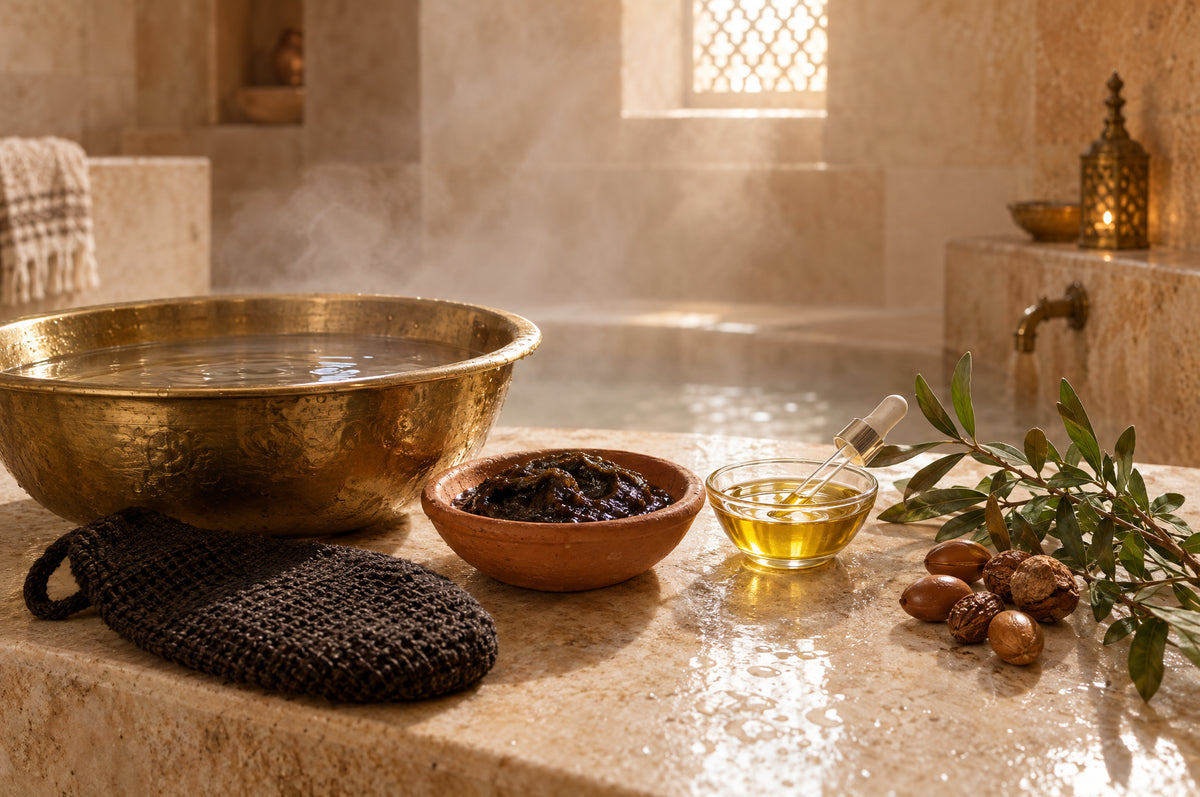
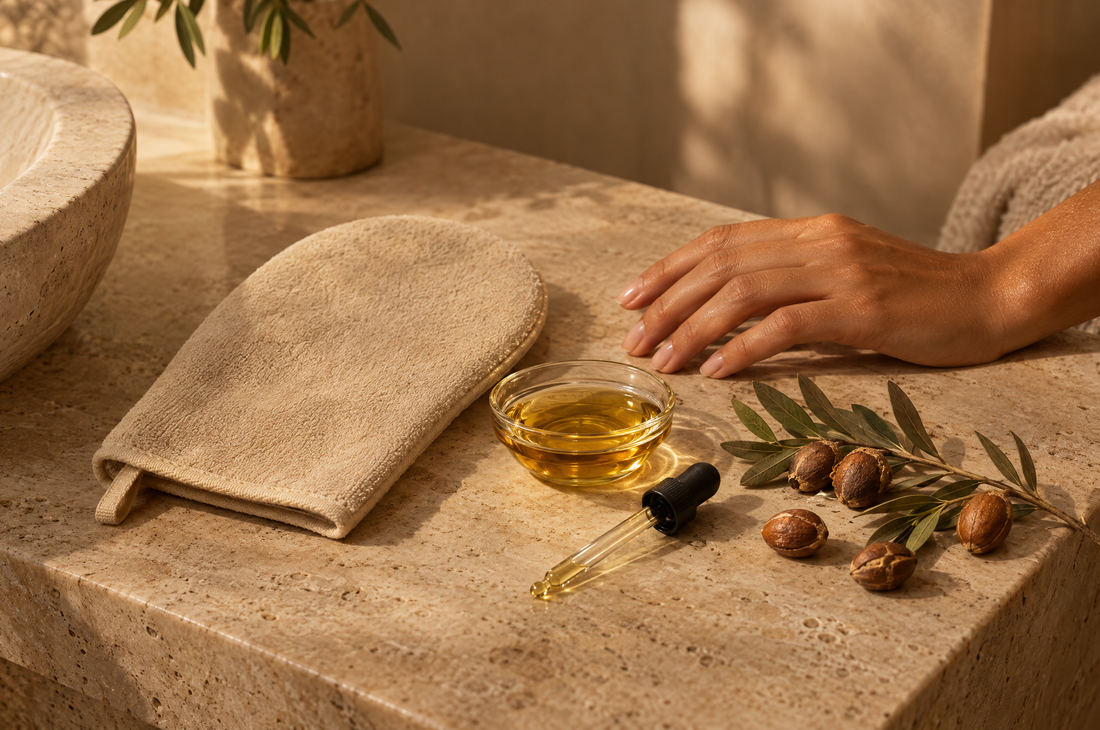
The Moroccan hammam ritual is a steam bath followed by a slow sequence of washing and scrubbing: warm up, lather with black soap, exfoliate with a coarse kessa glove, rinse, perhaps apply rhassoul clay, and finish by sealing the skin with oil. Argan oil belongs at the very end, on clean, damp skin. You can recreate a gentle version at home in about 45 minutes.
The short answer
A Moroccan hammam ritual moves from heat to cleansing to exfoliation to nourishment: steam, black soap, a kessa glove scrub, a rinse, an optional rhassoul clay mask, and a final layer of oil. Argan oil goes on last, pressed into damp skin. At home, use a warm shower and much lighter pressure.
What is a Moroccan hammam?
A hammam is a public steam bath, and in Moroccan towns it has long been a neighborhood fixture: somewhere to get properly clean, to spend an unhurried hour, and to talk. The architecture has deep roots. An archaeological study in the journal Al-Qanṭara traces the North African hammam back to the Roman and late antique baths of the region, and describes how the Islamic-era hot room shifted the emphasis from dry heat and plunge pools to hot water basins and steam1.
Morocco has some of the earliest examples. The same study discusses a hammam at Volubilis dating from the late eighth century, and notes that, because Morocco was never part of the Ottoman Empire, its hammams kept an older Maghrebi and Andalusi layout that survives today, for example in the Hammam Moulay Idriss in the medina of Fez1. The author is candid that the record is patchy: little is known about the earliest Islamic-era hammams in North Africa because written sources and archaeological evidence are limited1.
What has stayed constant is the sequence. You move from cooler rooms into a steamy hot room, sweat, wash, scrub, rinse and rest. The products are simple and local: black soap, a rough glove, a mineral clay, and oil.
The traditional steps, one by one
1. Heat and steam
The first stage is simply time in the warm, humid air. Heat and moisture soften the outer layer of skin, which is why the scrub that follows lifts so much. There is no need to stay until you feel lightheaded; sit, sip water, and leave the hot room if you feel faint.
2. Beldi black soap
Next comes savon beldi, Moroccan black soap. It is a soft, dark, jelly-like paste rather than a bar, traditionally made from olive oil and olives, and it is smoothed over the body and left on for a few minutes before rinsing. Recipes vary from maker to maker, and some versions add essential oils such as eucalyptus. We could not find published research on black soap itself, so read claims about it being uniquely purifying or detoxifying as marketing rather than evidence. It is a soap: it cleans, and like any soap it can leave dry skin feeling tight.
3. The kessa glove scrub
The kessa is a coarse woven mitt, and this is the step people remember. The attendant, or you, works over the body in firm strokes, and softened dead skin comes away in gray rolls. It is mechanical exfoliation, the same category as scrubs and brushes, and dermatologists are cautious about it for some skin types. The American Academy of Dermatology says mechanical exfoliation may be too irritating for sensitive, dry or acne-prone skin, advises people with darker skin tones to avoid strong mechanical or chemical exfoliation because it can lead to dark spots, and says never to exfoliate over cuts or sunburn4.
4. Rhassoul clay
Many hammams follow the scrub with a rhassoul (also spelled ghassoul) clay mask for the body or hair. Rhassoul is a mineral clay mined only at Jbel Ghassoul in Morocco, and it is mostly stevensite, a magnesium-rich clay; a 1974 Moroccan decree reserves the trade name for products that contain more than 90 percent of it3. Researchers note that it is used in skin-cleansing products and shampoos3. The published work on rhassoul is about its mineral chemistry, though, not clinical skin outcomes, so it is best thought of as a traditional, gentle cleansing clay rather than a clinically proven skin product.
5. Rinse, rest, and oil
Last comes a thorough rinse, a rest in a cooler room, and oil or cream on the body. In argan country, argan oil is the traditional choice. UNESCO's listing of argan know-how as intangible cultural heritage records the oil's uses in cosmetics as well as in cooking and traditional medicine2.
| Step | Traditional hammam | Gentle at-home version |
|---|---|---|
| Warm up | Time in a steam-filled hot room | 5 to 10 minutes in a warm, steamy shower with the door closed |
| Cleanse | Beldi black soap, left on briefly | Black soap or any gentle cleanser, rinsed off |
| Exfoliate | Firm kessa glove scrub, full body | Light strokes with a kessa or washcloth, or skip on sensitive skin |
| Mask | Rhassoul clay on body or hair | Optional rhassoul paste for a few minutes, rinsed well |
| Nourish | Oil applied after rinsing | A few drops of argan oil on damp skin |
Where does argan oil fit in a hammam ritual?
At the end, and for a practical reason. After steam, soap and a scrub, skin has lost some of its natural oils and the freshly exfoliated surface can feel tight. Oil applied while the skin is still a little damp helps hold in that water. The American Academy of Dermatology gives the same advice for everyday bathing: pat skin dry gently and apply moisturizer while it is still damp5.
The evidence for argan oil specifically is modest but real. In a 60-day study of 60 postmenopausal women, applying argan oil to the forearm was associated with measurable improvements in skin elasticity6, and a review of topical plant oils notes reports that argan oil helps skin hold water7. These are small studies, and none looked at hammam use, so take them as supportive rather than conclusive. Our guide to argan oil for skin goes through what the research does and does not show.
If you want an oil for this step, look for a single-ingredient, unroasted oil without added fragrance. Our organic argan oil is exactly that: 100% organic, cold-pressed argan kernel oil from Morocco, with nothing added.
Heat, soap, scrub, rinse, then oil. The order matters more than the products.
How to do a hammam at home
You do not need a steam room. A bathroom with the door closed and a warm shower will do most of the work. Plan on 30 to 45 minutes, most of it unhurried.
- Warm up. Run a warm (not scalding) shower or bath for 5 to 10 minutes with the door closed to let the room fill with steam.
- Cleanse. Smooth on a little black soap or your usual gentle cleanser, leave it a minute or two, and rinse.
- Scrub lightly. Wet the kessa glove and use short, light strokes on arms, legs and back. Avoid the face, the chest if it is sensitive, any broken or sunburned skin, and freshly shaved areas. If your skin turns red or stings, stop.
- Optional clay. Mix rhassoul powder with water into a smooth paste, apply a thin layer, leave it for a few minutes while it is still damp, and rinse thoroughly.
- Rinse and pat dry. Finish with a lukewarm rinse and pat, rather than rub, with a soft towel.
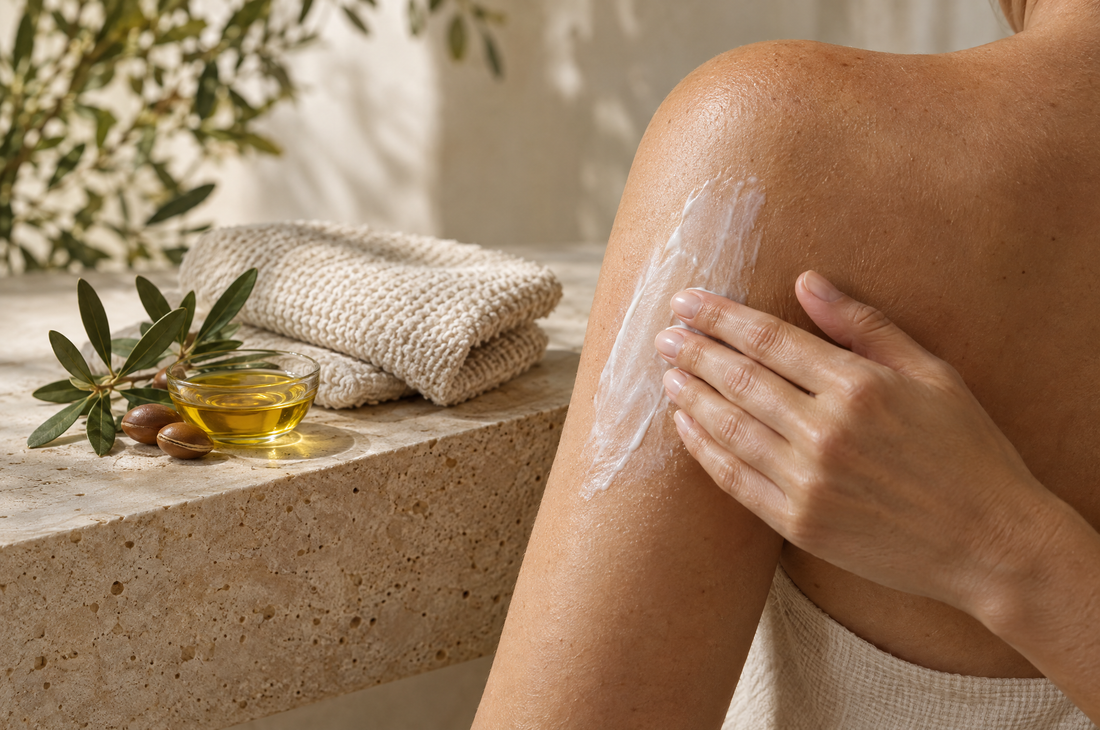
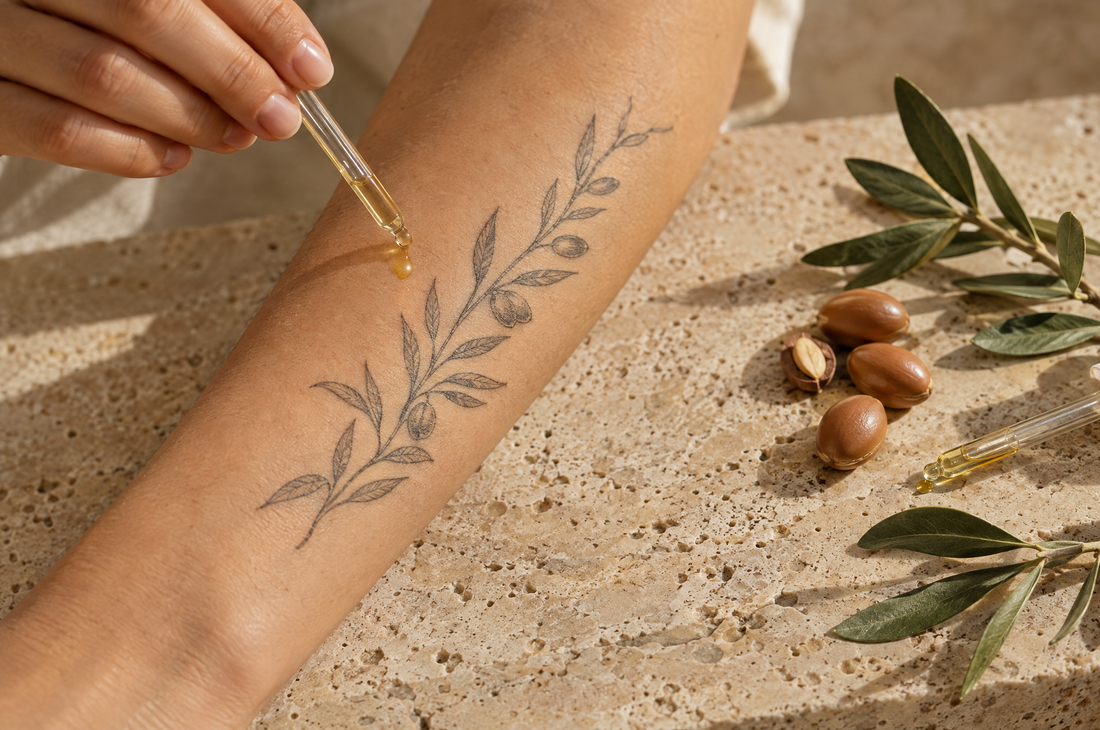
- Seal with argan oil. While skin is still slightly damp, warm 5 to 6 drops of argan oil between your palms and press it into arms, legs and torso. Add a drop or two to dry elbows, knees and heels.
- Rest. Drink some water and give yourself ten quiet minutes. That pause is part of the ritual.
Our post on using argan oil as an after-shower body oil covers the everyday version of that last step, and if you like the oil, there are plenty of other ways to use argan oil, from cuticles to hair ends.
Kessa glove and argan oil: how often, and how hard?
There is no research-based schedule for a hammam scrub. The general dermatology rule applies: the more aggressive the exfoliation, the less often it needs to be done, and over-exfoliating causes redness and irritation4. For most people that means a full kessa scrub no more than about once a week, and lighter pressure than you might get from a professional attendant.
Two other cautions from the American Academy of Dermatology are worth knowing. If you use prescription retinoids or retinol, exfoliating on top can worsen dryness or trigger breakouts4. And always moisturize afterward, because exfoliation can dry the skin4. For skin that is already dry, our guide to argan oil for dry skin explains how to layer oil with a moisturizer.
Is the hammam ritual safe for sensitive skin?
It can be, with changes. The full public-hammam experience, with long heat, soap and a vigorous scrub, is a lot for reactive skin. The dermatology guidance above suggests sensitive, dry and acne-prone skin may do better without mechanical exfoliation at all, using a washcloth and, if needed, a mild chemical exfoliant instead4. Everyday advice for dry skin also favors shorter, warm rather than hot washing5, which is the opposite of a long steam session.
A sensible approach is to keep the parts that feel good, the warmth, the rinse and the oil, and to scale back the parts that strip or abrade. Patch test any new soap, clay or oil on a small area first. Argan oil is gentle for most people, but reactions are possible; our article on whether argan oil can irritate skin explains how to patch test.
Heat itself deserves respect. If you are pregnant, have a heart or blood pressure condition, or tend to feel faint in hot rooms, check with your doctor before using a steam room or very hot bath.
Frequently asked questions
What are the steps of a Moroccan hammam?
Steam or warm up first, wash with black soap, rinse, scrub with a kessa glove, optionally apply a rhassoul clay mask, rinse again, then rest and moisturize. Argan oil traditionally goes on at the end, on clean, damp skin.
How often should you do a hammam scrub?
There is no research-backed schedule. Many people scrub weekly or less. Dermatologists say the more aggressive the exfoliation, the less often you need it, so go by how your skin feels and back off if it turns red or sore.
Is a kessa glove safe for sensitive skin?
Often not at full strength. The American Academy of Dermatology says mechanical exfoliation may be too irritating for sensitive, dry or acne-prone skin, and that darker skin tones should avoid strong scrubbing. Use light pressure or skip the scrub.
Do you put argan oil on before or after the scrub?
After. The scrub and rinse come first, then a few drops of argan oil pressed into skin that is still slightly damp. Oil before scrubbing would mostly be rubbed and rinsed away.
What is beldi black soap made of?
Traditional Moroccan black soap is a soft paste soap usually made from olive oil and olives. Recipes vary by maker, so read the ingredient list, especially if your skin reacts to fragrance or essential oils.
This article is for general information and isn't medical advice. If you have a skin condition, are pregnant, or have a health condition affected by heat, check with your doctor or dermatologist before trying a steam bath or a new exfoliation routine.
Sources
- Maréchal S. From balnea to hammams: late antique bath design in Cyrenaica as inspiration for early Islamic hammams? Al-Qanṭara. 2023;44(1):e06. Link
- UNESCO Intangible Cultural Heritage. Argan, practices and know-how concerning the argan tree (Morocco). Inscribed 2014 on the Representative List. Link
- Moussout H, Ahlafi H, Aazza M, Chfaira R, Mounir C. Interfacial electrochemical properties of natural Moroccan Ghassoul (stevensite) clay in aqueous suspension. Heliyon. 2020;6(3):e03634. Link
- American Academy of Dermatology. How to safely exfoliate at home. Link
- American Academy of Dermatology. Dermatologists' top tips for relieving dry skin. Link
- Boucetta KQ, Charrouf Z, Aguenaou H, Derouiche A, Bensouda Y. The effect of dietary and/or cosmetic argan oil on postmenopausal skin elasticity. Clin Interv Aging. 2015;10:339–349. Link
- Lin TK, Zhong L, Santiago JL. Anti-inflammatory and skin barrier repair effects of topical application of some plant oils. Int J Mol Sci. 2017;19(1):70. Link