Argan Oil and Self-Tanner: Prep, Mixing and Removal
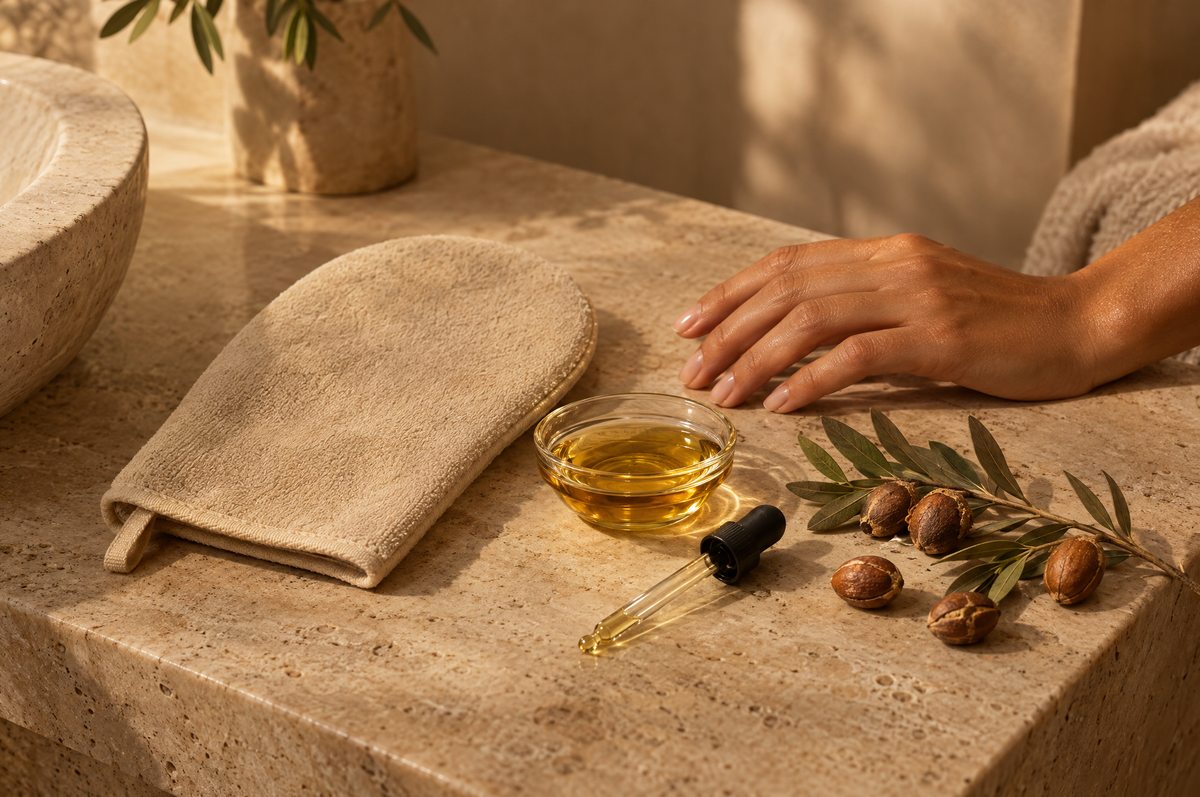
Argan oil and fake tan can work well together, as long as you use the oil at the right moments. A thin layer on dry spots before tanning helps keep knees and elbows from going too dark, a drop or two mixed into tanner gives a sheerer glow, and oil can help loosen a fading, patchy tan. What argan oil should never be is a tanning oil for lying in the sun.
The short answer
Use argan oil with self-tanner in three ways: as a very thin barrier on dry areas like knees, elbows, ankles and knuckles before you tan; mixed in small amounts for a lighter glow; and to soften skin while exfoliating off old tan. It contains no sunscreen, so never use it as a sun tanning oil.
How self-tanner actually works
Almost all self-tanners rely on dihydroxyacetone, or DHA. The U.S. Food and Drug Administration (FDA) describes it as a color additive that darkens the skin by reacting with amino acids in the skin's surface layer.1 That reaction, a slow browning similar to what happens in cooking, produces brown pigments in the outermost layer of dead skin cells.2
Two details explain almost everything about using oil with tanner:
- Where skin is thicker, color is darker. Areas with a thicker outer layer, such as hands, feet and elbows, react more strongly and come out darker.2
- The tan sheds with your skin. Because the color sits in the surface cells, it fades and disappears over several days as those cells naturally flake away.2
So the goals are simple: an even, smooth surface before you apply, a lighter hand on rough areas, and help removing the dead cells when the tan starts to break up.
Argan oil before tanning: prep for even color
A review of DHA tanning products recommends exfoliating before application for an even result, and moisturizing at least the day before.2 That's where argan oil earns its place.
- The day before: exfoliate and moisturize. Shave or wax first if you plan to, then exfoliate gently. Afterward, press five or six drops of argan oil into damp skin all over, paying extra attention to rough patches.
- Tanning day: start with clean, dry skin. Shower without heavy body wash or lotion so the tanner has nothing to slide on.
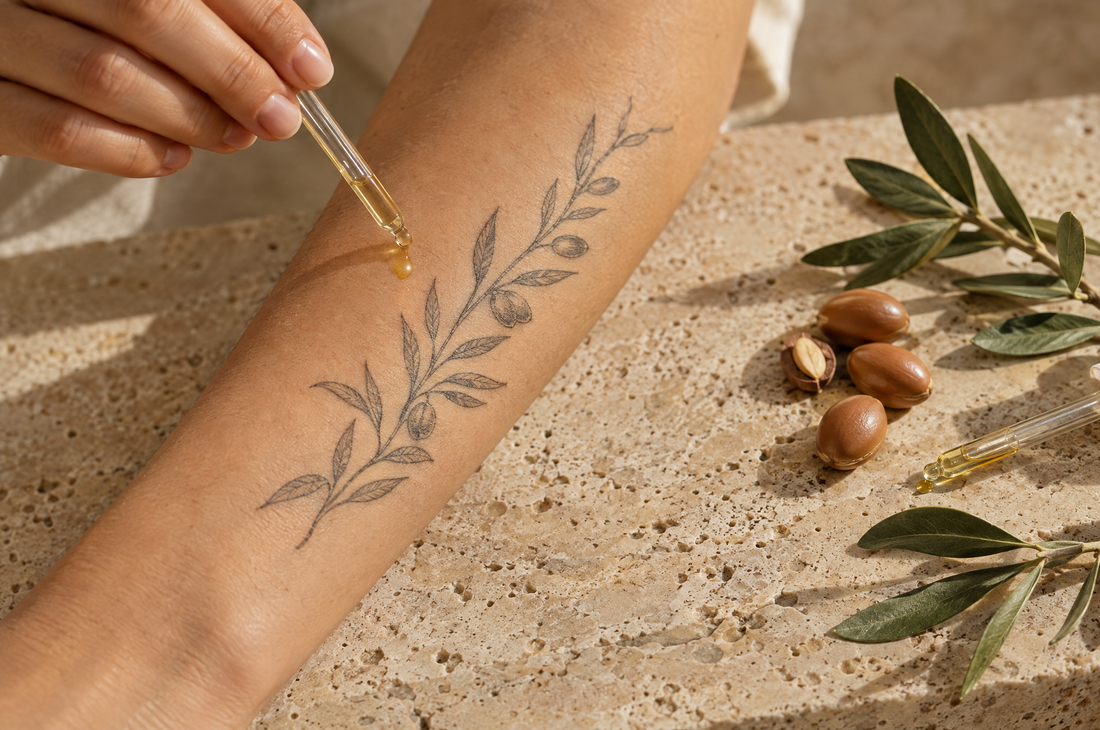
- Barrier the dry spots. Rub one drop of argan oil between your fingertips and press a sheer film over knuckles, elbows, knees, ankles, heels and the sides of the feet. You want a barely-there sheen, not a slick.
- Wait a few minutes, then apply tanner with a mitt as usual, blending lightly over the oiled areas.
- Wash your palms straight away so they don't stain.
A word of honesty on step three. Using a light layer of oil or moisturizer as a barrier is a widely used technique, and it makes sense given that thick, dry skin grabs more color. But we found no study testing it, with argan oil or any other oil, so think of it as a trial-and-error trick. Too much oil can leave streaks or lighter blotches, so start sparingly.
If your skin is dry all over, building a regular routine with argan oil for dry skin in the weeks before a big tan helps more than a single prep night.
Mixing oil with self-tanner for a gradual glow
Many people mix a couple of drops of oil into a palmful of tanning lotion or mousse to dilute it, aiming for a softer, more gradual color that's easier to blend. There's no research on how much oil changes the result, and formulas differ, so test it before an event.
- Start small. One or two drops of argan oil per palmful of tanner is plenty.
- Mix in your palm just before applying, not in the bottle, where you could change how the whole product behaves.
- Test on a small area such as a forearm or the front of a thigh first, and check the color the next morning.
- Read the tanner's directions. Some products are designed to be mixed; others aren't, and the label will tell you.
Expect a lighter, sheerer result than the tanner gives on its own. If you want more color, build it up over two or three days rather than adding more product at once.
Keeping a tan looking fresh
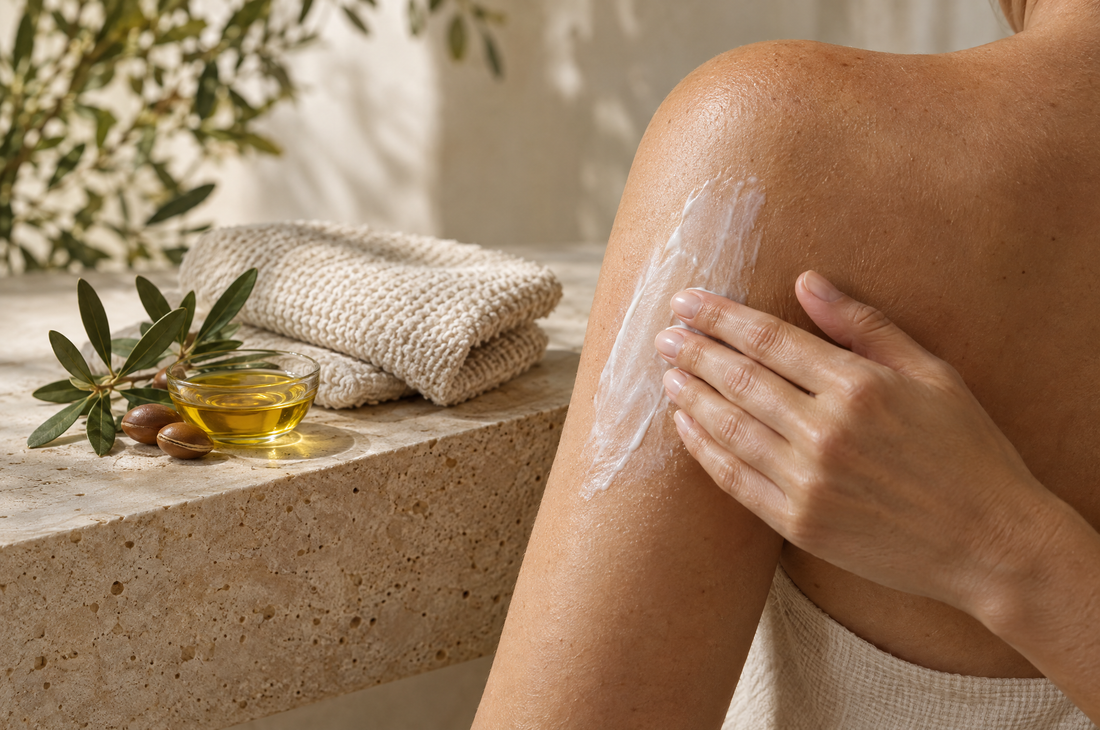
Because the color lives in surface cells, dry, flaky skin makes a tan look patchy sooner. Once the tan has developed and you've had your first shower, a few drops of argan oil on damp skin each evening keeps the surface smoother. We cover how to apply it in our guide to using argan oil as an after-shower body oil. Argan oil has a modest track record here: in a 60-day study, nightly argan oil on the forearm reduced water loss through the skin and raised hydration in the outer layer.3
Whether to use the oil on its own or over a cream depends on how dry your skin runs; our guide to using argan oil as a moisturizer explains the layering.
Does argan oil remove fake tan?
Partly, with help. Because the color sits in the outermost dead skin cells and fades as they shed,2 the most reliable way to remove a tan is to speed up that shedding with gentle exfoliation. Oil doesn't dissolve DHA color; we found no study showing any oil does. What it can do is soften the surface and give your mitt some slip, so flaky, patchy patches lift more evenly.
- Massage in argan oil over the patchy areas on dry skin and leave it for about ten minutes.
- Take a warm shower and let the skin soften.
- Exfoliate gently with a mitt or washcloth in small circles. Stop if skin turns red or sore; it's better to repeat over two or three days than to scrub hard once.
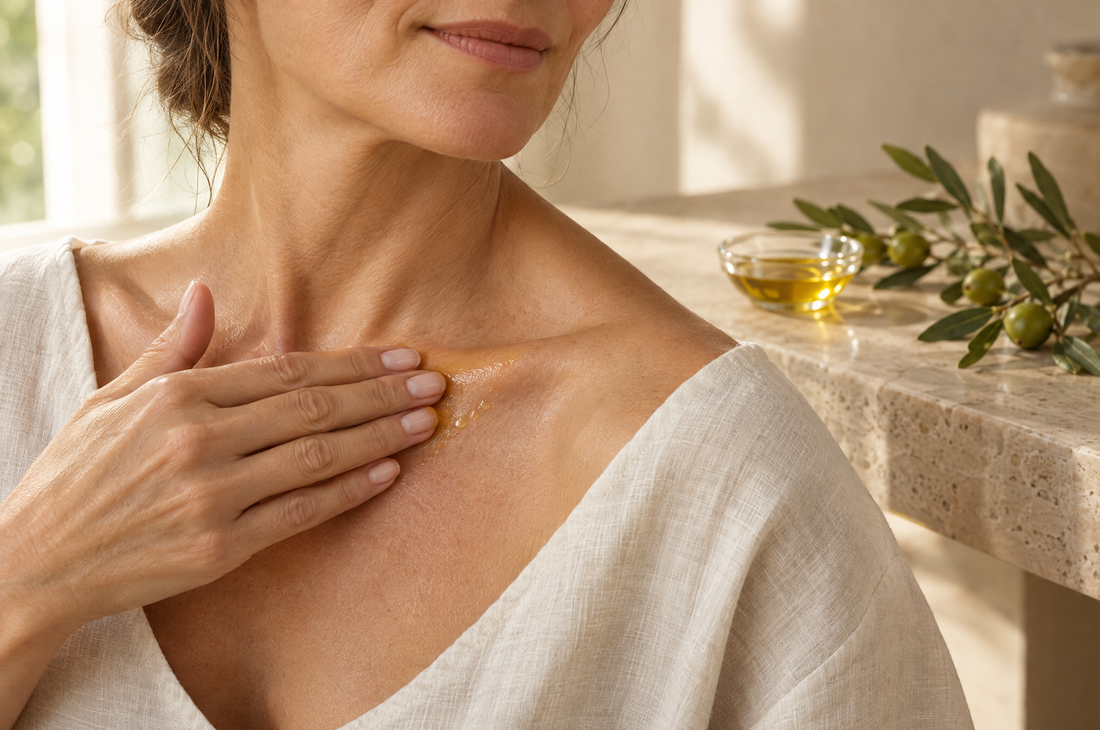
- Finish with a few drops of oil on damp skin to calm any tightness.
Argan oil for tanning in the sun: why it's a bad idea
Argan oil has no SPF. Oiling up to "tan faster" in the sun means spending time in UV light with no protection, and the FDA requires tanning products without sunscreen to carry a warning that they don't contain sunscreen and don't protect against sunburn.4 The American Academy of Dermatology is blunt about tanning itself: every tan, whether from the sun or a tanning bed, ages the skin prematurely, and self-tanner is the alternative it recommends.5
Fake the tan, not the sun protection.
Don't count on a self-tan to protect you either. A safety review found DHA offers minimal to no protection from the sun,6 and the FDA notes that only sunless tanners that contain sunscreen ingredients and show an SPF may protect against the sun.1 Wear a broad-spectrum sunscreen over your tan as usual.
| Use | When | How much argan oil |
|---|---|---|
| Skin prep | The night before tanning | 5–6 drops all over damp skin |
| Barrier on dry spots | Just before tanning | 1 drop shared across knuckles, elbows, knees and ankles |
| Mixed into tanner | During application | 1–2 drops per palmful |
| Upkeep | Evenings after the tan develops | A few drops on damp skin |
| Removal | When the tan turns patchy | Enough to massage over the area, then exfoliate |
| Sun tanning | Never | None; wear sunscreen instead |
Self-tanner safety notes
- Keep DHA off the eyes, lips and inside the nose. The FDA permits DHA for external use only and not on mucous membranes; if you use a spray booth, ask for eye, lip and nose protection.1
- Watch for reactions. Both irritant and allergic contact reactions to DHA have been reported.6 Patch-test a new tanner, and stop if you get a rash or itching.
- Keep the oil simple. A single-ingredient oil with no fragrance means one less thing to react to. Ours is 100% organic, cold-pressed argan oil with nothing added.
For more on what the research says about argan oil for skin in general, see our evidence guide. If you develop a rash that doesn't settle after you stop a product, check in with a dermatologist.
Frequently asked questions
Does argan oil remove fake tan?
Not on its own. Self-tan color sits in the outermost skin cells, so it comes off as they shed. Argan oil softens the surface so gentle exfoliation lifts patchy tan more evenly.
Can I put argan oil on before self-tanner?
Yes, in two ways: a few drops all over the night before, and a very thin film on dry spots like knees, elbows and knuckles just before tanning. Too much oil can cause streaks.
Can I mix argan oil with self-tanner?
You can mix one or two drops into a palmful for a sheerer glow. There's no research on the effect, so test on a small area first and check your tanner's directions.
Is argan oil a good tanning oil for the sun?
No. Argan oil has no SPF and doesn't protect against sunburn. Use self-tanner for color and broad-spectrum sunscreen for protection.
This article is for general information and isn't medical advice. If you have a skin condition, or develop a rash or irritation from a tanning product, check with a dermatologist before trying something new.
Sources
- U.S. Food and Drug Administration. Sunless tanners & bronzers. Link
- Turner J, O'Loughlin DA, Green P, McDonald TO, Hamill KJ. In search of the perfect tan: chemical activity, biological effects, business considerations, and consumer implications of dihydroxyacetone sunless tanning products. J Cosmet Dermatol. 2023;22(1):79–88. Link
- Boucetta KQ, Charrouf Z, Derouiche A, Rahali Y, Bensouda Y. Skin hydration in postmenopausal women: argan oil benefit with oral and/or topical use. Prz Menopauzalny. 2014;13(5):280–288. Link
- U.S. Food and Drug Administration. Required warning statement for tanning products without sunscreen. Link
- American Academy of Dermatology. 11 ways to reduce premature skin aging. Link
- Owji S, Teklehaimanot F, Maghfour J, Lim HW. Properties and safety of topical dihydroxyacetone in sunless tanning products: a review. Photodermatol Photoimmunol Photomed. 2023;39(6):567–572. Link