Argan Oil for Tattoos: Aftercare and Keeping Ink Bright
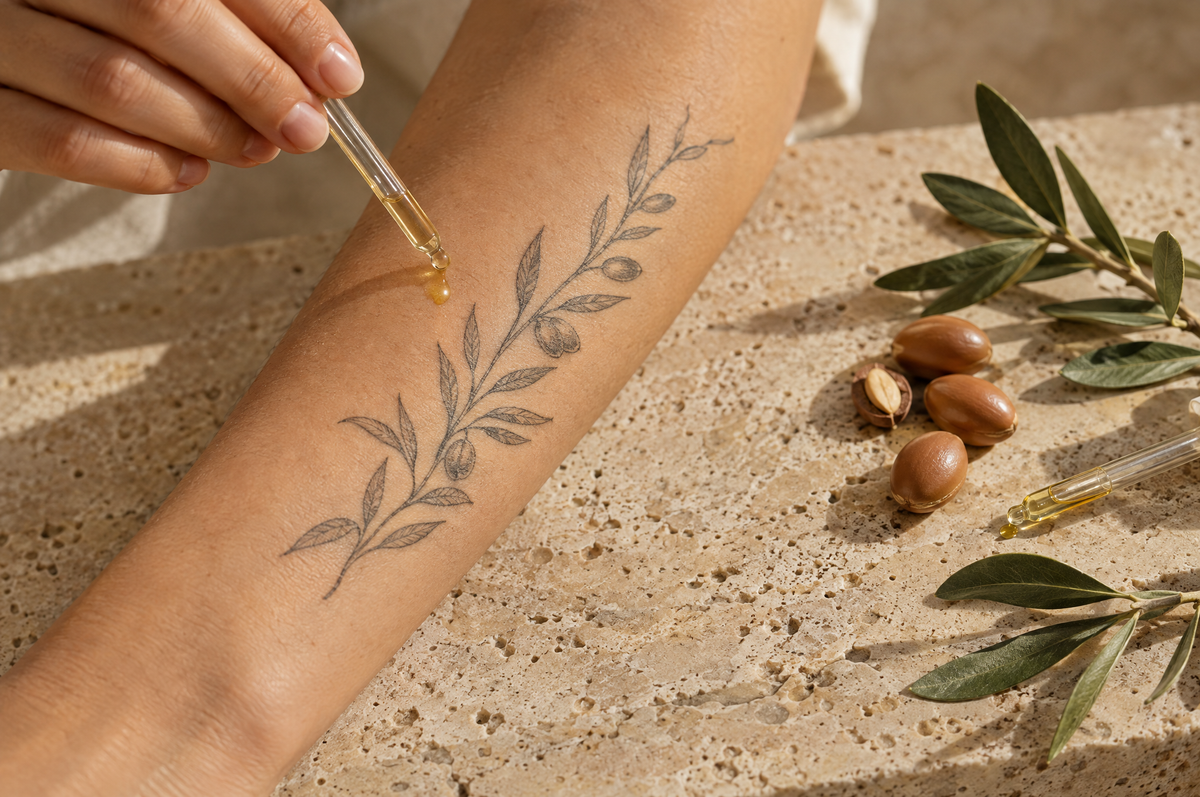
Argan oil is a good moisturizer for a tattoo that has fully settled, but it doesn't belong on fresh ink. A new tattoo is an open wound, and its care should follow your tattoo artist's or doctor's instructions. Once the skin has closed, stopped peeling and feels like normal skin again, a few drops of argan oil can keep it soft, while sunscreen does the real work of keeping color bright.
The short answer
Don't put argan oil on a new tattoo unless your artist or doctor recommends it. Follow their aftercare until the skin has fully closed and stopped peeling. After that, one or two drops of argan oil can keep tattooed skin soft and comfortable. To keep ink from fading, daily broad-spectrum SPF 30 sunscreen matters far more than any oil.
Can you put argan oil on a new tattoo?
The safest answer is no, not until your tattoo artist says the skin has closed. A fresh tattoo is a wound: ink has been placed into the skin with needles, and the surface needs time to seal. The U.S. Food and Drug Administration (FDA), which oversees tattoo inks, says your tattoo artist should advise you on caring for a new tattoo and how long any discomfort may last.1
Part of the reason the internet is full of conflicting advice is that the instructions people receive vary so much. A 2023 analysis of 700 American tattoo aftercare sheets found wide differences in content, with 70 different moisturizers recommended, and only about one in five sheets explained when to contact a physician about a complication.2 There is no single agreed standard, and no published study has tested argan oil on fresh tattoos. In that gap, sticking to the plan your artist gave you, and asking a doctor when something looks wrong, is the sensible default.
What's normal and what isn't
The FDA notes that some redness, swelling or warmth right after tattooing is expected. Contact your health care professional if the area doesn't seem to be getting better, if you develop a rash of red bumps, and especially if you develop a fever.1 Serious infections can cause high fever, shaking, chills and sweats.1 Infections can come from unhygienic practices, non-sterile equipment or contaminated ink, including inks from sealed bottles.1 If you have a reaction, the FDA also asks you to tell your artist, note the ink brand, color and lot number if you can, and report the problem to the agency.1
Argan oil tattoo aftercare: when it's ready
A tattoo is usually ready for an ordinary moisturizer once all of these are true:
- There are no scabs, raw spots or weeping areas left.
- Flaking and peeling have stopped.
- The surface no longer looks shiny or tight, and it feels like the skin around it.
- Your artist has told you that you can return to your normal routine.
For small tattoos this often takes a few weeks; larger or heavily shaded pieces can take longer. When in doubt, wait another week or ask your artist.
Using oil for healed tattoos
Once the skin has fully closed, tattooed skin is skin, and it gets dry like any other. Dry, flaky skin over a tattoo tends to make the design look dull and slightly gray, while smooth, moisturized skin lets the color show through more clearly. That's the main thing an oil can offer: comfort and a fresher look on the surface. It doesn't change the ink itself.
The evidence for argan oil as a moisturizer comes from general skin studies, not tattoos. In a 60-day study of 60 postmenopausal women, argan oil applied to the forearm reduced water loss through the skin and increased the water content of its outer layer.3 Argan oil is mostly oleic and linoleic acids, with vitamin E mainly as gamma-tocopherol.4 Linoleic acid helps maintain the skin's water barrier, and plant oils can form a light film that slows water loss.5 For a fuller look at what the research shows about argan oil for skin, see our evidence guide.
What dermatologists say about moisturizing tattoos
The American Academy of Dermatology (AAD) recommends a water-based lotion or cream when tattooed skin feels dry, and warns that petroleum-based products such as petroleum jelly can cause the ink to fade.6 Argan oil is a plant oil, not a petroleum product, but the AAD doesn't address plant oils either way, and we haven't found any study on whether oils affect tattoo color over time. A practical approach that respects that uncertainty: use a water-based lotion as your main moisturizer, and add a drop or two of argan oil on top when the skin feels especially dry. If you're unsure how to layer the two, our guide to using argan oil as a moisturizer covers the order.
Fewer ingredients, fewer surprises
Many products sold for tattoo aftercare have long ingredient lists. A study of 84 tattoo aftercare products found they contained, on average, about eight ingredients known to cause contact allergy, with fragrances and botanical extracts the most common; "natural" was the most frequent marketing claim.7 That's a useful reminder that "natural" doesn't mean allergy-free. A single-ingredient, fragrance-free oil keeps the list short, but plant oils can still irritate some people, so read our guide on whether argan oil can irritate skin and patch-test first.
How to use argan oil on a healed tattoo
- Check it's ready. No scabs, peeling or shine, and your artist has given the all-clear.
- Patch-test. Apply one drop to the inside of your forearm, away from the tattoo, for a couple of days and watch for redness or itching.
- Apply after washing. Pat the area almost dry. Moisturizers work best on slightly damp skin.
- Lotion first, if you use one. Apply a water-based lotion or cream, as the AAD suggests.6
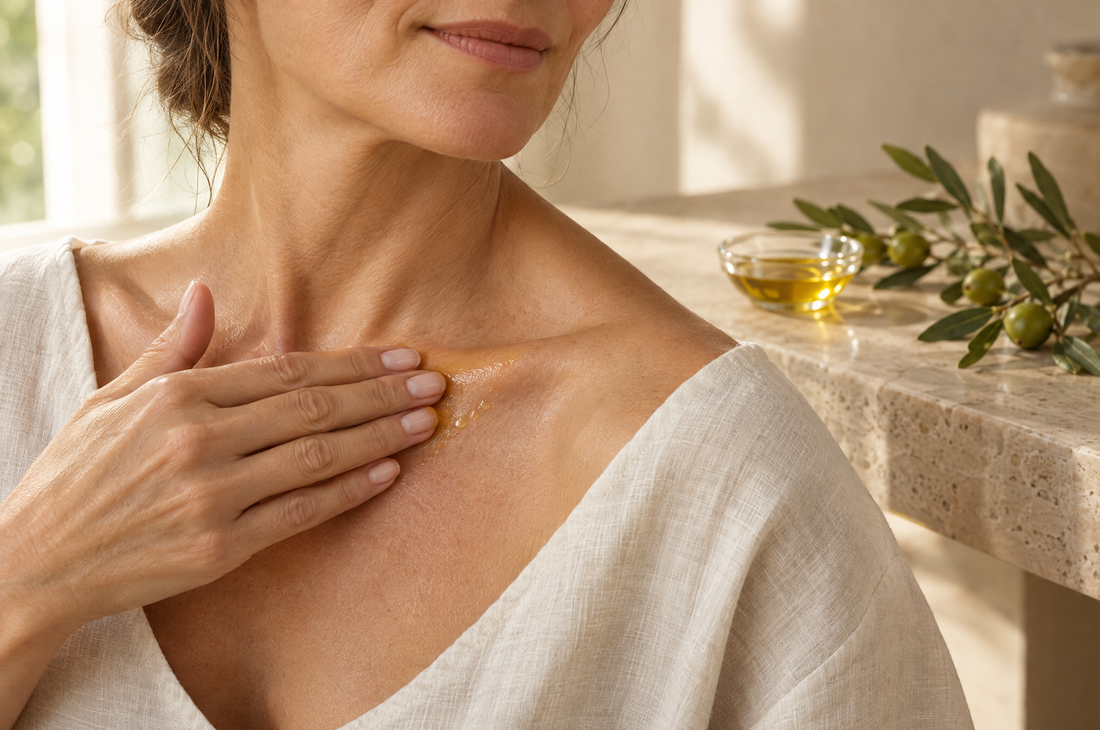
- Add one or two drops of oil. Warm them between your fingertips and press them over the tattoo. A large back or thigh piece may need four or five.
- Blot the excess. Tattooed skin shouldn't look greasy. If it does, use less next time.
- Sunscreen in the morning. If the tattoo will be in the sun, apply sunscreen on top once the oil has settled.
If you want a single-ingredient option, our 100% organic, cold-pressed argan oil contains only argan kernel oil, with no fragrance or dyes.
Keeping ink bright: sun protection matters most
Sunlight is the bigger threat to a tattoo's color. The AAD notes that ultraviolet light can fade some tattoo inks, and recommends a broad-spectrum, water-resistant sunscreen with SPF 30 or higher, applied 15 minutes before going outside and reapplied at least every two hours.6 It also advises avoiding tanning beds and sunlamps, which can fade ink and raise skin cancer risk; in some people, UV light reacts with the ink and causes a painful skin reaction.6
Oil keeps the skin comfortable. Sunscreen keeps the color.
Argan oil has no SPF and is not a substitute for sunscreen. Covering a tattoo with clothing on long sunny days helps too.
When to see a doctor or dermatologist
Tattoo reactions don't only happen in the first few days. The AAD says reactions can appear right after a tattoo or years later, and recommends seeing a board-certified dermatologist if your tattooed skin reacts or changes in any way.6 See a doctor promptly if you notice:
- Fever, chills, or redness and warmth that spread or worsen after the first few days1
- A rash, bumps or itching in the tattoo that won't settle
- Raised, hard or lumpy areas in the ink
- A mole or spot within a tattoo that changes in size, shape or color
Don't try to manage these with oils or home remedies. And if your tattooed skin is dry all over rather than reacting, our guide to argan oil for dry skin covers routines that help.
Frequently asked questions
Can you put argan oil on a new tattoo?
It's best not to unless your tattoo artist or doctor recommends it. Follow their aftercare instructions until the skin has fully closed and stopped peeling.
When can I start using oil on my tattoo?
Once there are no scabs, peeling or shiny areas, the tattoo feels like the surrounding skin, and your artist has given the all-clear. For small tattoos that often takes a few weeks.
Does argan oil make tattoos look brighter?
It can make a dry, dull tattoo look fresher by smoothing and moisturizing the skin over it. It doesn't change the ink, and daily sunscreen does more to slow fading.
Is argan oil better than petroleum jelly for tattoos?
The AAD advises against petroleum-based products on tattoos because they can fade ink, and recommends water-based lotions. Argan oil isn't petroleum-based, but there's no research on oils and tattoo color, so use it sparingly on top of a lotion.
This article is for general information and isn't medical advice. Follow your tattoo artist's aftercare instructions for new tattoos, and see a doctor or dermatologist if you notice signs of infection, a rash, fever, or any change in tattooed skin.
Sources
- U.S. Food and Drug Administration. Think before you ink: tattoo safety. Consumer Update. Link
- Liszewski W, Newcomer J, Laumann AE, Leger MC, Farah RS. An analysis of the content and recommendations of 700 American tattoo aftercare instructions. Dermatology. 2023;239(6):988–995. Link
- Boucetta KQ, Charrouf Z, Derouiche A, Rahali Y, Bensouda Y. Skin hydration in postmenopausal women: argan oil benefit with oral and/or topical use. Prz Menopauzalny. 2014;13(5):280–288. Link
- Gharby S, Charrouf Z. Argan oil: chemical composition, extraction process, and quality control. Front Nutr. 2021;8:804587. Link
- Lin TK, Zhong L, Santiago JL. Anti-inflammatory and skin barrier repair effects of topical application of some plant oils. Int J Mol Sci. 2017;19(1):70. Link
- American Academy of Dermatology. Caring for tattooed skin. Link
- Liou YL, Liszewski W, Schlarbaum JP, Warshaw EM. Characterization of tattoo aftercare products: allergenic ingredients and marketing claims. Dermatitis. 2021;32(5):301–307. Link