20 Ways to Use Argan Oil, From Face to Fingertips
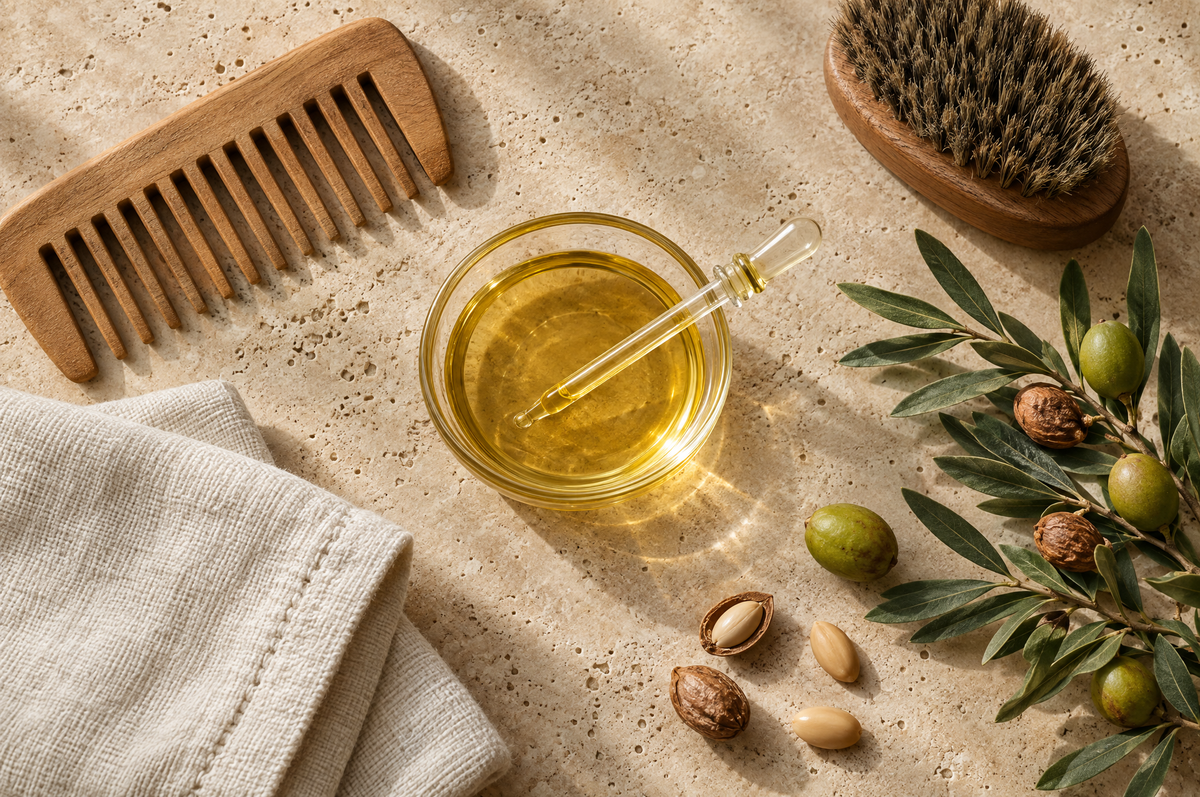
One of the nicest things about a single, pure oil is how many small jobs it can do. A bottle of argan oil can sit by the sink and quietly handle dry cheeks, frizzy ends, ragged cuticles and rough heels. But "good for everything" is also how argan oil got oversold. Here are 20 genuinely useful ways to use it, with an honest note on what each one can and can't do.
The short answer
Argan oil is good for moisturizing: dry facial skin, the body after a shower, frizzy or dry hair ends, cuticles, beards, lips and rough patches like elbows and heels. Small studies show it helps skin hold moisture. It isn't proven to regrow hair, erase scars or treat skin conditions, so think of it as a versatile conditioner.
What is argan oil good for? The evidence in brief
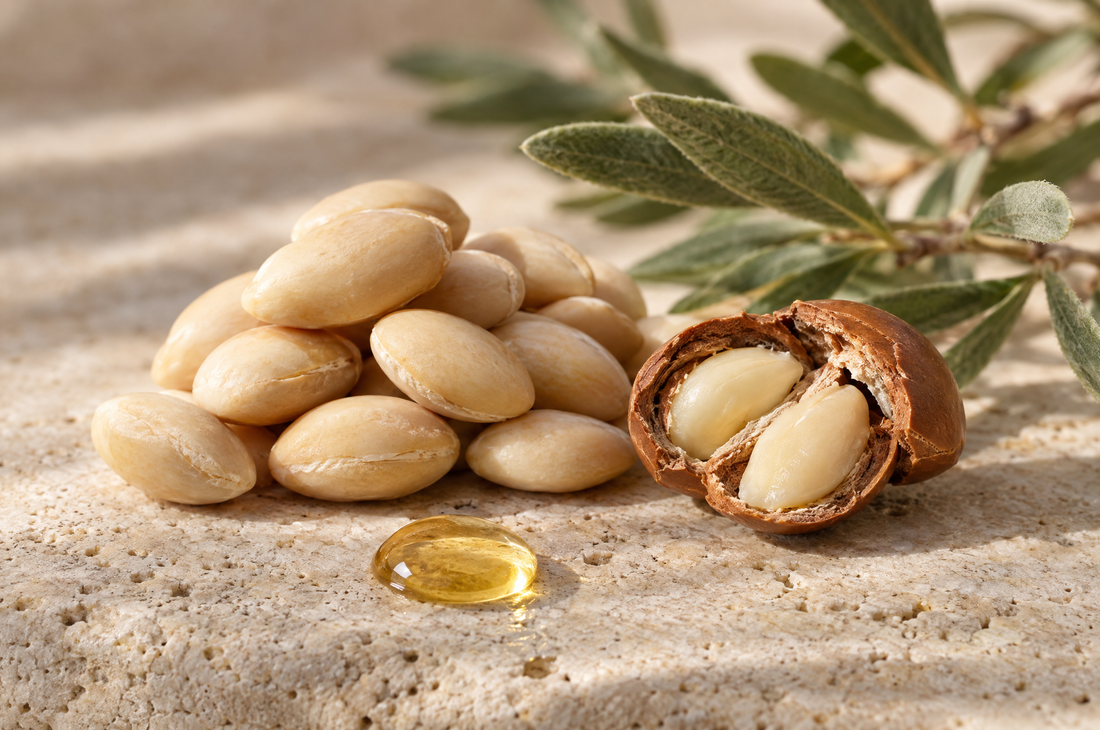
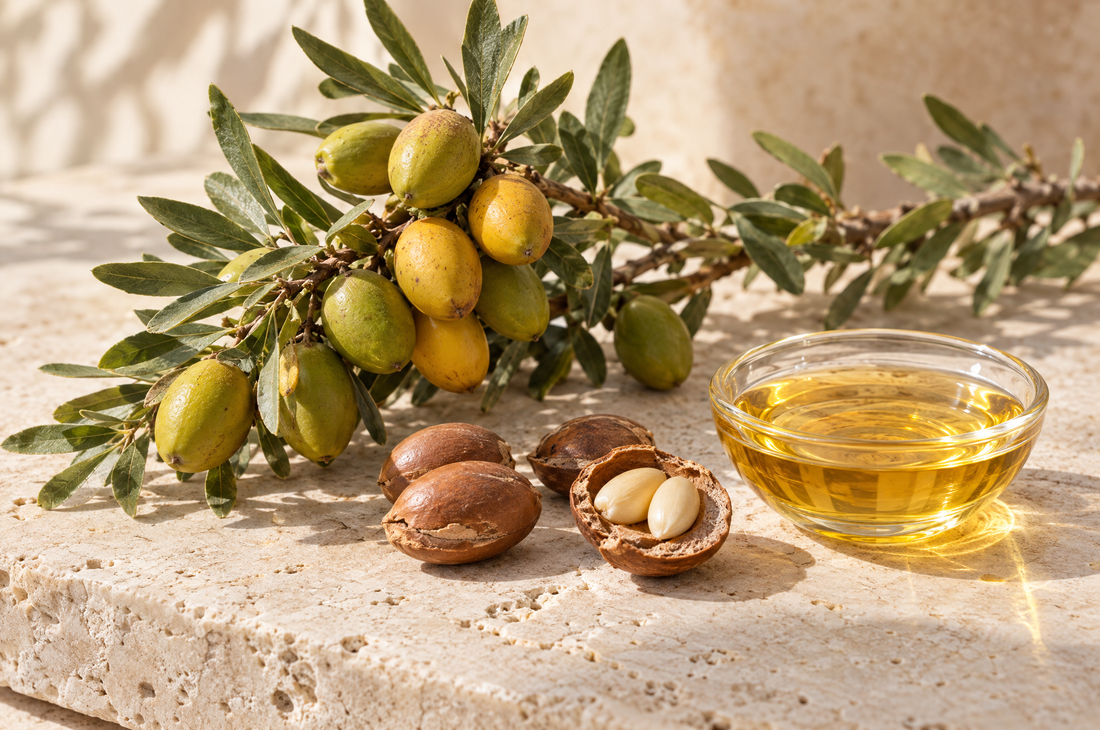
Argan oil is pressed from the kernels of the argan tree, which grows mainly in southwestern Morocco. Cosmetic argan oil comes from unroasted kernels, while culinary argan oil is made from roasted ones1. It's mostly oleic and linoleic acids, with vitamin E compounds (tocopherols) and plant sterols1.
The best human data come from two small, 60-day trials in postmenopausal women: applying argan oil to the skin reduced water loss, increased skin moisture and improved elasticity measurements2,3. A review of topical plant oils lists argan oil among those with evidence for skin barrier repair4. For hair, the evidence is thinner: a lab study found argan oil pre-treatment reduced protein loss in hair exposed to oxidative chemicals5, but a systematic review found no meaningful clinical evidence that it improves hair growth6.
That's the frame for everything below: argan oil moisturizes and conditions. It doesn't cure anything. For the fuller picture, read our complete guide to argan oil.
How to use argan oil on your face
1. As a face oil
Two to three drops pressed into clean, slightly damp skin, morning and/or night, as the last step of your routine. It suits normal and dry skin best. Our guide to using argan oil on your face covers technique.
2. Mixed into your moisturizer
If straight oil feels like too much, add one drop to your usual moisturizer in your palm. It's an easy way to give a light lotion more staying power in winter.
3. On dry patches
Flaky spots around the nose, eyebrows or chin often respond well to a single drop pressed in at night. If a patch is red, scaly and persistent, see a dermatologist rather than self-treating.
4. On lips
A drop smoothed over the lips at bedtime softens them. It's lighter than a balm, so reapply more often; the AAD's own recommendation for dry lips is lip balm or petroleum jelly7, and argan oil underneath a balm works well.
5. Around the eyes, carefully
A tiny amount tapped onto the orbital bone (not the lid) can help dry under-eye skin. Keep it out of your eyes. See argan oil under eyes for cautions.
Argan oil uses for hair
6. Frizz control
One drop warmed between your palms and smoothed over dry hair tames flyaways without a crunchy finish.
7. Dry ends
Concentrate a drop or two on the last few inches, where hair is oldest and most weathered. It won't repair split ends (only a trim does that), but it makes ends feel softer and look less frayed.
8. Pre-wash treatment
Work a few drops through the lengths 30 minutes to an hour before shampooing. The lab finding that argan oil pre-treatment reduced protein loss during chemical exposure is a reason to try it before coloring5, though that was tested on cut hair, not people.
9. Leave-in for damp hair
After washing and conditioning, a little oil through towel-dried hair helps detangling. The AAD advises using a wide-tooth comb on wet hair, which is fragile8.
10. Curl refresh
Rub a drop between your palms and scrunch it into curls on day two or three. Our curly hair routine explains how to define without weighing curls down.
11. Dry scalp comfort
A few drops massaged into a dry, tight scalp before washing can feel soothing. It's not a dandruff treatment; flaking that persists usually needs a medicated shampoo.
Body uses
12. After-shower body oil
Five or six drops on damp skin straight out of the shower. The AAD recommends moisturizing while skin is still damp to lock in water7.
13. Elbows, knees and heels
Rough, thick skin likes a nightly drop or two. For heels, apply at bedtime and wear cotton socks.
14. Hands
A drop rubbed into the backs of the hands after washing helps on cold, dry days, when the AAD suggests protecting hands and moisturizing after each wash7.
15. After shaving
Smooth a few drops over legs, underarms or face after shaving to calm that tight, just-shaved feeling.
16. Massage oil
Argan oil glides without feeling heavy. Mix it with a cheaper carrier oil if you need a lot for a full-body massage.
Nails, beard and the small stuff
17. Cuticle oil
One drop per hand on the nail beds every night. Dermatologists recommend moisturizing nails and cuticles to reduce brittleness9. Full routine in argan oil for nails and cuticles.
18. Beard oil
Two to five drops into the skin and through the beard after washing. The AAD recommends beard oil for normal to dry skin to prevent itchy, flaky skin underneath10. See argan oil for beards.
19. Taming brows
A tiny amount on a clean spoolie smooths unruly brows. Whether it helps lashes or brows grow is a different question, covered in argan oil for eyelashes and brows.
20. A travel multitasker
A small bottle replaces face oil, hair serum, cuticle oil and body oil in a carry-on. Keep it capped tightly and out of direct sun.
What argan oil is not good for
- Cooking (cosmetic oil). Culinary argan oil is made from roasted kernels and handled as a food. Don't cook with a cosmetic bottle. See culinary vs. cosmetic argan oil.
- Sun protection. Argan oil is not a sunscreen. Use a broad-spectrum SPF 30 or higher during the day.
- Treating skin or scalp conditions. Eczema, rosacea, acne, dandruff and hair loss deserve a proper diagnosis. Argan oil may help with dryness and comfort alongside medical care, not instead of it.
- Regrowing hair. A systematic review found no significant evidence for this6.
How to use argan oil: quick reference
| Area | Amount | Best time |
|---|---|---|
| Face | 2–3 drops | Morning and/or night, last step |
| Hair (dry) | 1 drop through the ends | Any time |
| Hair (damp) | 2–3 drops through lengths | After washing |
| Body | 5–6 drops | Right after bathing |
| Nails | 1 drop on the nail beds | Bedtime |
| Beard | 2–5 drops | After washing |
| Lips | 1 drop | Bedtime, under a balm |
All of these work best with a pure oil. If you're shopping, look for an ingredient list that reads only Argania spinosa kernel oil. Ours is 100% organic, cold-pressed argan oil in a 60 mL glass dropper bottle, with no fragrance or dyes, so the same bottle can go from face to fingertips.
Before you start: patch test
Argan oil is well tolerated by most people, but allergic reactions have been reported. The AAD's method is to apply a product to a small spot on your inner arm twice a day for 7 to 10 days, and use it only if there's no redness, itching or swelling11. If you have a nut or seed allergy, ask your doctor first.
Frequently asked questions
What is argan oil good for?
Mainly moisturizing and conditioning: dry facial skin, the body after a shower, dry or frizzy hair, cuticles, beards, lips and rough patches. Small studies show it helps skin retain moisture.
Can I use argan oil on my face and hair from the same bottle?
Yes, if it's pure cosmetic argan oil. A single-ingredient oil works the same on face, hair, body and nails; just adjust the amount for each area.
Can you leave argan oil on overnight?
Yes. Night is a good time for face, lips, cuticles and heels. For hair, use a small amount or protect your pillowcase if you apply more.
Can argan oil be used on the scalp?
It can be massaged into a dry scalp as a pre-wash treatment and then shampooed out. It isn't a treatment for dandruff or hair loss.
Can I cook with argan oil?
Only with culinary argan oil, which is made from roasted kernels and sold as a food. Cosmetic argan oil is made for skin and hair, not cooking.
Sources
- Gharby S, Charrouf Z. Argan oil: chemical composition, extraction process, and quality control. Front Nutr. 2022;8:804587. Link
- Boucetta KQ, Charrouf Z, Derouiche A, Rahali Y, Bensouda Y. Skin hydration in postmenopausal women: argan oil benefit with oral and/or topical use. Prz Menopauzalny. 2014;13(5):280–288. Link
- Boucetta KQ, Charrouf Z, Aguenaou H, Derouiche A, Bensouda Y. The effect of dietary and/or cosmetic argan oil on postmenopausal skin elasticity. Clin Interv Aging. 2015;10:339–349. Link
- Lin TK, Zhong L, Santiago JL. Anti-inflammatory and skin barrier repair effects of topical application of some plant oils. Int J Mol Sci. 2017;19(1):70. Link
- Sharifi N, Hamedeyazdan S, Shokri J, Monajjemzadeh F. Argan oil as a pretreatment of human hair before exposure to oxidative damage: attenuated total reflectance and protein loss studies. J Cosmet Dermatol. 2022;21(10):5010–5017. Link
- Phong C, Lee V, Yale K, Sung C, Mesinkovska N. Coconut, castor, and argan oil for hair in skin of color patients: a systematic review. J Drugs Dermatol. 2022;21(7):751–757. Link
- American Academy of Dermatology. Dermatologists' top tips for relieving dry skin. Link
- American Academy of Dermatology. Tips for healthy hair. Link
- American Academy of Dermatology. Gel manicures: Tips for healthy nails. Link
- American Academy of Dermatology. A dermatologist's top tips for a healthy beard. Link
- American Academy of Dermatology. How to test skin care products. Link