Argan Oil Under Eyes: Benefits, How to Apply, and Cautions
The skin under your eyes is usually the first place to look tired, dry or crepey, and the last place you want to irritate. That makes people understandably cautious about putting oil there. Used the right way, argan oil can be a gentle option for this area, but it's worth knowing what it can't do and how to keep it out of your eyes.
The short answer
Argan oil can be good for under the eyes in tiny amounts: it softens dryness and can make fine, crepey lines look smoother. It won't erase dark circles, which usually come from genetics, pigment, visible blood vessels or shadows. Use one drop for both eyes, tap it along the orbital bone, and keep it out of the eyes themselves.
Is argan oil good for under eyes?
The under-eye area has a few quirks. Eyelid skin is among the thinnest on the body: one study measuring skin at 28 sites found eyelid skin was about 521 to 626 micrometers thick, compared with nearly 2,000 on the back, with a particularly thin outer layer1. Thin skin shows dryness quickly, and fine lines become more visible when it's dehydrated.
That's where a light oil can help. In a 60-day study in postmenopausal women, applying argan oil to the forearm every night reduced water loss through the skin and increased the water content of the outer layer2. Nobody has repeated that study specifically under the eyes, so treat it as supportive rather than direct evidence. In everyday terms, a well-moisturized under-eye looks smoother and less crepey, and makeup tends to settle into lines less.
What argan oil doesn't do is rebuild collagen, tighten loose skin or reduce puffiness. For lines more broadly, see our article on argan oil for wrinkles.
Argan oil for dark circles: what it can and can't do
Dark circles aren't one problem. A comprehensive dermatology review lists several causes: genetics, excess pigmentation, darkening left behind by eczema or allergic reactions around the eyes, swelling, visible blood vessels, and shadowing from skin laxity and the hollow of the tear trough as we age3. Often more than one is at play.
| Type of dark circle | Can argan oil help? | What tends to help more |
|---|---|---|
| Pigment (brownish) | Not shown to lighten it | Sun protection; a dermatologist for targeted treatment |
| Vascular (bluish or purplish) | No | Concealer; medical options from a dermatologist |
| Shadows from hollows or laxity | No | Lighting and concealer; in-office procedures |
| Dryness making the area look dull and crepey | Yes, this is where it helps | Gentle moisturizing, avoiding rubbing |
| Darkening after eczema or allergy | Indirectly, by keeping skin comfortable | Treating the underlying condition and avoiding triggers |
One point is worth underlining: because irritation and allergic reactions around the eyes can themselves cause darkening3, the gentlest approach is the best one. That means fragrance-free products, no rubbing, and testing anything new before it goes near your eyes. Sunglasses help too; the American Academy of Dermatology notes they reduce lines caused by squinting, alongside daily sun protection4.
What about puffiness?
Under-eye bags and morning puffiness are mostly about fluid and the structure of the tissue beneath the skin; the dermatology review above lists swelling around the eyes as its own cause of a darker-looking under-eye3. An oil sits on the surface and won't drain fluid or tighten what's underneath. If puffiness comes with itching, redness or seasonal allergy symptoms, it's worth raising with your doctor rather than reaching for another product. For a broader look at building a face routine around argan oil, see using argan oil for your face.
How to apply argan oil under your eyes
Use a pure oil with nothing added. Fragrance and essential oils have no place this close to your eyes. Our organic argan oil is a single ingredient with no fragrance, and the dropper makes it easy to dispense one drop rather than a splash.

- Patch test first. Try the oil on your inner arm twice a day for seven to 10 days, following the AAD's method for new products9. If you have sensitive eyes or eczema around the eyelids, also ask your doctor.
- Wash your hands. Clean hands are basic eye-area hygiene8.
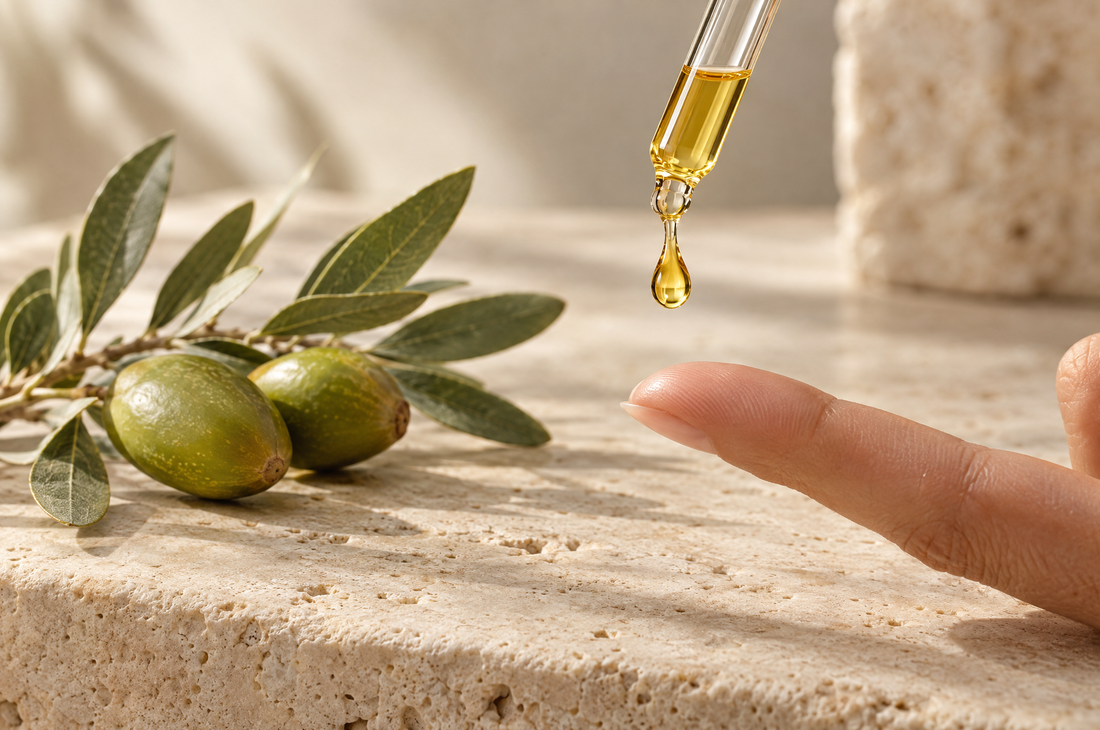
- Put one drop on your ring finger. Touch it to the ring finger of the other hand so both have a thin film. That's enough for both eyes.
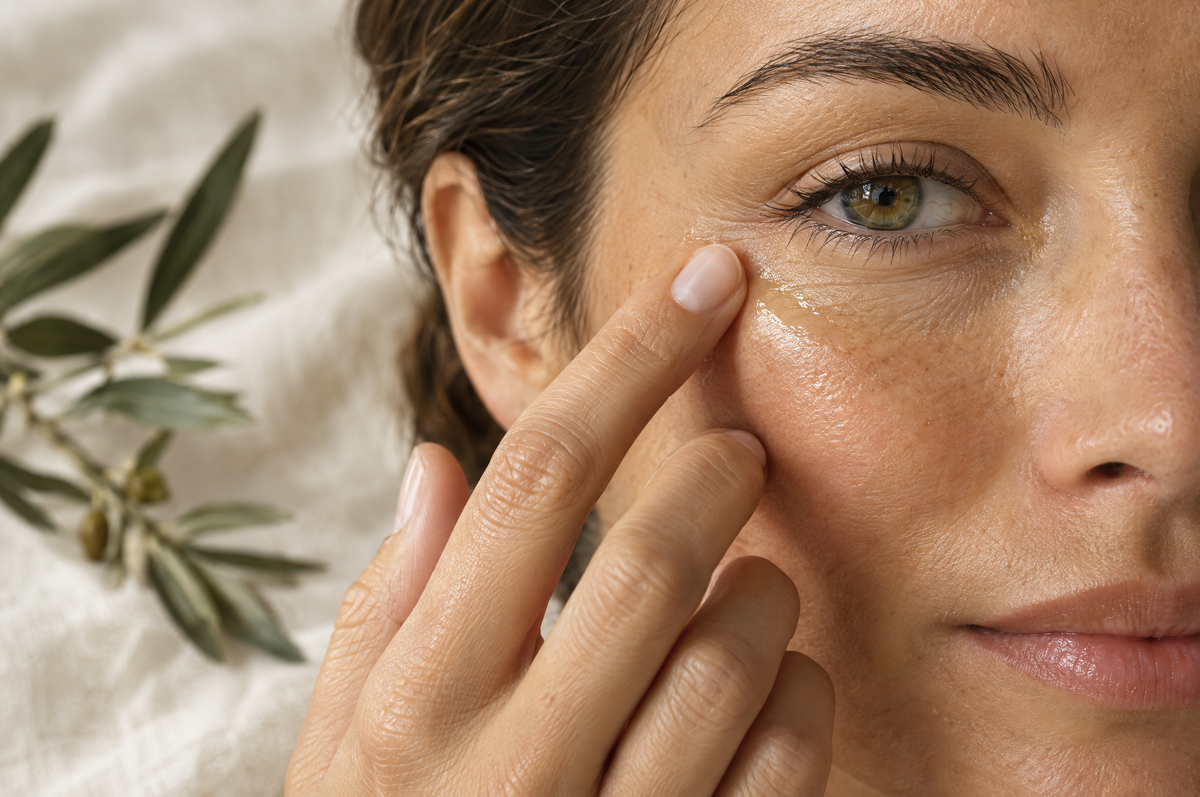
- Tap, don't rub. Lightly tap along the orbital bone, the bony ridge you can feel under the eye, working from the inner corner outward. The ring finger naturally applies the least pressure.
- Stay off the lids and lash line. The oil will spread a little on its own as it warms. Keeping a margin from the lash line helps stop it migrating into the eye.
- Do it at night, or well before makeup. At night, apply it a little while before bed so it isn't transferred to your pillow and into your eyes. In the morning, let it absorb fully before concealer.
If you'd like to use argan oil on your lashes too, that's a separate technique with its own cautions; see argan oil for eyelashes and brows.
Milia: the under-eye risk to watch for
Milia are tiny, hard, pearly-white bumps, small cysts of trapped keratin, and they commonly appear around the eyelids and cheeks6. Cleveland Clinic notes that secondary milia can form as a reaction to a heavy skin cream or ointment5. Argan oil is lighter than most balms, but any rich product used heavily around the eyes may raise the odds for people prone to milia.
- If you notice small white bumps where you apply the oil, stop using it there.
- Don't squeeze or scrape them. That can cause scarring or infection5.
- Milia are harmless and often clear on their own within a few months6; a dermatologist can remove them if they bother you.
Is it bad to get argan oil in your eyes?
Argan oil isn't made or tested as an eye product, so you don't want it in your eyes. A small amount will most likely cause temporary blurriness or stinging, but don't assume it's harmless, but treat it like anything else that gets in the eye:
- Don't rub. Blink several times and let tears do the work7.
- Rinse. If it still feels uncomfortable, flush the eye with eyewash, saline solution or running tap water7.
- Take out contact lenses if you wear them, and clean or replace them before putting them back.
- Get help if it doesn't settle. If irritation persists, stop using the product and see a doctor8. Seek care promptly for pain, light sensitivity or changes in vision.
The FDA's general advice for anything used near the eyes applies here too: stop using it if it causes irritation, and don't share it8.
Argan oil under eyes before and after: realistic expectations
After a single application, the area should feel softer and look less papery. Over a few weeks of consistent nightly use, people with dry under-eyes often find fine lines are less noticeable and concealer sits better. What won't change is the structure: hollows, bags, and genetic or vascular darkness stay the same. For more on timelines across uses, see argan oil before and after.
Under the eyes, one drop does more than five.
If the skin around your eyes is red, itchy, flaky or swollen, that's not a dryness problem to moisturize away. It could be a reaction to something you're using, even something natural, so it's worth seeing a dermatologist. If you've reacted to oils before, read can argan oil irritate skin first.
Frequently asked questions
Can I put argan oil under my eyes every night?
Most people can, using about one drop for both eyes tapped along the orbital bone. Stop if you notice irritation or small white bumps (milia).
Does argan oil get rid of dark circles?
No. Dark circles usually come from genetics, pigment, visible blood vessels or shadows, which an oil can't change. It can make dry, dull under-eye skin look smoother.
Is argan oil safe for the eye area?
Pure, fragrance-free argan oil is generally well tolerated around (not in) the eyes when used sparingly. Patch test first and keep it away from the lash line.
What should I do if argan oil gets in my eye?
Don't rub. Blink, then rinse with eyewash, saline or clean running water. If irritation continues, or you have pain or vision changes, see a doctor.
Sources
- Lee Y, Hwang K. Skin thickness of Korean adults. Surg Radiol Anat. 2002;24(3–4):183–189. Link
- Boucetta KQ, Charrouf Z, Derouiche A, Rahali Y, Bensouda Y. Skin hydration in postmenopausal women: argan oil benefit with oral and/or topical use. Prz Menopauzalny. 2014;13(5):280–288. Link
- Sarkar R, Ranjan R, Garg S, Garg VK, Sonthalia S, Bansal S. Periorbital hyperpigmentation: a comprehensive review. J Clin Aesthet Dermatol. 2016;9(1):49–55. Link
- American Academy of Dermatology. 11 ways to reduce premature skin aging. Link
- Cleveland Clinic. Milia (milk spots): causes and treatment. Link
- Gupta M, Oakley A. Milium. DermNet. Link
- American Academy of Ophthalmology. Recognizing and treating eye injuries. Link
- U.S. Food and Drug Administration. Eye cosmetic safety. Link
- American Academy of Dermatology. How to test skin care products. Link
This article is for general information and isn't medical advice. If you have eyelid rashes, eye irritation, or a skin or eye condition, check with your doctor or dermatologist before trying something new near your eyes.