Argan Oil for Oily Skin: Why Oil Doesn't Always Mean Oily
If your forehead is shiny by lunchtime, putting oil on your face sounds like the last thing you should do. Yet "argan oil for oily skin" is one of the most searched argan questions, and plenty of people with oily skin swear by a drop or two at night. The truth sits in the middle: some oily skin does well with argan oil, some doesn't, and the evidence is thinner than the enthusiasm.
The short answer
Argan oil can suit oily skin for some people, because it is light, fast-absorbing and relatively high in linoleic acid. But the only sebum study used a multi-ingredient cream, not pure oil. If you try it, use one or two drops at night, introduce it slowly, and stop if you notice more breakouts or congestion.
Is argan oil good for oily skin? What the research shows
The study most often quoted is a small 2007 trial of a "sebum control cream" in 20 volunteers with oily or combination skin. Applied twice a day for four weeks, the cream reduced casual sebum levels by about 20 percent and the area covered by oily spots by 42 percent, and 95 percent of participants saw a visible improvement.1 Those are encouraging numbers, but the cream contained a polyphenol-rich saw palmetto extract and sesame seed ingredients as well as argan oil, the study was short and small, and the abstract does not describe a placebo group.1 It tells us the formula helped those volunteers. It does not tell us what pure argan oil does to sebum on its own.
A 2024 review of argan oil in medicine and cosmetology cites this same work and acknowledges that research on argan oil's effects on the human body is still limited.2 So any claim that argan oil "balances" or "regulates" oil production goes further than the evidence allows.
The linoleic acid angle
There is a more interesting, if indirect, line of reasoning. Argan oil contains roughly 29 to 36 percent linoleic acid and 43 to 49 percent oleic acid.3 Linoleic acid plays a direct role in keeping the skin's water barrier intact, while oleic acid, in continuous use, can disrupt it.4 In a small double-blind, placebo-controlled study, topical linoleic acid reduced the size of microcomedones (the tiny precursors of blackheads and whiteheads) by almost 25 percent over a month in people with acne.5
That study used linoleic acid, not argan oil, and it is one small trial from 1998. But it explains why oils with a decent share of linoleic acid are often suggested for oily and acne-prone skin, and why argan oil, with its mix of the two, sits in the middle of the pack rather than at either extreme.
Oily vs. dehydrated: why oil doesn't always mean oily
"Oily" and "well hydrated" are not the same thing. Sebum is oil produced by your glands; hydration is the water content of the outer skin. It is entirely possible to have shine on the T-zone and tight, flaky patches elsewhere, especially if you use strong cleansers, acne treatments or drying toners.
The American Academy of Dermatology's advice for oily skin reflects this. It recommends washing up to twice a day with a gentle foaming cleanser, avoiding scrubbing and harsh products, and still applying a moisturizer after cleansing, choosing one that is oil-free and noncomedogenic.6 In other words, oily skin still needs moisture. Stripping it rarely makes it less oily; it usually makes it more uncomfortable.
Where argan oil can help is in that tight, irritated-but-shiny situation. A single drop pressed over a light gel moisturizer at night can make skin feel more comfortable without the heaviness of a rich cream. Whether it does that for your skin is something only a careful trial will tell you.
How to use argan oil on oily skin
The principle is simple: start small, use it at night, and give it time.
- Patch test. Apply a drop along your jawline or behind the ear for a few nights before using it all over.
- Cleanse gently. Use a mild foaming cleanser and pat dry.
- Moisturize first. Apply a light, oil-free gel moisturizer.
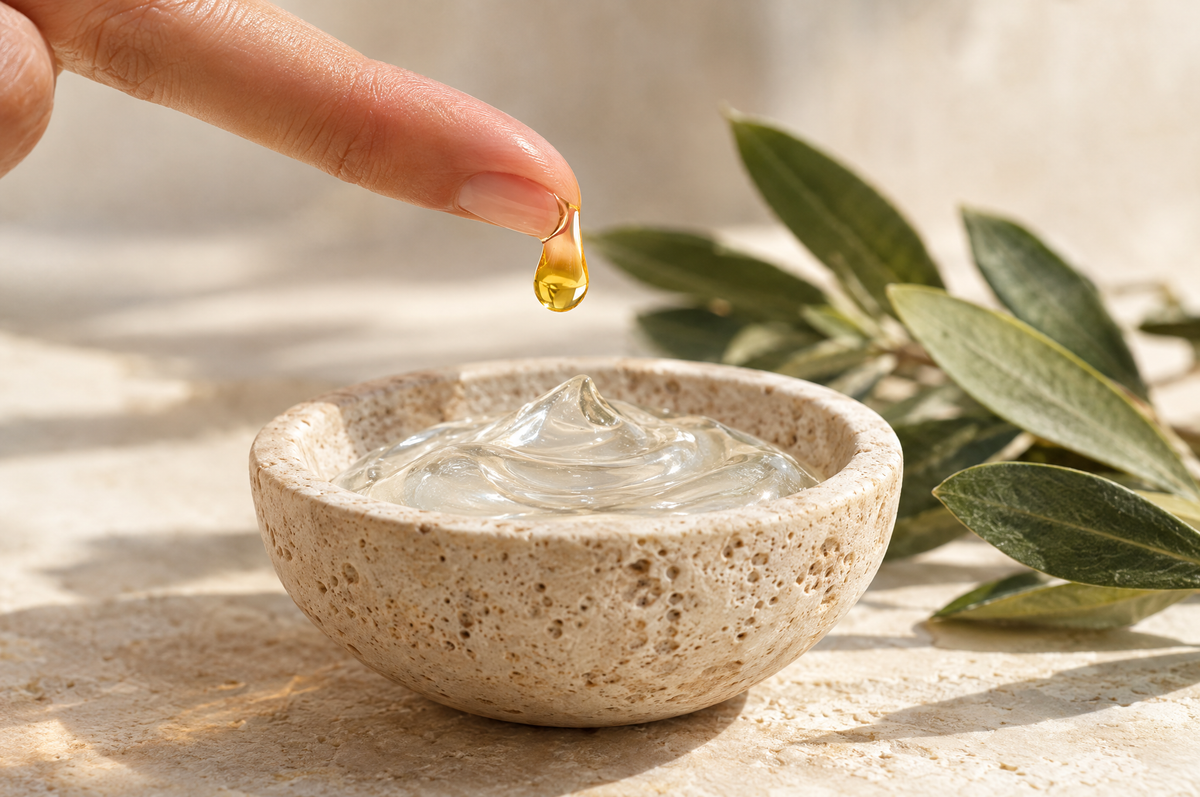
- Use one drop, not three. Warm one drop of argan oil between your fingertips and press it over the cheeks and any drier areas. Go lighter on the T-zone, or skip it there altogether.
- Start every other night. Do this three nights a week for two weeks, then increase if your skin is happy.
- Keep mornings oil-free if you prefer a matte finish, and finish with sunscreen.
- Track it. Give it about four weeks and note any change in shine, comfort and breakouts.
If you'd rather keep things to one step, mix a single drop into your gel moisturizer instead. Our guide to layering argan oil with moisturizer has routines for every skin type.
Choose a pure, cosmetic-grade oil
For oily skin especially, the oil itself matters. Blends that call themselves "argan" often include silicones, fragrance or other oils that change how they feel on the skin. Look for one ingredient, Argania spinosa kernel oil, and an unroasted, cold-pressed cosmetic oil. That is all that's in our 100% organic argan oil; you can read more on what "100% pure" should really mean.
Signs argan oil isn't right for your skin
Individual variation is real. Some oily skin types love a drop of argan; others simply don't. Stop using it if you notice:
- New small, flesh-colored bumps or more blackheads after two to four weeks
- More inflamed breakouts in the areas where you applied it
- Shine that lasts noticeably longer through the day
- Redness, itching or stinging, which may point to irritation or, rarely, allergy
Be patient in both directions. A clogged pore takes a while to show up as a visible blackhead or bump, so a reaction to a new product may not appear for a couple of weeks, and any improvement in comfort or texture can take just as long. Change one thing at a time, so that if your skin does react, you know what caused it. If you started a new cleanser, a new serum and argan oil in the same week, you will have no idea which one to blame.
Our articles on whether argan oil clogs pores and argan oil for acne-prone skin go into the pore question in more depth. If you have persistent acne, a dermatologist can recommend treatments with much stronger evidence than any facial oil.6
Face oil for oily skin: how argan compares with the alternatives
If you are set on using a face oil, argan is one reasonable option among several. Here is an honest comparison of the most common choices for oily skin.
| Option | Feel | Why people choose it | What to know |
|---|---|---|---|
| Argan oil | Light, absorbs quickly | Balanced oleic and linoleic acid; rich in vitamin E | Pure-oil sebum data is lacking; start with one drop |
| Jojoba oil | Light, slightly waxy | A liquid wax often described as structurally similar to sebum7 | Technically a wax ester, not a true oil; also limited trial data |
| Oil-free gel moisturizer | Weightless | Dermatologist default for oily skin6 | Less occlusive; may not feel enough in winter |
| No added oil | — | Simplest option if your skin is comfortable | Perfectly fine; oil is optional, not essential |
For a closer look at the most popular alternative, read our comparison of argan oil vs. jojoba oil.
Oily skin doesn't need to be punished. It needs gentle cleansing, light moisture and patience while you find out what it likes.
Frequently asked questions
Does argan oil reduce sebum?
One small 2007 study found a cream containing argan oil, saw palmetto and sesame ingredients reduced sebum by about 20 percent over four weeks. There is no good evidence on pure argan oil alone, so it is best not to rely on it for oil control.
Will argan oil make my face greasy?
Not if you use very little. One drop pressed into the skin at night absorbs quickly for most people; using three or four drops on oily skin is what usually leaves a greasy finish.
Is argan oil or jojoba oil better for oily skin?
Neither has strong clinical evidence for oily skin. Jojoba is a wax that some people find lighter, while argan is richer in linoleic acid and vitamin E; patch testing both is the only way to know which your skin prefers.
Can I use argan oil in the morning if I have oily skin?
You can, but most people with oily skin prefer to use it at night only. If you do use it in the morning, keep it to one drop and finish with an oil-free sunscreen.
This article is for general information and isn't medical advice. If you have persistent acne or a skin condition, check with a dermatologist before adding a new product to your routine.
Sources
- Dobrev H. Clinical and instrumental study of the efficacy of a new sebum control cream. J Cosmet Dermatol. 2007;6(2):113–118. Link
- Serrafi A, et al. The importance of argan oil in medicine and cosmetology. Nutrients. 2024;16(20):3573. Link
- Gharby S, Charrouf Z. Argan oil: chemical composition, extraction process, and quality control. Front Nutr. 2021;8:804587. Link
- Lin TK, Zhong L, Santiago JL. Anti-inflammatory and skin barrier repair effects of topical application of some plant oils. Int J Mol Sci. 2017;19(1):70. Link
- Letawe C, Boone M, Piérard GE. Digital image analysis of the effect of topically applied linoleic acid on acne microcomedones. Clin Exp Dermatol. 1998;23(2):56–58. Link
- American Academy of Dermatology. How to control oily skin. Link
- Gad HA, Roberts A, Hamzi SH, et al. Jojoba oil: an updated comprehensive review on chemistry, pharmaceutical uses, and toxicity. Polymers (Basel). 2021;13(11):1711. Link