Moisturizer for Itchy Skin: Where Argan Oil Fits and When to See a Doctor

The best moisturizer for itchy skin is usually the plainest one you can find: fragrance-free, rich enough to stay put, and applied to damp skin right after a short, lukewarm shower. When dry skin is behind the itch, which it very often is, a few drops of pure argan oil make a good sealing layer on top. When the itch comes with a rash, keeps you awake, or covers your whole body without obvious dryness, no moisturizer is the answer and a doctor is.
The short answer
For itch caused by dry skin, choose a fragrance-free cream or ointment and apply it within a few minutes of a short, lukewarm shower, while skin is still damp. Pure argan oil can be the final sealing layer, especially on the body. Itch that persists, spreads or comes with a rash needs a doctor.
Why is my skin so itchy? Start with the most common cause
Dry skin is the usual suspect. The American Academy of Dermatology (AAD) puts it plainly: extremely dry skin can be intensely itchy, and by around 65 our skin is thinner and holds less moisture, which makes the problem more common with age.1 Dermatologists call it xerosis. In a review of itch in older adults, age-related xerosis was the most common cause of chronic itch, seen in more than half of older people, and it typically shows up as itchy, dry, cracked or flaking skin on the arms, legs and trunk.4
You don't have to be 65 for it to happen. Long hot showers, harsh soaps, heated indoor air and cold wind all strip water and lipids from the outer layer of skin. Once that layer is compromised, skin turns rough, tight and itchy. Then comes the itch-scratch cycle: scratching feels good for a moment, roughens the skin further, and leaves it itchier than before. Dermatologists' first instruction is simply to try not to scratch,1 and the NHS suggests patting or tapping the spot, or holding a cool, damp towel on it, instead.2
If your itch is seasonal and worst on your shins, forearms and back, dryness is a likely culprit. Our guide to cold-weather skin covers the winter side of the story.
What to look for in a moisturizer for itchy skin
The AAD's advice for dry skin is specific. Ointments and creams add more moisture and work better than lotions. Helpful ingredients include glycerin, petrolatum, shea butter and lanolin. Choose products labeled fragrance-free rather than "unscented," which can contain masking fragrance, and skip anything with alcohol, added fragrance or retinoids while your skin is irritated.3 The NHS gives the same message in fewer words: use an unperfumed moisturizer, and use it regularly.2
Fragrance matters more than people expect. It is one of the substances the AAD lists as a cause of allergic, itchy rashes,1 so a lovely-smelling body lotion can quietly keep an itch going. "Natural" doesn't solve that: essential oils are fragrance too.
Where argan oil fits
An oil is not a complete moisturizer on its own. It contains no water; its job is to soften and to slow the water already in your skin from evaporating. That is exactly why it works best as the last step on damp skin, or over a fragrance-free cream when your skin is very dry. (Our article on argan oil for dry skin explains the humectant-plus-oil logic in more detail.)
The research on argan oil itself is modest but encouraging. In a 60-day study of 60 postmenopausal women, those who applied cosmetic argan oil to one forearm had less water loss through the skin and higher water content in the outer skin layer.6 A review of plant oils describes the same pattern, with argan oil reported to improve hydration partly by supporting barrier function.7 Two honest caveats: the study measured hydration, not itch, and it was small and in one specific group. Not every plant oil behaves alike, either. The same review notes that olive oil applied to adults' forearms actually increased water loss.7
If you'd like to try it, look for a single-ingredient oil. Ours is 100% organic, cold-pressed argan oil with no fragrance, dyes or other additives, which lines up with the fragrance-free advice above.
Itchy dry skin relief: the soak-and-seal routine
This is the habit that does most of the work. Moisturizer applied to dry skin hours after a shower does far less than the same product applied to damp skin straight away.
- Keep it short and lukewarm. Five to ten minutes in warm, not hot, water.2,3
- Cleanse only where you need to. Use a gentle, fragrance-free cleanser on the areas that need it. Mild, low-pH cleansers are recommended for dry, itchy skin in older adults.3,4
- Pat, don't rub. Leave your skin slightly damp.3
- Moisturize within about three minutes. The AAD's bathing guidance for children with eczema uses a three-minute window, and the same idea applies to anyone with dry skin: moisturize while the skin is still damp.3,5
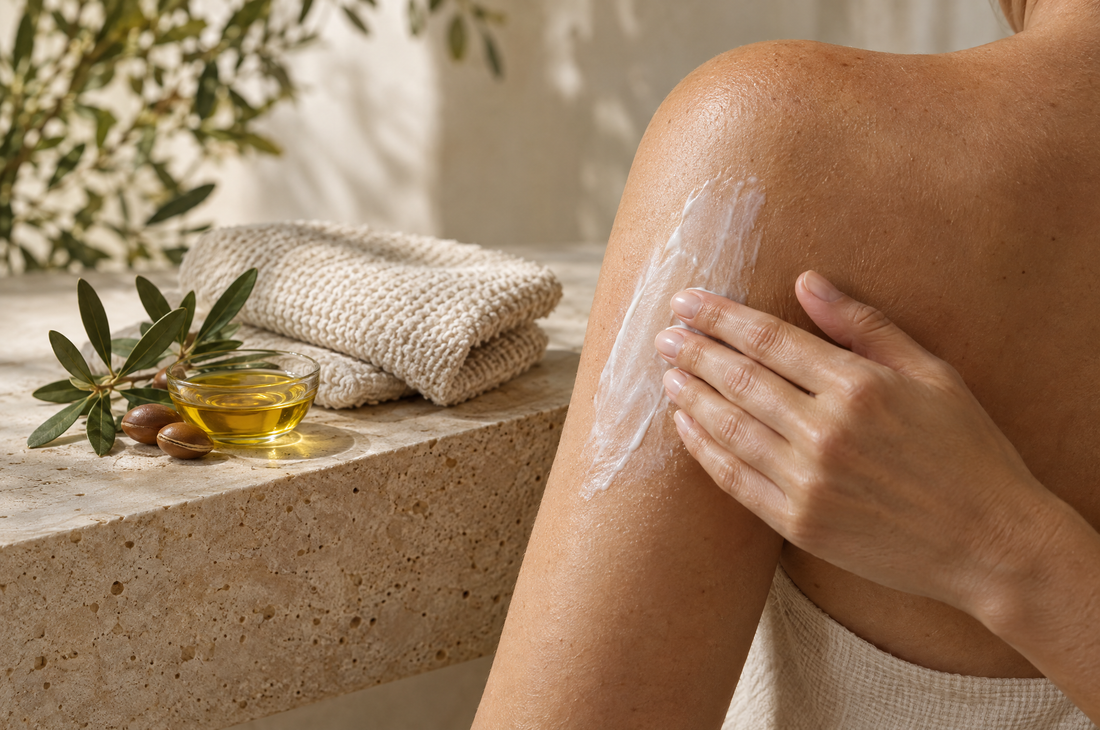
- Seal with oil. Press 5 to 6 drops of argan oil into each large area, such as both shins or your back and shoulders, over your cream or on its own where skin is only mildly dry. Our argan body oil guide maps out how much to use from neck to feet.
- Top up during the day. The AAD suggests moisturizing several times a day when skin is dry, especially hands after washing.3
- Humidify the bedroom. The AAD recommends running one in the bedroom while you sleep, and cleaning it regularly.3
Natural remedies for itchy skin worth trying
A few simple measures have solid backing and cost almost nothing:
- Cool compresses. A cool, damp cloth calms an itchy patch without the damage of scratching.2
- Colloidal oatmeal. Moisturizing with colloidal oatmeal products has been shown to reduce itch in dry skin, and oatmeal baths are a reasonable option.4
- Softer fabrics. Loose cotton or silk, sensitive-skin laundry detergent, and less wool or tight synthetic clothing against the skin.2,3
- Shorter nails and gloves at night if you scratch in your sleep.
Be wary of home remedies that add fragrance or acids to skin that is already raw, such as undiluted essential oils, vinegar or lemon. And patch test anything new, including argan oil. Allergy to it is uncommon, but argan is a kernel oil, and our guide to argan oil allergies and patch testing covers who should be careful.
When itch means something else
Moisturizer fixes dryness. If the itch outlasts the dryness, it was never only about dryness.
Itch is a symptom, not a diagnosis. The AAD lists internal diseases that can cause it, including kidney disease, liver disease, an overactive thyroid, diabetes, HIV and some blood diseases and lymphomas, along with medication side effects, nerve problems and insects such as bedbugs, lice and mites.1 The NHS adds fungal infections, scabies, eczema, psoriasis, pregnancy and menopause to the list.2 In older adults especially, kidney, liver and blood disorders and medications are worth ruling out when itch becomes chronic.4
See a doctor or dermatologist if your itch:2
- affects your sleep or daily life, or is severe
- doesn't get better with self-care or keeps coming back
- covers your whole body
- comes with a new rash, lump or swelling
- starts during pregnancy, since it can occasionally signal a liver condition
Red, rough patches that flare and fade, especially in skin creases, may be eczema rather than simple dryness. Our article on argan oil and eczema explains what dermatologists recommend and where an oil does and doesn't belong. Until you know what a rash is, keep it simple and skip new products on it.
Frequently asked questions
What is the best moisturizer for itchy skin?
For itch caused by dry skin, dermatologists favor fragrance-free creams or ointments over thin lotions, applied to damp skin after bathing. Look for ingredients such as glycerin, petrolatum or shea butter, and skip products with fragrance or alcohol.
Is argan oil good for itchy skin?
It can help when dryness is the cause. Pure argan oil is fragrance-free and, in a small study, improved skin hydration and reduced water loss. It works best pressed onto damp skin or over a fragrance-free cream, and it is not a treatment for rashes or skin conditions.
Should I moisturize before or after a shower if my skin itches?
After. Keep the shower short and lukewarm, pat dry, and apply moisturizer while your skin is still slightly damp, ideally within a few minutes. That traps the water your skin just absorbed.
When should I worry about itchy skin?
See a doctor if the itch is all over your body, keeps you from sleeping or working, doesn't improve with moisturizing, comes with a new rash or lump, or starts during pregnancy. Itch can be a sign of liver, kidney or thyroid problems, among other causes.
Can I put argan oil on an itchy rash?
It's better not to until you know what the rash is. Rashes can come from allergies, infections, insects or skin conditions that need specific treatment, and putting any product on inflamed skin can make it harder to tell what's going on.
Sources
- American Academy of Dermatology. 10 reasons your skin itches uncontrollably and how to get relief. Link
- NHS. Itchy skin. National Health Service (UK). Link
- American Academy of Dermatology. Dermatologists' top tips for relieving dry skin. Link
- Fourzali KM, Yosipovitch G. Management of itch in the elderly: a review. Dermatol Ther (Heidelb). 2019;9(4):639–653. Link
- American Academy of Dermatology. Eczema resource center: how to bathe (a child with eczema). Link
- Boucetta KQ, Charrouf Z, Derouiche A, Rahali Y, Bensouda Y. Skin hydration in postmenopausal women: argan oil benefit with oral and/or topical use. Prz Menopauzalny. 2014;13(5):280–288. Link
- Lin TK, Zhong L, Santiago JL. Anti-inflammatory and skin barrier repair effects of topical application of some plant oils. Int J Mol Sci. 2017;19(1):70. Link
This article is for general information and isn't medical advice. If your itch is severe, widespread, comes with a rash, or starts during pregnancy, check with your doctor or dermatologist.