Argan Oil for Winter Skin: A Cold-Weather Routine
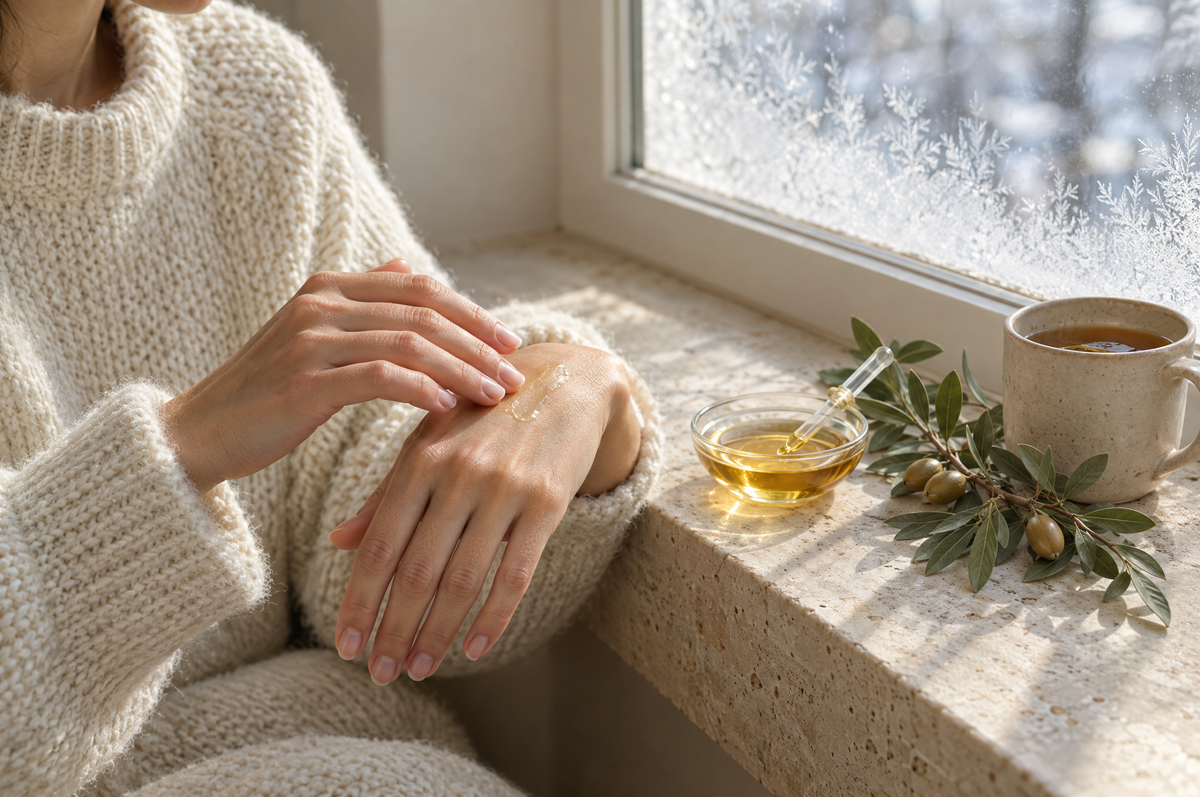
Using argan oil in winter makes good sense: cold air outdoors and heated air indoors both pull water out of your skin, and a few drops of oil pressed over your moisturizer help slow that loss. Think of it as a sealing step rather than a complete moisturizer. Pair it with shorter, cooler showers, a humidifier, lip balm and gloves, and winter skin becomes far easier to manage.
The short answer
Yes, argan oil is useful in winter. Apply your usual moisturizer to damp skin, then press two or three drops of argan oil on top to help slow water loss. For very dry or cracked areas, follow with a thicker ointment. Keep showers short and warm and run a humidifier while you sleep.
Why skin gets so dry in winter
Winter dryness isn't in your imagination. A review of research on climate and skin concluded that low humidity and low temperatures reduce the skin barrier's function and make skin more vulnerable to mechanical stress, and that skin also becomes more reactive to irritants.1 The same review notes that cold, dry weather is linked to more flares in people with atopic dermatitis.1
Indoors is often no better. The American Academy of Dermatology points out that cold outdoor air, heated indoor air and dry air in general can all weaken the skin's protective barrier, leading to dryness and itch.2 Add long hot showers, which feel wonderful in January, and you have a season built to leave skin tight, flaky and rough.
How argan oil helps in cold weather
Moisturizing works in three ways: humectants draw water into the skin, emollients soften the surface, and occlusives form a thin layer that slows evaporation. Plant oils mainly act as emollients with a light occlusive effect. A review of topical plant oils describes how they can form a protective layer that helps skin retain moisture and lowers transepidermal water loss.3
Argan oil has some direct human evidence, though it is limited. In a study of 60 postmenopausal women, applying argan oil nightly to one forearm for 60 days lowered water loss and raised the skin's water content.4 The study was small and participants were also consuming argan or olive oil daily, so the topical effect can't be fully separated from diet. Still, it fits what many people find each winter: skin feels more comfortable when oil goes on after washing. Our broader look at argan oil for skin grades the rest of the evidence.
It helps to be honest about strength, too. The AAD notes that thick ointments such as white petroleum jelly lock in moisture better than waxes or oils.5 So in deep winter, argan oil is best as one layer in a routine, not the only one. Interestingly, the AAD's own winter guide lists oils and balms among richer face moisturizers that work better in cold, dry weather.2
A winter skin care routine with argan oil
This routine keeps things simple. If dryness is your main concern year-round, our full guide to argan oil for dry skin goes deeper.
- Keep showers short and warm. The AAD recommends five to ten minutes in warm rather than hot water, with the bathroom door closed to keep the air humid.6
- Cleanse gently. Use a creamy, fragrance-free cleanser and skip products with alcohol.2
- Pat, don't rub. Leave skin slightly damp.
- Moisturize right away. Apply a cream to damp skin within minutes of bathing.6 Creams and ointments generally do more in winter than thin lotions.6
- Seal with argan oil. Press two or three drops over your face, and five or six over each limb or dry area. If you're unsure about the order, our guide to using argan oil as a moisturizer explains how to layer it.
- Use sunscreen in the morning. Winter sun still counts. The AAD suggests a creamier sunscreen or layering moisturizer underneath, with broad-spectrum protection of SPF 30 or more.2
- Run a humidifier at night. A portable humidifier in the bedroom helps, as long as you clean it regularly.6
Ease off strong actives
The AAD suggests using glycolic acid, salicylic acid and retinol products less often or at lower strengths in winter, since they can add to dryness.2 If you use a retinoid, see our guide to using argan oil with retinol for how to buffer it without undoing its work.
Face oil in cold weather: morning or night?
Both, in different amounts. In the morning, one or two drops over moisturizer is enough; let it settle for a few minutes before sunscreen so nothing pills. At night, use two or three drops as your last step. If you spend time outdoors in the cold, a drop pressed over your cheeks and nose before you go out can make windburned skin feel less raw, though it is no substitute for covering up with a scarf.
A pure oil is the easiest to fit into this routine. Our organic argan oil has a single ingredient, cold-pressed with nothing added, so it layers over any moisturizer without adding fragrance to already-stressed winter skin.
Argan oil for chapped skin in winter: hands, lips and hair
Hands
Hands take the worst of winter: cold air outside, hot water and soap inside. The AAD recommends a fragrance-free, dye-free hand cream or ointment applied to damp skin, especially in cold weather, and suggests tubes over pump bottles.7 Wear gloves outdoors in cold, dry weather and for washing dishes.6 Argan oil fits as a finishing step: one drop massaged over knuckles and cuticles after your cream.
For very dry hands, the AAD suggests an overnight routine: soak hands in warm water, apply a cream or ointment, then wear cotton gloves to bed.7 Adding a couple of drops of argan oil under the cream is an easy upgrade.
Lips
Lips dry out fast in winter. The AAD recommends a gentle lip balm several times a day and before bed, a thick ointment such as white petroleum jelly for very cracked lips, and a lip balm with SPF 30 or higher outdoors, even in winter.5 Resist licking your lips; saliva evaporates and leaves them drier.5 A drop of argan oil pressed into the lips before a layer of petroleum jelly makes a comfortable overnight step.
Hair
Dry indoor air and wool hats leave many people with static and brittle ends. A single drop of argan oil smoothed through dry ends helps tame flyaways without weighing hair down. Our guide on how to use argan oil for hair covers amounts for different lengths and textures.
In winter, the order matters: water first, then cream, then oil, and something heavier wherever skin has cracked.
When winter dryness needs a dermatologist
Most winter dryness responds to these habits within a couple of weeks. See a board-certified dermatologist if dryness continues despite good care, because it can be linked to conditions such as atopic dermatitis or psoriasis.6 Also get checked if skin cracks and bleeds, itches enough to disturb your sleep, or reacts to a product with burning or stinging. Don't put oil on broken, weeping or infected skin.
Frequently asked questions
Is argan oil good for your face in winter?
Yes, for most people. Press two or three drops over your moisturizer at night and one or two in the morning before sunscreen to help slow water loss in dry air.
Should I use oil or cream in winter?
Ideally both. A cream adds water and humectants, and a few drops of oil on top help hold that moisture in. Very cracked areas may need a thick ointment as well.
Can argan oil help with chapped skin in winter?
It can make chapped skin feel softer and more comfortable when layered with a cream or petroleum jelly. If skin is cracked and bleeding, see a dermatologist.
Can I put argan oil on before going out in the cold?
Yes. A drop pressed over your cheeks and nose after moisturizer can help exposed skin feel less raw. Keep wearing sunscreen and cover up with a scarf.
Sources
- Engebretsen KA, Johansen JD, Kezic S, Linneberg A, Thyssen JP. The effect of environmental humidity and temperature on skin barrier function and dermatitis. J Eur Acad Dermatol Venereol. 2016;30(2):223–249. Link
- American Academy of Dermatology. Your winter skin survival kit. Link
- Lin TK, Zhong L, Santiago JL. Anti-inflammatory and skin barrier repair effects of topical application of some plant oils. Int J Mol Sci. 2017;19(1):70. Link
- Boucetta KQ, Charrouf Z, Derouiche A, Rahali Y, Bensouda Y. Skin hydration in postmenopausal women: argan oil benefit with oral and/or topical use. Prz Menopauzalny. 2014;13(5):280–288. Link
- American Academy of Dermatology. 7 dermatologist tips for healing dry, chapped lips. Link
- American Academy of Dermatology. Dermatologists' top tips for relieving dry skin. Link
- American Academy of Dermatology. 4 skin care tips for your hands. Link