Can You Grow an Argan Tree Outside Morocco?
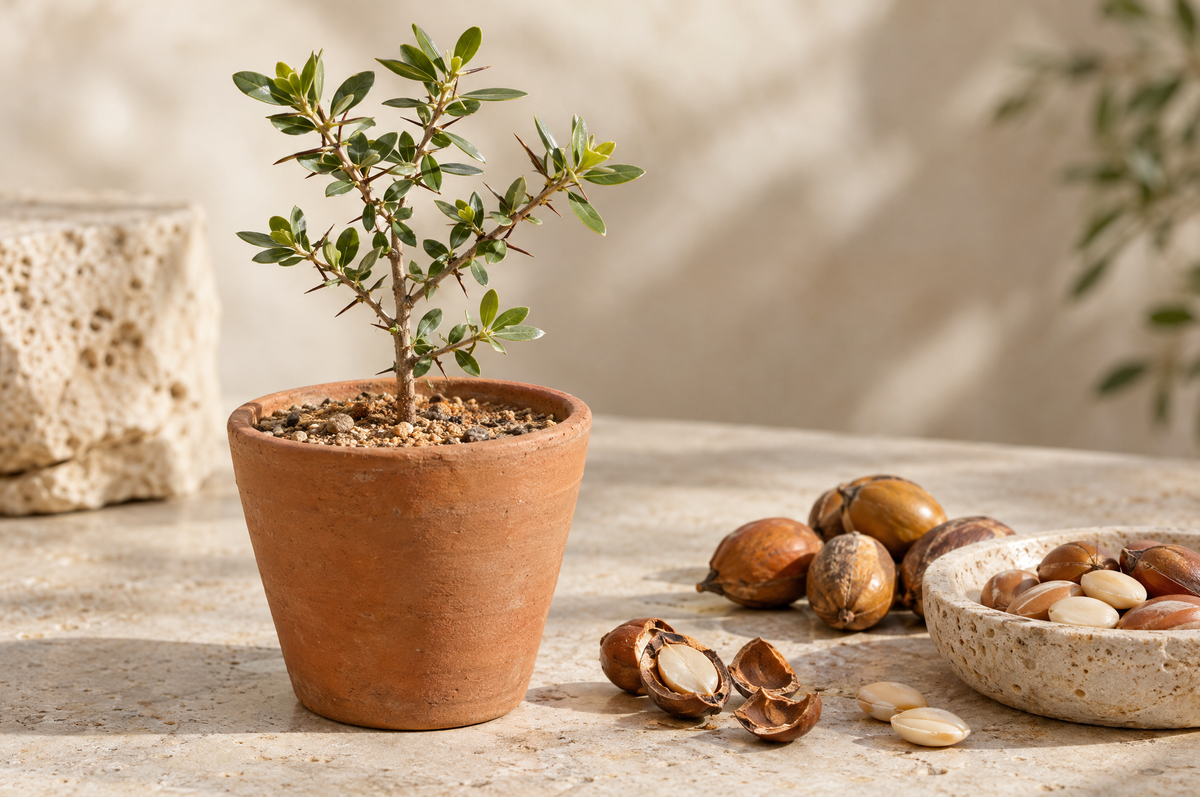
Yes, you can grow an argan tree outside Morocco, as long as you can give it heat, sun, sharp drainage and protection from frost. Researchers have grown argan in Israel, Algeria, Mexico and elsewhere. What you realistically cannot do at home is grow your own argan oil: the tree is slow, fruits irregularly, and a single tree yields only a small amount of oil.
The short answer
The argan tree (Argania spinosa) is a slow-growing, thorny, drought-adapted tree native to southwestern Morocco. It tolerates intense heat but not cold, so it grows outdoors only in warm, dry, near frost-free climates. It can be raised from seed, but expect slow growth, years before fruit, and very little oil per tree.
Argan tree facts: what kind of tree is it?
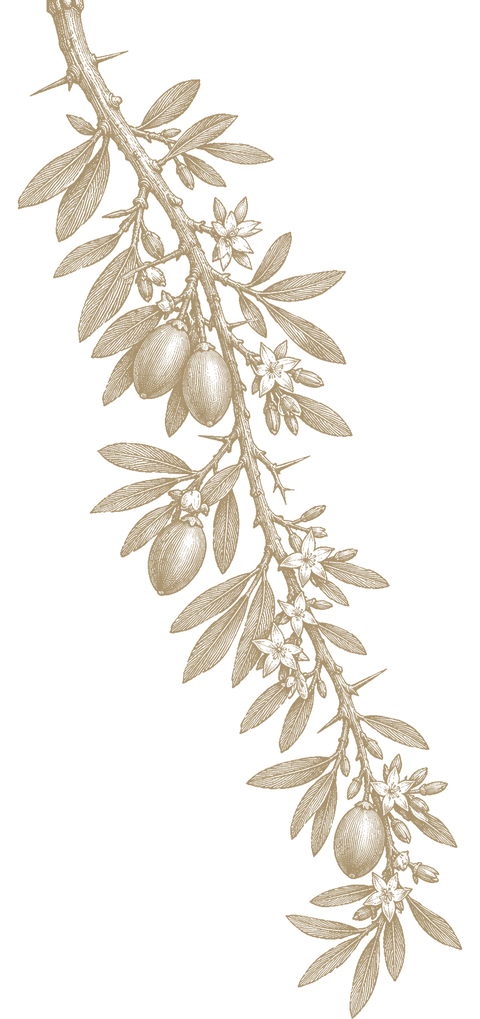
The argan is the only member of the Sapotaceae plant family that lives outside the tropics1. It is native mainly to southwestern Morocco, with populations reaching the Tindouf area of Algeria, and it is slow-growing, thorny and well adapted to drylands1. The United Nations notes that it can reach about 10 meters, live for up to 200 years, and withstand temperatures as high as 50°C3.
The trees are built for hardship. A World Agroforestry species profile describes them clinging to rocky slopes on poor soils, needing very little rain, and able to drop into a dormant state during drought, which is why they do not fruit every year2. The fruit is a small, olive-like drupe around an extremely hard nut, and inside sit one to three oil-rich kernels4. Those kernels are the source of argan oil, which is why people sometimes plant the tree hoping for a harvest. For the bigger picture of the tree's home range, see where argan oil comes from.
| Trait | What to expect |
|---|---|
| Climate | Hot, dry, sunny; mean annual temperature around 18 to 20°C in its range2 |
| Rainfall | About 100 to 500 mm a year2 |
| Cold tolerance | Poor; described as unable to withstand cold2 |
| Heat tolerance | Excellent, up to about 50°C3 |
| Soil | Poor, stony, calcareous or sandy soils; not waterlogged ground2 |
| First fruit | Around 5 to 6 years, with peak production around 60 years2 |
| Lifespan | Commonly cited as about 200 years or more2,3 |
Where has the argan tree been grown outside Morocco?
Quite a few places, mostly experimentally. A review by Moroccan argan researchers lists the tree as introduced as a cultivated species in the deserts of South Africa, Spain, Kuwait, Mexico, Tunisia and Israel, among other countries1.
Israel
Israel has the longest-running effort. Researchers in the Arava valley have grown argan since 1982, working on selection, hybridization and mechanizing oil extraction; the institute itself says argan has not yet been successfully domesticated as a production crop5. An early study in the Negev desert planted seedlings at two contrasting sites, one hot with brackish water and one with cold winters. By their seventh year the trees averaged about 4 to 4.6 meters tall, and the best trees produced 20 to 25 kg of dried fruit, but the orchard average was three to four times lower because trees varied so much4.
Algeria
Algeria has argan populations of its own and has also planted trees outside their natural range. In one 2026 study, seedlings raised from seed in 2008 and 2009 were planted in the Saharan province of Adrar in 2010 and drip irrigated; by 14 years old they were producing roughly 10 kg of fruit a year, and their oil met Moroccan extra-virgin quality criteria6. The authors are careful to call this preliminary evidence, based on a single planted site and one season's fruit6.
The pattern across these trials is consistent: argan can establish and fruit outside Morocco when it gets heat and some water, but it is not a quick or predictable crop.
Can you grow an argan tree at home?
Where frost is rare and summers are hot and dry, an argan tree can be planted in the ground in full sun and very free-draining soil. Think of the conditions that suit olives and other dryland trees, with even less tolerance for winter cold. In cooler climates, the realistic option is a large container that can come indoors, or into a frost-free greenhouse, before nights turn cold.
A few practical notes, drawn from the tree's biology rather than from formal trials:
- Drainage matters more than feeding. The species is adapted to poor soils and is not suited to waterlogged ground2. A gritty, fast-draining mix and infrequent deep watering mimic its natural conditions.
- Light. Give it as much direct sun as possible, indoors and out.
- Patience. Argan grows slowly1,8, and even well-tended young trees put on growth gradually.
- Thorns. It is a genuinely spiny tree. Site it away from paths and wear gloves when pruning.
How to grow an argan tree from seed
Argan seed is notoriously reluctant to sprout. A recent nursery study describes germination as low and irregular, mainly because the seed sits inside a hard, impermeable coat7. In that trial, which is a preprint and not yet peer reviewed, mechanically scarified seeds soaked in plain tap water for three hours reached 100 percent germination, compared with much lower rates after short soaks or plant-hormone soaks, and a well-aerated growing medium helped seedlings emerge7. Other researchers are testing beneficial soil bacteria to improve germination8, which tells you how much of a bottleneck it is.
A simple home approach based on that work:
- Start with fresh seed from a reputable supplier. Old seed may be dead.
- Scarify. Carefully file or nick the hard outer shell, or crack it, so water can reach the kernel. Protect your fingers; the shell is very hard.
- Soak the scarified seed in room-temperature water for a few hours.
- Sow about 1 to 2 cm deep in a deep pot of free-draining seed mix, since argan roots grow deep in search of water2.
- Keep warm and lightly moist, not wet, in a bright spot. Be patient, and expect some seeds not to sprout.
- Pot on gently into deeper containers, disturbing the roots as little as possible, and harden the seedling off before it goes outdoors in summer.
If you are shopping for an "argan tree for sale," you will mostly find seeds and young seedlings from specialty and rare-plant nurseries. Check your country's rules on importing seeds and live plants before ordering from abroad.
Will a home-grown argan tree give you oil?
Realistically, no. In the Negev trial, kernels made up only about 6.5 percent of the fruit's weight, and those kernels were about 55 percent oil4. That works out to roughly 3 to 4 percent of the dried fruit's weight as oil, before any losses in cracking and pressing. The UN estimate is similar: about 150 kg of fruit for 3 liters of oil3. Even an exceptional young tree producing 20 to 25 kg of fruit would give at most about a liter in theory, and less in practice, and that is before you crack hundreds of stone-hard nuts by hand.
Grow an argan tree for its silhouette and its story. Buy the oil.
If you want to use argan oil rather than grow it, the label matters more than the tree. Look for 100% pure argan oil with argan kernel oil as the only ingredient, and, if organic matters to you, genuine USDA organic argan oil with the certifier named. Our organic argan oil is cold-pressed from unroasted kernels of hand-harvested Moroccan fruit, and a single 60 mL bottle covers a lot of the ways to use argan oil, from dry ends to cuticles.
Why argan trees matter in Morocco
Back home, the argan tree is under pressure. Researchers describe natural regeneration as practically absent across much of its main range, and see cultivation as both a conservation tool and an economic opportunity8. Goats are part of that story; our article on argan trees and goats explains why. Planting one in your garden will not change that, but it is a good reason to buy argan oil from sellers who can tell you where it comes from.
Frequently asked questions
Can you grow an argan tree in the US?
Outdoors, only in warm, dry, essentially frost-free areas, since argan does not tolerate cold. Elsewhere it can be kept in a large pot and brought indoors for winter, as an ornamental rather than an oil crop.
How long does an argan tree take to produce fruit?
A widely used tree reference says argan starts fruiting at about 5 to 6 years old, with peak production around 60. Expect small, irregular crops for years, and none at all in some drought years.
How do you grow an argan tree from seed?
Use fresh seed from a reliable source, crack or file the very hard shell, soak the seed in water for a few hours, and sow it in a free-draining mix kept warm and lightly moist. Germination is often slow and patchy.
Where can you buy an argan tree?
Argan seeds and seedlings are sold by some specialty nurseries and rare-plant sellers. Check your country's plant and seed import rules before ordering from abroad.
How much argan oil does one tree make?
Very little. The UN puts it at about 150 kg of fruit for 3 liters of oil, and even the best young trees in an Israeli trial produced 20 to 25 kg of dried fruit a year.
Sources
- Gharby S, Charrouf Z. Argan oil: chemical composition, extraction process, and quality control. Front Nutr. 2022;8:804587. Link
- Orwa C, Mutua A, Kindt R, Jamnadass R, Simons A. Agroforestree Database: a tree reference and selection guide, version 4.0. Argania spinosa species profile. World Agroforestry Centre; 2009. Link
- United Nations. International Day of Argania, 10 May (General Assembly resolution A/RES/75/262, 2021). Link
- Nerd A, Eteshola E, Borowy N, Mizrahi Y. Growth and oil production of argan in the Negev desert of Israel. 1994. Abstract record, Fedepalma repository. Link
- Arava Institute for Environmental Studies. Developing argan as a commercial crop in the Arava valley. Link
- Ould Safi M, Di Bella G, Nava V, et al. Comparative study of the physicochemical properties and nutritional quality of argan oil from endemic and planted Argania spinosa (L.) fruit trees in south-west Algeria. Foods. 2026;15(14):2557. Link
- Eed AM, Al-hajj AH. Combined effects of mechanical scarification, hormonal treatments, and hydration optimization on germination and early seedling growth of Argania spinosa under plastic tunnel conditions. Research Square preprint. 2026. Not peer reviewed. Link
- Chabbi N, Chafiki S, Telmoudi M, et al. Plant-growth-promoting rhizobacteria improve seeds germination and growth of Argania spinosa. Plants (Basel). 2024;13(15):2025. Link