Argan Oil for Cracked Heels and Dry Feet
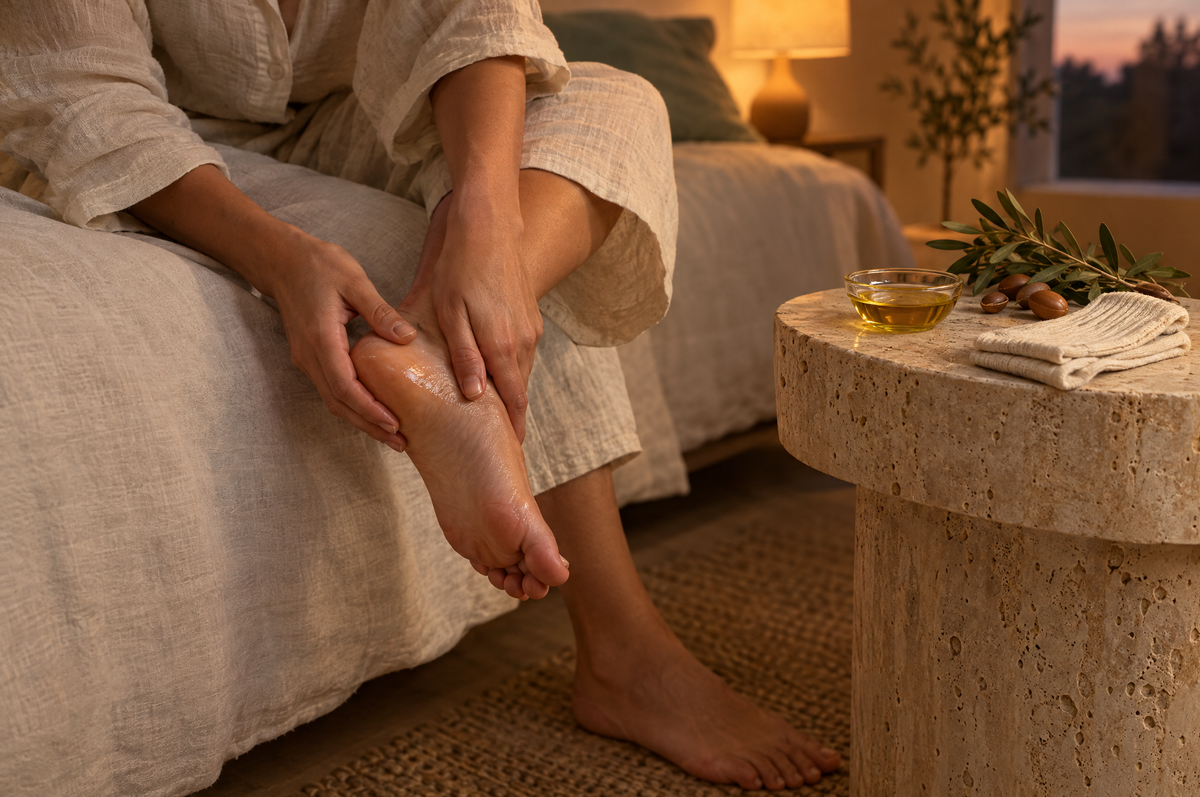
Argan oil can help cracked heels, but it works best as the last step, not the whole fix. Heel skin is thick and builds up hard callus that oil can't get through on its own. Soften the rough layer first with a urea or exfoliating foot cream, then seal it with a few drops of argan oil, ideally under cotton socks overnight.
The short answer
Argan oil is a helpful finishing step for cracked heels and dry feet, not a stand-alone fix. Dermatologists recommend a heel cream with 10–25% urea, alpha hydroxy acid or salicylic acid. Apply that first, then massage in a few drops of argan oil and wear cotton socks overnight to hold the moisture in.
Why heels crack in the first place
Most cracked heels start with plain dryness. The skin around the rim of the heel often thickens into a yellowish or brownish callus, and that thick, dry layer is less elastic than normal skin. Every time you stand, the fat pad under your heel spreads sideways, and the stiff skin around it splits.1 Small surface cracks can deepen over time, become painful, and in some cases let infection in.1
The skin on the soles is built differently from skin elsewhere. It is very thick, yet normally flexible enough to cope with the pressure and friction of walking, helped by moisture from sweat glands.2 When it loses moisture and lipids, which becomes more common with age, it gets stiff and prone to callus and fissures.2
Common triggers
- Long periods of standing, especially on hard floors
- Going barefoot, or wearing sandals and open-backed shoes
- Extra body weight, which adds pressure to the heel
- Dry skin in general, and conditions such as eczema, psoriasis, an underactive thyroid or diabetes1
Can argan oil help cracked heels? What the evidence says
To be clear up front: no study has tested argan oil on cracked heels or on the soles of the feet. What we do have is evidence that argan oil helps skin hold on to water. In a 60-day study of 60 postmenopausal women, nightly argan oil on the forearm lowered water loss through the skin and raised the water content of its outer layer.3 That is a different body site with much thinner skin, so it supports argan oil as a good moisturizing oil in general, not as a heel remedy.
Its makeup explains why it feels at home in a foot routine. Argan oil is roughly 43–49% oleic acid and 29–37% linoleic acid, with vitamin E mostly in the form of gamma-tocopherol.4 Linoleic acid plays a direct part in keeping the skin's water barrier intact, and plant oils can leave a thin protective film that slows water loss.5 Not every oil behaves the same way, though: the same review notes that olive oil actually increased water loss in some studies.5
So the honest picture is this. Argan oil is a pleasant, lightweight emollient that softens the surface and helps seal in moisture. It does not dissolve built-up callus. That job belongs to ingredients that loosen hardened skin, and that is where a heel routine should begin. If your dry skin goes well beyond your feet, our guide to argan oil for dry skin covers face and body routines.
Start with the right heel cream: urea, acids and gentle filing
The American Academy of Dermatology (AAD) recommends a moisturizing cream with 10–25% urea, alpha hydroxy acid or salicylic acid for dry, cracked heels, applied within five minutes of bathing while the skin is still damp, and again whenever your heels feel dry.6 A New Zealand clinical review reaches the same conclusion: products that both draw in water and loosen thickened skin work best. It notes that 10% urea is the everyday choice, with stronger 25% products for severe fissures, and that a 25% urea cream improved pain, dryness and scaling after four weeks in people with heel fissures.1
Urea is a natural part of healthy skin. It is thought to loosen keratin, the tough protein in callus, and expose more places for water to bind.2 In a small two-week pilot study of 26 people with diabetes and dry feet, a 10% urea foam improved dryness and flexibility scores significantly more than participants' usual moisturizers, though the change in callus was not statistically significant.2
What each step actually does
| Product | Main job | Where it fits |
|---|---|---|
| Urea cream (10–25%) | Draws in water and loosens thick, hard skin | First, on damp heels after washing |
| Salicylic acid or alpha hydroxy acid cream | Exfoliates and thins callus | An alternative to urea; may sting on open cracks |
| Pumice stone | Buffs away softened callus | Gently, after skin has been softened |
| Argan oil | Softens the surface and slows water loss | After the cream, before socks |
| Plain petroleum jelly | Heavy seal that blocks water loss | At bedtime for very cracked heels |
A few cautions. Urea and salicylic acid can sting if the crack has gone through to the deeper, raw layer of skin.1 File only skin that has already been softened, and never use a blade or razor on your own heels, because cuts can become infected.1
Argan oil foot care: an overnight routine for dry feet
This routine follows the dermatologist sequence of wash, hydrate, then seal, with argan oil as the seal.
- Keep the wash short. Limit showers or baths to 5–10 minutes, use a gentle fragrance-free cleanser, and pat your feet dry rather than rubbing.6
- Buff, lightly. Two or three times a week, run a pumice stone over the softened callus for a few strokes. Stop well before the skin feels tender, and skip any area with open cracks.
- Hydrate while damp. Within five minutes, rub a urea or exfoliating heel cream into the heels and any rough patches on the soles.
- Seal with argan oil. Warm five or six drops between your palms and massage them over the heels, soles and tops of the feet. Keep it out of the spaces between your toes, where trapped moisture can cause problems.7
- Put on cotton socks. Socks keep the oil on your skin instead of your sheets, the same trick dermatologists suggest with petroleum jelly at night.6
- Protect by day. Choose well-fitting, closed-heel shoes. The AAD advises avoiding flip-flops, slingbacks and worn-down shoes while heels are cracked.6
For a single-ingredient option, our 100% organic, cold-pressed argan oil contains nothing but argan kernel oil, with no added fragrance, which keeps things simple on skin that may already be irritated. The same bottle covers hands, cuticles and hair, and our list of ways to use argan oil shows how far a few drops go.
Argan oil or petroleum jelly?
If your heels are deeply cracked, plain petroleum jelly at bedtime is the AAD's first suggestion, and it is the heavier seal.6 Argan oil absorbs faster and feels lighter, which many people find easier to stick with every night. A sensible middle path: use petroleum jelly while the cracks are bad, then switch to argan oil once your heels are smoother and you want to keep them that way. You can also do both, oil first and a thin layer of jelly on the very rim of the heel.
Dry feet overnight: what results to expect
Feet often feel softer the morning after the first oil-and-socks night, because the outer layer is temporarily better hydrated. Real change in thick callus and cracks takes longer. In the clinical reports above, improvements were measured at two to four weeks of twice-daily use.2,1 Plan on a few weeks of consistency before judging the routine, and keep a lighter version going afterward. Cracks tend to return when the routine stops, especially in winter or in summer sandal season.
The rest of your skin benefits from the same habits. If you already use oil after a shower, your after-shower body oil ritual is an easy place to fold in foot care, since the skin is already damp and warm. For a broader look at what the research does and doesn't show about argan oil for skin, see our evidence guide.
Soften first, seal second. Oil is the finishing coat, not the sander.
When cracked heels need a doctor or podiatrist
For most people, cracked heels are a cosmetic nuisance. Sometimes they are more than that. See a board-certified dermatologist if your heels are severely cracked or don't improve with home care, because an underlying condition such as diabetes can be the cause.6 Deep fissures can become infected, and in people with diabetes who have nerve damage or poor circulation, a heel crack can turn into a foot ulcer.1
If you have diabetes
Diabetes can damage the nerves in your feet, so you may not feel a blister, a pebble in your shoe, or a crack that has started to bleed.7 The National Institute of Diabetes and Digestive and Kidney Diseases advises checking your feet every day, washing them in warm water without soaking, applying a thin layer of lotion, cream or petroleum jelly to the tops and bottoms, and never between the toes.7 It also advises contacting your provider promptly about any cut or blister that doesn't improve within a few days, or skin that turns red, warm or painful.7 Ask your doctor or podiatrist before filing callus or using strong urea or acid products, and let them look at any crack that bleeds.
Other warning signs
- Cracks that bleed, ooze, or hurt when you are not standing
- Redness, warmth or swelling spreading from a crack
- Thick, scaly, itchy or blistering skin elsewhere on the feet, which may point to a skin condition
Frequently asked questions
Is argan oil good for cracked heels?
It is a good finishing step. Use a heel cream with urea, alpha hydroxy acid or salicylic acid first to loosen hard skin, then seal with a few drops of argan oil and cotton socks overnight.
Should I put argan oil on my feet at night?
Yes, night is the best time. Apply it after washing and a heel cream, then wear cotton socks so the oil stays on your skin while you sleep.
How many drops of argan oil do I need for my feet?
Five or six drops is usually enough for both feet. Add one more drop to the rim of each heel if it is very rough.
Can I use argan oil on my feet if I have diabetes?
Many people with diabetes use moisturizers on their feet, but keep oil out from between the toes and check your feet daily. Ask your doctor or podiatrist before filing callus, and get any crack that bleeds or looks red checked promptly.
This article is for general information and isn't medical advice. If you have diabetes, poor circulation, numbness in your feet, or heel cracks that bleed or look infected, check with your doctor, podiatrist or dermatologist before trying something new.
Sources
- bpacnz. Cracked heels: stop them in their tracks. Best Practice Journal. 2014;(65):39–40. Link
- Baker N, Rayman G. Effects of a urea-based moisturiser on foot xerosis in people with diabetes. The Diabetic Foot Journal. 2008;11(4):179–182. Link
- Boucetta KQ, Charrouf Z, Derouiche A, Rahali Y, Bensouda Y. Skin hydration in postmenopausal women: argan oil benefit with oral and/or topical use. Prz Menopauzalny. 2014;13(5):280–288. Link
- Gharby S, Charrouf Z. Argan oil: chemical composition, extraction process, and quality control. Front Nutr. 2021;8:804587. Link
- Lin TK, Zhong L, Santiago JL. Anti-inflammatory and skin barrier repair effects of topical application of some plant oils. Int J Mol Sci. 2017;19(1):70. Link
- American Academy of Dermatology. How to care for dry, cracked heels. Link
- National Institute of Diabetes and Digestive and Kidney Diseases. Diabetes & foot problems. Link