Argan Oil for Dry Hands: A Routine That Actually Helps
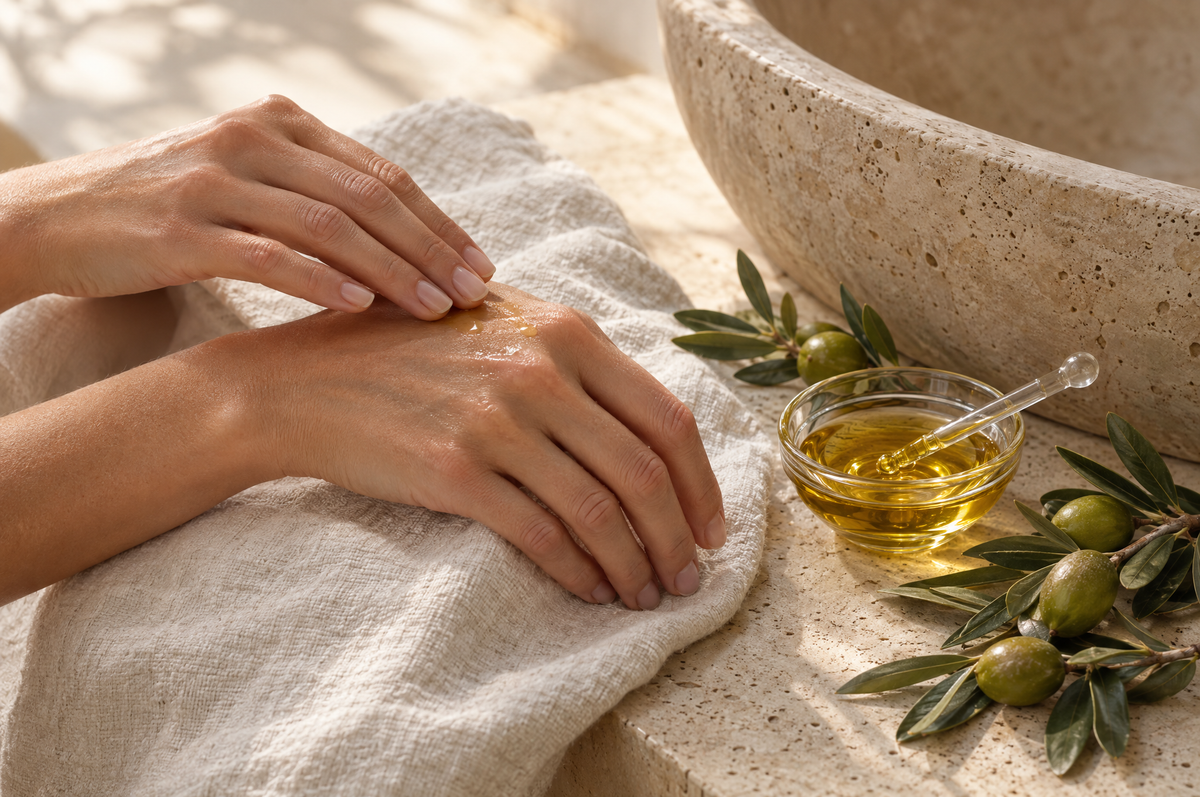
Argan oil can help dry hands feel softer, especially when it is massaged into knuckles, fingertips and cuticles, but it works best as a partner to hand cream rather than a replacement. The routine that helps most is simple: wash gently, apply cream to damp hands, seal with a drop of argan oil, and give your hands an occasional overnight treatment. Hands that are cracked, bleeding or painful need a dermatologist, not just a new oil.
The short answer
Argan oil softens dry hands and helps slow water loss, but it lacks the humectants in a good hand cream. After washing, pat hands until slightly damp, apply a fragrance-free cream, then massage one or two drops of argan oil into knuckles and cuticles. See a dermatologist if hands crack, bleed or stay painful.
Why frequent hand washing dries your skin
Hands get washed more than any other part of the body, and every wash removes some of the skin's natural oils. The American Academy of Dermatology notes that some soaps are more drying than others and that alcohol-based sanitizers can strip the skin's natural oils.12 Add cold weather, hot water and household cleaners, and the backs of the hands and the fingertips start to feel tight and rough.
That doesn't mean you should wash less. Hand washing removes germs that make people sick, and the AAD is clear that moisturizing afterward doesn't cancel out its benefits.12 The goal is to put back what washing takes away, every time.
Can argan oil replace hand cream?
For most dry hands, no, and it helps to understand why. The AAD recommends a fragrance-free, dye-free hand cream or ointment that contains lipids, humectants and occlusives, ideally in a tube rather than a pump bottle.2 For hands dried out by washing, it specifically suggests moisturizers with mineral oil or petrolatum.1
Argan oil covers part of that list. It supplies lipids and acts as a soft, light occlusive; a review of topical plant oils describes how such oils can form a protective layer that helps skin retain moisture.3 In a small study, argan oil applied nightly to the forearm for 60 days lowered water loss and raised the skin's water content, though participants were also consuming argan or olive oil, so the topical effect couldn't be fully isolated.4 What argan oil doesn't contain is a humectant, the kind of ingredient such as glycerin that draws water into the skin.
So the most effective approach is to use both: cream for water and humectants, argan oil to soften and seal. For a broader look at how argan oil behaves on skin, see our guide to argan oil for skin.
Making your own argan oil hand cream
If you already like a plain, fragrance-free hand cream, you can turn it into an argan oil hand cream in seconds: squeeze a pea-sized amount into your palm, add one drop of argan oil, rub your hands together and apply. It feels richer than cream alone without the slip of oil on its own, and it skips the fragrance that many ready-made "argan" hand creams add.
A daily routine for dry hands
- Wash with lukewarm water. Wash for at least 20 seconds with lukewarm, not hot, water, and try a few soaps until you find one that doesn't leave your hands tight.1
- Pat, don't rub. Leave your hands slightly damp.
- Apply cream right away. The AAD recommends applying hand cream or ointment to damp skin right after washing and working it into your fingertips and nails.1
- Seal with argan oil. Massage one or two drops over your knuckles, the backs of your hands and your cuticles, where skin tends to crack first.
- Moisturize after sanitizer too. Once the sanitizer dries, apply cream.1
- Wear gloves. Use gloves for washing dishes and gardening and outdoors in cold, dry weather.5
- Use sunscreen on your hands. The AAD recommends a broad-spectrum, water-resistant SPF 30 or higher on hands whenever they'll be outside, since hands show sun damage like rough skin and age spots.2
If you'd like a bottle that works for this and much more, our organic argan oil is a single ingredient with no fragrance or dyes, which matters on hands that are already irritated. Its glass dropper makes it easy to use one drop at a time.
The overnight glove treatment
For hands that feel rough no matter what you do during the day, nighttime is your best opportunity because nothing is washing the moisturizer off. The AAD suggests this routine:2
- Soak your hands in warm water for a few minutes.
- Pat them until slightly damp and apply a generous layer of cream or ointment.
- Put on clean cotton gloves and wear them to bed.
- Run a humidifier while you sleep.
Argan oil fits neatly into step two: smooth two or three drops over your hands and cuticles first, then apply the cream or ointment on top. Wash the gloves often so they stay clean.
Cream to hydrate, oil to soften, gloves to keep it all where it belongs.
Argan oil for cracked hands: where it fits
Ordinary dryness and hand eczema can look alike at first. The AAD lists the signs of hand eczema as dry, chapped skin, red or dark brown irritated patches, itchy scaling, burning or itchy blisters, deep painful cracks that may bleed, and weeping or crusted skin.6 Common triggers include water, chemicals, solvents and latex, and even frequent hand washing can contribute.6
The AAD notes that moisturizer alone may not clear hand eczema and that it tends to get worse without care, which is why it recommends seeing a dermatologist if your hands stay very dry and painful even when you moisturize throughout the day.6 A dermatologist may add a barrier repair cream or a cortisone cream to your routine.6
So where does argan oil fit with cracked hands? As a comfort step on intact, dry skin, it is fine for most people. Don't apply it to open cracks, blisters or weeping skin, and stop if it stings, itches or makes redness worse. If you have eczema elsewhere, our guide to argan oil and eczema explains what to watch for.
Don't forget cuticles and nails
Hand washing dries the cuticles as much as the skin, and ragged cuticles are easy to pick, which makes them worse. A single drop of argan oil massaged into each set of nail beds before bed keeps them softer and less likely to split. Our full guide to argan oil for nails and cuticles has a step-by-step routine.
If dry hands are part of a bigger pattern of dryness on your arms, legs or face, our guide to argan oil for dry skin covers whole-body routines.
Frequently asked questions
Is argan oil good for dry hands?
Yes, as part of a routine. It softens skin and helps slow water loss, and it works best layered over a fragrance-free hand cream applied to damp skin.
Can I use argan oil instead of hand cream?
On mildly dry hands, it may be enough. For very dry or frequently washed hands, use a cream with humectants first and seal it with a drop of argan oil.
Should I put argan oil on cracked hands?
Use it only on intact skin, not open or bleeding cracks. Deep, painful or bleeding cracks can be a sign of hand eczema, so see a dermatologist.
Is it good to wear gloves overnight with argan oil?
Yes. Apply a few drops of argan oil and a layer of cream or ointment to damp hands, then wear clean cotton gloves to bed.
Sources
- American Academy of Dermatology. Dry skin relief from handwashing. Link
- American Academy of Dermatology. 4 skin care tips for your hands. Link
- Lin TK, Zhong L, Santiago JL. Anti-inflammatory and skin barrier repair effects of topical application of some plant oils. Int J Mol Sci. 2017;19(1):70. Link
- Boucetta KQ, Charrouf Z, Derouiche A, Rahali Y, Bensouda Y. Skin hydration in postmenopausal women: argan oil benefit with oral and/or topical use. Prz Menopauzalny. 2014;13(5):280–288. Link
- American Academy of Dermatology. Dermatologists' top tips for relieving dry skin. Link
- American Academy of Dermatology. Dry, scaly, and painful hands could be hand eczema. Link
This article is for general information and isn't medical advice. If your hands are cracked, bleeding, blistered or persistently painful, or you think you may have hand eczema, check with your doctor or dermatologist before trying something new.