Argan Oil for Dandruff and Dry Scalp: What Actually Works
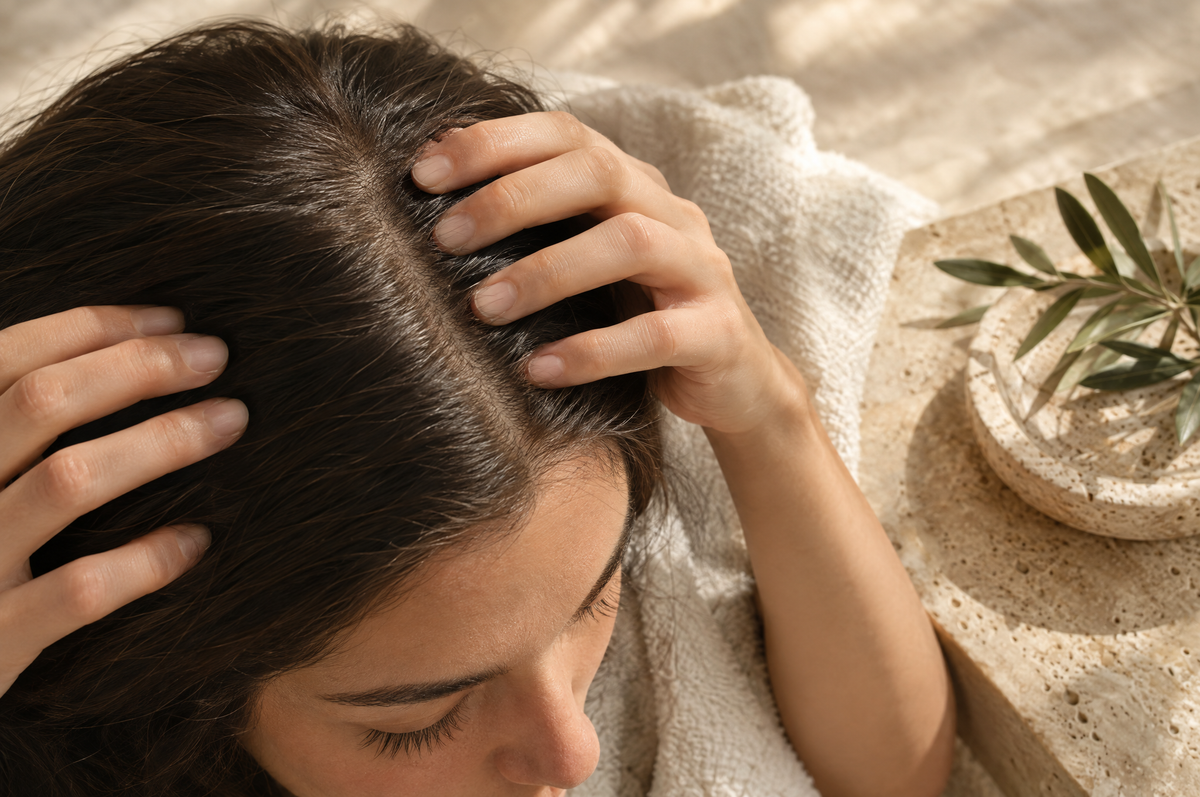
Flakes on your shoulders send a lot of people straight to the oil bottle, on the reasoning that flaking must mean dryness. Sometimes that is right. But the most common cause of scalp flaking, dandruff, is driven partly by oils on the scalp, and adding more can backfire. Knowing which one you have is the whole game.
The short answer
Argan oil is not a dandruff treatment, and for dandruff-prone scalps it may make flaking worse, because the yeast involved breaks down scalp oils into irritating fatty acids such as oleic acid. For a genuinely dry scalp, a few drops as a short pre-wash treatment may help. For dandruff, use a medicated shampoo.
Dandruff vs. dry scalp: they are not the same thing
Dandruff and seborrheic dermatitis sit on the same spectrum. Dandruff is limited to the scalp and involves itchy, flaking skin without visible inflammation; seborrheic dermatitis is the more inflamed version and can affect other oily areas such as the eyebrows and sides of the nose.1 Researchers point to three factors working together: sebaceous (oil gland) secretions, colonization of the skin by Malassezia yeasts, and individual susceptibility.1,2
A dry scalp is different. It is simply skin that lacks moisture, often in cold, dry weather, after very hot showers or harsh shampoos, or in people whose skin runs dry everywhere.
| Dry scalp | Dandruff | |
|---|---|---|
| Flakes | Small, fine, white, powdery | Often larger, can look yellowish or oily |
| Scalp feel | Tight, dry | Itchy, can be oily |
| Rest of skin | Often dry elsewhere too | May have flaking around eyebrows or nose |
| Main driver | Lack of moisture | Scalp oils, Malassezia yeast and individual sensitivity2 |
| Does oil help? | It may | Usually not, and it may aggravate it |
These are general patterns, not a diagnosis. Psoriasis, eczema and fungal infections of the scalp can also cause flaking, which is one reason the AAD suggests seeing a dermatologist when flaking does not improve.4
Why oils can make dandruff worse
Malassezia yeasts are common on the scalp and thrive on oily skin. A study in the Journal of Investigative Dermatology Symposium Proceedings showed that dandruff is driven by what these yeasts produce: they break down triglycerides in the scalp's oil and release irritating free fatty acids. The researchers used oleic acid to represent those irritating fatty acids, and their work pointed to individual sensitivity to these fatty acids as the reason some people get dandruff and others do not.2
Here is why that matters for argan oil. Argan oil is made of triglycerides, and oleic acid is its largest single fatty acid, at roughly 43–49%.3 No study has tested argan oil on dandruff directly, so we cannot say for certain what it does. But the mechanism gives a clear reason for caution: leaving an oleic-rich oil on a dandruff-prone scalp supplies more of the material involved in the flaking process.
Does argan oil cause dandruff?
Not in the sense of creating dandruff in someone who is not prone to it. But if you already have a tendency toward dandruff or seborrheic dermatitis, a recurring observation is that heavy scalp oiling makes itch and flakes worse. If you notice that pattern, stop oiling the scalp and keep argan oil on your lengths.
What actually works for dandruff
The American Academy of Dermatology recommends dandruff shampoos containing one of these active ingredients:4
- Zinc pyrithione
- Ketoconazole
- Selenium sulfide
- Salicylic acid
- Sulfur
- Coal tar
Antifungal ingredients work because they reduce Malassezia, which in turn reduces the irritating fatty acids and the flaking and itch that follow.2 A few tips from the AAD make these shampoos work better:4
- Lather on the scalp, not just the hair. Some products need to sit for five to ten minutes before rinsing; check the label.
- Match frequency to hair type. People with fine, straight hair or an oily scalp may shampoo daily and use a dandruff shampoo twice a week. People with coarse, curly or coily hair may use a dandruff shampoo about once a week and apply it only to the scalp to avoid drying the strands.
- Protect your scalp from sun if you use coal tar, which makes skin more sensitive to UV.
- See a dermatologist if it does not improve. Persistent flaking may be seborrheic dermatitis, psoriasis, a fungal infection or eczema.
There is one place argan oil fits even for dandruff-prone people: on the lengths. Medicated shampoos can be drying on hair, especially textured hair. A drop or two of argan oil on the mid-lengths and ends after washing keeps hair soft without putting oil on the scalp.
Argan oil for dry scalp: how to use it
If your scalp is truly dry and not prone to dandruff, a short oil treatment before washing is a reasonable thing to try. There are no trials of argan oil on the scalp, but in studies on the forearm skin of postmenopausal women, nightly topical argan oil for 60 days significantly reduced water loss through the skin and increased skin hydration.5 Scalp skin is not identical to forearm skin, so treat this as a reason to try gently, not a promise.
- Use very little. Warm three to five drops between your fingertips.
- Apply to dry areas of the scalp. Part your hair in sections and press the oil onto the skin, then massage gently with your fingertips, not your nails.
- Leave it for 15 to 30 minutes. Not overnight, which leaves oil on the scalp longer than needed.
- Shampoo thoroughly. Concentrate shampoo on the scalp so the oil is fully removed.6
- Condition the lengths. Keep conditioner off the scalp.
- Repeat once a week at most, and stop if itching or flaking increases.
If you want to try this, use a pure oil with no added fragrance, since fragrance is a common irritant for sensitive scalps. Our organic argan oil contains a single ingredient, cold-pressed argan kernel oil, with no fragrance or dyes. Patch test on the inner arm first if you have sensitive skin, and read can argan oil irritate skin if you have nut allergies or reactive skin.
Other habits that help a dry scalp
- Use lukewarm rather than hot water.
- Choose a gentle, fragrance-free shampoo and do not over-wash.
- Run a humidifier in dry, heated rooms.
- Avoid scratching, which can break the skin.
When flaking needs a doctor
See a board-certified dermatologist if:
- Flaking persists after a few weeks of dandruff shampoo.
- Your scalp is red, swollen, weeping, crusted or painful.
- You have thick, silvery scale, which can be a sign of psoriasis.
- You are losing hair in the flaky areas.
- Flaking spreads to your face, ears or chest.
An itchy scalp has many possible causes beyond dandruff, which we cover in can I use argan oil for an itchy scalp. For a broader routine, see looking after your hair and scalp, and for what argan oil does well on the hair itself, is argan oil good for hair.
The bottom line
Argan oil can be a pleasant, gentle treatment for a scalp that is simply dry. It is not a dandruff remedy, and for dandruff-prone scalps the science of Malassezia and oleic acid is a good reason to keep oil off the skin and use a medicated shampoo instead. When in doubt, ask a dermatologist to look; the right diagnosis saves months of trial and error.
Frequently asked questions
Does argan oil get rid of dandruff?
There is no evidence that argan oil treats dandruff. Dandruff is linked to Malassezia yeast breaking down scalp oils, and dermatologists recommend medicated shampoos with ingredients like zinc pyrithione, ketoconazole or selenium sulfide.
Can argan oil cause dandruff?
Argan oil does not cause dandruff on its own, but in people prone to it, leaving oil on the scalp may make flaking and itch worse. Research links dandruff to irritating fatty acids such as oleic acid, which is a major component of argan oil.
Is argan oil good for a dry scalp?
It may help a scalp that is genuinely dry, with fine white flakes and tightness but no greasy scale or redness. Use a few drops as a short pre-wash treatment and shampoo it out rather than leaving it on.
How do I know if I have dandruff or a dry scalp?
Dry scalp flakes tend to be small, white and powdery, often with tightness and dryness elsewhere on the body. Dandruff flakes are often larger and oilier, and the scalp may feel itchy or greasy. If you are unsure or home care is not working, see a dermatologist.
This article is for general information and isn't medical advice. If you have persistent flaking, itching, redness or hair loss, see your doctor or a board-certified dermatologist for a diagnosis before trying something new.
Sources
- Borda LJ, Wikramanayake TC. Seborrheic dermatitis and dandruff: a comprehensive review. J Clin Investig Dermatol. 2015;3(2):19. Link
- DeAngelis YM, Gemmer CM, Kaczvinsky JR, Kenneally DC, Schwartz JR, Dawson TL Jr. Three etiologic facets of dandruff and seborrheic dermatitis: Malassezia fungi, sebaceous lipids, and individual sensitivity. J Investig Dermatol Symp Proc. 2005;10(3):295–297. Link
- Gharby S, Charrouf Z. Argan oil: chemical composition, extraction process, and quality control. Front Nutr. 2021;8:804587. Link
- American Academy of Dermatology. How to treat dandruff. Link
- Boucetta KQ, Charrouf Z, Derouiche A, Rahali Y, Bensouda Y. Skin hydration in postmenopausal women: argan oil benefit with oral and/or topical use. Prz Menopauzalny. 2014;13(5):280–288. Link
- American Academy of Dermatology. Tips for healthy hair. Link