Can You Leave Argan Oil in Your Hair Overnight?
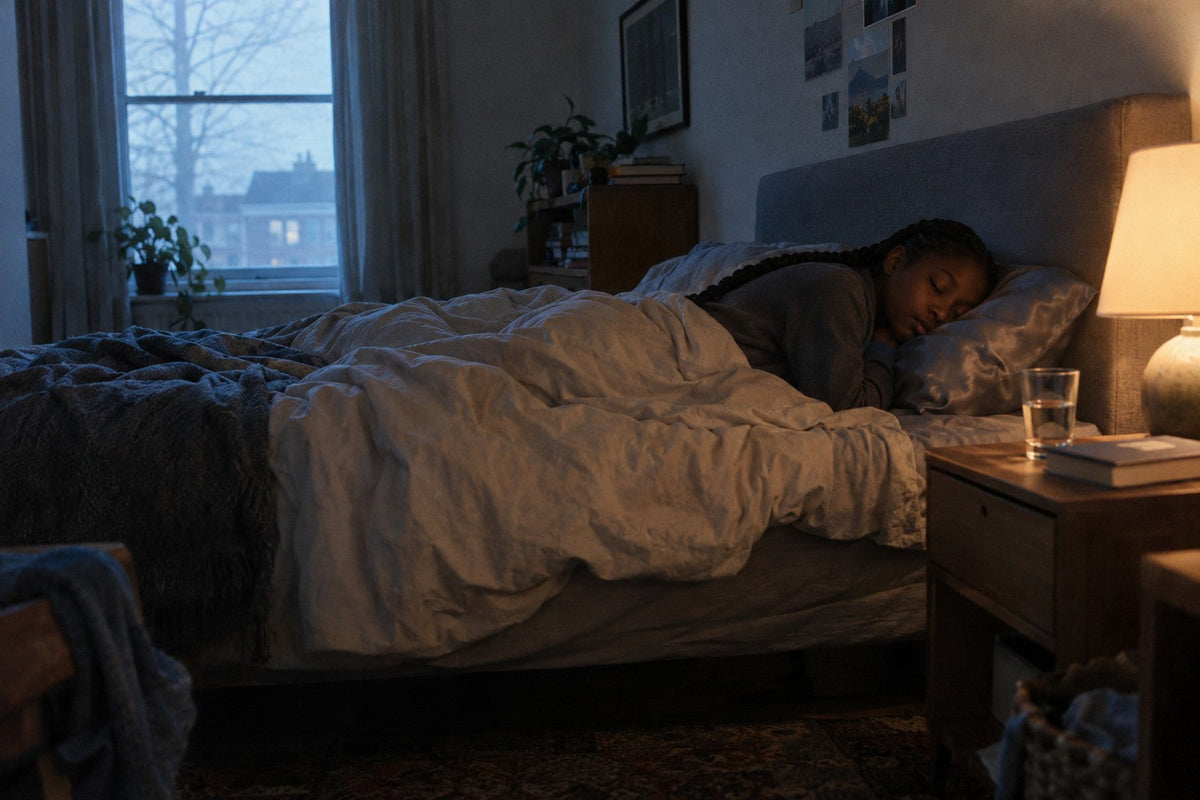
Yes, you can leave argan oil in your hair overnight, and for dry lengths and ends it is a simple, low-effort way to deep-condition. The catch is that "overnight" is not better than an hour by any measured standard, and oil on the scalp or near the face does not suit everyone. Here is how to do it well, how long is actually worth it, and who should stick to a shorter session.
The short answer
Yes, leaving argan oil in your hair overnight is generally safe for the lengths and ends. Use a light coat on dry or damp hair, braid or bun it loosely, protect your pillowcase, and shampoo in the morning. No study shows overnight beats thirty to sixty minutes, and oily scalps or breakout-prone hairlines are better off skipping the overnight version.
Is it okay to sleep with oil in your hair?
For most people, yes. Argan oil is a plant oil with a long history of use on hair, and sleeping with it on the lengths is essentially a longer version of a pre-wash oil or argan oil hair mask. The things to think about are not toxicity but practicality and skin: oil transfers to pillowcases, it can reach the forehead and hairline while you sleep, and some scalps do not do well with extra oil.
One useful benchmark: dermatologists say leave-in conditioner applied only from the mid-strands to the ends can stay on hair for up to a week before it needs washing out, while putting leave-in products on the scalp can cause buildup that may irritate it.1 The same logic applies to oil. Lengths tolerate it well. Scalp and skin are where problems start.
What an overnight oil does for your hair
The research on oils and hair is mostly laboratory work on hair fibers, and most of it uses coconut oil rather than argan, so it is worth being precise about what it shows.
- It limits swelling. Hair absorbs water and swells every time it is washed, then shrinks as it dries. Researchers found that oil in the hair limits this swelling, and suggested that repeated swelling and drying, known as hygral fatigue, is one cause of hair damage.2
- It can reduce protein loss, depending on the oil. In a well-known study, coconut oil used as a pre-wash reduced protein loss from both damaged and undamaged hair, while sunflower and mineral oil did not.3 The difference was put down to coconut oil's small, straight fatty acid molecules, which penetrate the hair shaft. Argan oil was not tested.
- It slows moisture loss. A surface film of oil lowered how quickly water moved in and out of hair fibers in lab testing, an effect the researchers compared to moisturization.4
What we could not find is any study showing that leaving oil on for eight hours does more than leaving it on for one. A 2022 systematic review also found no significant clinical evidence that argan oil improves hair growth or quality in people.5 So think of an overnight oil as a comfortable, cosmetic deep-conditioning step for softness, shine and easier detangling, not a repair.
How long to leave argan oil in your hair
There is no research-based ideal time. In practice, three windows cover most needs:
| Time | Best for | Notes |
|---|---|---|
| 15 to 30 minutes | Fine hair, oily scalps, quick pre-wash | Enough to coat the lengths before shampoo |
| 30 to 60 minutes | Most hair types | The practical sweet spot; no pillow to protect |
| Overnight | Very dry, thick, coarse or curly lengths | Convenient rather than proven to work better |
If you find the overnight version leaves your hair softer, there is no reason to stop. If you cannot tell the difference, the shorter session saves you a pillowcase.
An overnight argan oil routine, step by step
This routine focuses on the lengths. For a broader look at methods, see our guide to how to use argan oil for hair.
- Start with dry or slightly damp hair. Dry hair takes oil easily. If you prefer damp, towel-blot first so you are not going to bed with soaking hair.
- Use a modest amount. Start with four to six drops for shoulder-length hair, more for long or very thick hair. You want a sheen, not a drip.
- Work from the ends up. Warm the oil between your palms and smooth it through the ends and mid-lengths, stopping a few inches from the roots.
- Tie it up loosely. A loose braid or low bun keeps oil off your face and neck. Skip tight elastics, which tug on oiled, slippery hair.
- Protect your bedding. Cover the pillow with an old towel or a pillowcase you wash often. Some people prefer silk or satin; we found no good studies on this, but a smooth surface is gentler on oiled hair than a rough one.
- Wash it out in the morning. Apply shampoo to dry or barely damp hair first, work it in, then add water. Oil lifts more easily this way. You may need two rounds of shampoo; follow with a light conditioner on the ends.
Scalp or lengths only?
Lengths only, for most people. The ends of your hair are the oldest and driest part and benefit most from oil. The scalp already makes its own oil, sebum.
Oil on the scalp is a more complicated question. Yeasts called Malassezia live on normal skin and depend on fats to grow. A 2023 letter from dermatologists notes that lab studies show these yeasts grow well in oils such as olive and coconut oil, that no clinical studies have tested hair oils and seborrheic dermatitis directly, and that providers should recommend avoiding oils on the scalp and focusing on the hair shaft instead.6 Argan oil was not part of that research, but the same caution is sensible. If you have flaking, itching or a diagnosed scalp condition, see our guide to argan oil for scalp dryness and dandruff before oiling your roots, and check with a dermatologist.
Who should skip sleeping with oil in hair
Very fine or flat hair
Fine hair can be left limp after an overnight soak and may need extra shampooing to recover. A 20-minute pre-wash usually gives the softness without the weight.
Oily scalps
If your roots are greasy by the end of the day, there is little to gain from adding oil near them, and buildup is more likely.1
Breakouts along the hairline or forehead
The American Academy of Dermatology notes that oil in hair products can find its way to the skin and cause small breakouts along the hairline, forehead and back of the neck, and recommends washing pillowcases and anything else your hair touches.7 Hours of contact overnight make that transfer more likely. If you are prone to this, keep oil to the ends and tie hair away from your face, or choose a daytime session. Our guide to argan oil for acne-prone skin covers the face side.
Itchy bumps that look like acne but are not
Malassezia folliculitis, sometimes called fungal acne, shows up as small, uniform, itchy bumps, usually on the upper back and chest but also on the forehead and hairline. DermNet lists occlusion from emollients, hot and humid conditions and heavy sweating among its risk factors.8 If you get itchy, same-size bumps along your hairline after oiling, stop and have a dermatologist take a look.
Picking an oil for overnight use
Since the oil will sit on your hair for hours, it helps to know exactly what is in it. Many blended hair oils add fragrance or silicones, which are fine for some people but are not what you want against your face for eight hours if your skin is reactive. Coconut oil is the most researched option for pre-wash use;3 our comparison of argan oil vs. coconut oil for hair explains when each makes sense.
Our 100% organic argan oil is a single ingredient, cold-pressed kernel oil with no added fragrance, which keeps things simple when it is going to be in contact with your skin and bedding all night.
Frequently asked questions
Can I leave argan oil in my hair overnight?
Yes, on the lengths and ends it is generally fine. Tie hair loosely, protect your pillowcase, and shampoo in the morning. Skip the scalp if it is oily, flaky or itchy.
How long should I leave argan oil in my hair?
There is no proven ideal time. Thirty to sixty minutes suits most hair, while very dry, thick or curly lengths may enjoy an overnight session. Fine hair often needs only 15 to 30 minutes.
Should I put argan oil on my scalp overnight?
Usually not. The scalp makes its own oil, and dermatologists caution that extra oil on the scalp may encourage buildup and feed yeasts linked to flaking. Focus on the lengths and ask a dermatologist about scalp concerns.
Can sleeping with oil in my hair cause breakouts?
It can for some people. Oil from hair can transfer to the hairline and forehead, especially via pillowcases. Keep oil to the ends, tie hair back and wash pillowcases often.
How do I wash argan oil out of my hair?
Apply shampoo to dry or barely damp hair first and work it in before adding water, then rinse and repeat if needed. Finish with a light conditioner on the ends.
Sources
- American Academy of Dermatology. Dermatologists' top tips for using leave-in conditioner. Link
- Ruetsch SB, Kamath YK, Rele AS, Mohile RB. Secondary ion mass spectrometric investigation of penetration of coconut and mineral oils into human hair fibers: relevance to hair damage. J Cosmet Sci. 2001;52(3):169–184. Link
- Rele AS, Mohile RB. Effect of mineral oil, sunflower oil, and coconut oil on prevention of hair damage. J Cosmet Sci. 2003;54(2):175–192. Link
- Keis K, Huemmer CL, Kamath YK. Effect of oil films on moisture vapor absorption on human hair. J Cosmet Sci. 2007;58(2):135–145. Link
- Phong C, Lee V, Yale K, Sung C, Mesinkovska N. Coconut, castor, and argan oil for hair in skin of color patients: a systematic review. J Drugs Dermatol. 2022;21(7):751–757. Link
- Mayo T, Dinkins J, Elewski B. Hair oils may worsen seborrheic dermatitis in Black patients. Skin Appendage Disord. 2023;9(2):151–152. Link
- American Academy of Dermatology. Are your hair care products causing breakouts? Link
- DermNet. Malassezia folliculitis. Link
This article is for general information and isn't medical advice. If you have a scalp condition, persistent flaking or itchy bumps along your hairline, check with a dermatologist before adding oil to your routine.