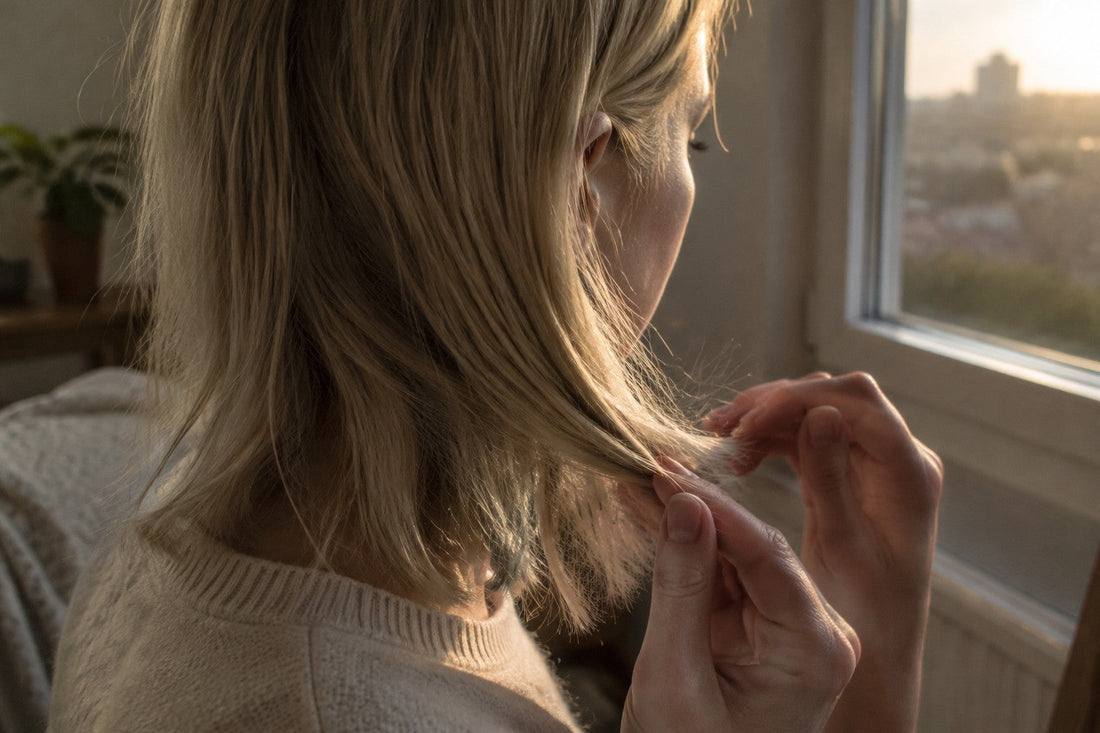
Is Argan Oil a Heat Protectant? What It Can and Can't Do
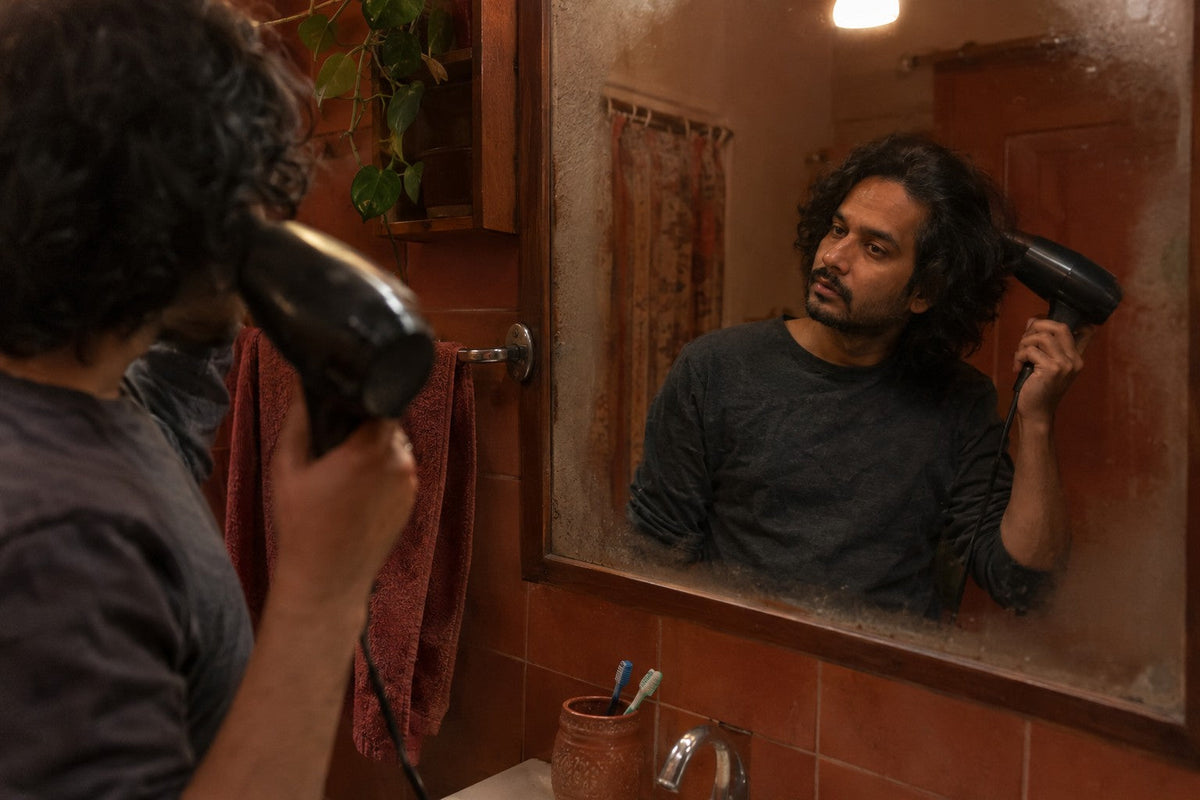
No, argan oil is not a heat protectant. It has never been tested or formulated to shield hair from blow dryers, flat irons or curling irons, and no published study shows that it does. It is a lovely finishing oil once your hair is styled, but the job of protecting hair from heat belongs to products designed and tested for it. Here is why, and how argan oil can still fit into a heat-styling routine.
The short answer
Argan oil is not a heat protectant. There is no evidence that it protects hair from flat iron, curling iron or blow dryer heat. Use a dedicated heat protectant before styling, keep tools on the lowest setting that works, and use one or two drops of argan oil after styling, once your hair has cooled.
Why people think argan oil protects hair from heat
The idea is everywhere: oils coat the hair, so surely they shield it. Some styling products also put argan oil on the front of the bottle and heat protection in the claims, which blurs the two together. And heat protectants do work partly by coating the hair, so an oil sounds like a natural version.
But coating hair is not the same as protecting it from heat. What matters is what the coating is made of, how evenly it spreads, and whether anyone has measured its effect on heated hair. For argan oil, nobody has.
What heat actually does to hair
Understanding the damage makes it clearer what a protectant needs to do.
It weakens the proteins inside the hair
Hair is mostly keratin, held together by strong disulfide bonds. High temperatures can break those bonds and denature keratin, which researchers describe as a main reason frequent blow-drying leaves hair fragile and prone to breakage.1 In a study of flat ironing, which typically runs above 200°C (392°F), heat shifted the structure of hair protein and degraded keratin, and heat-damaged hair held less water.2
It roughens the cuticle
The cuticle is the outer layer of overlapping scales. In a study of repeated hair dryer use, hair dried with the nozzle 5 cm away reached about 95°C and showed cracks, holes and blurred cuticle edges after 30 cycles, while drying from 15 cm caused less damage.3 Blow-drying wet hair can also make the cuticle scales open wider, and damaged scales leave a rough surface that increases friction between hairs.1
On wet hair, it can boil the water inside
The most dramatic form of heat damage is called bubble hair. When wet hair is heated, gas bubbles form inside the shaft, leaving it dry, brittle and easy to break. A dermatology report notes this can happen when wet hair is exposed to about 125°C, a temperature many styling tools reach, and that it resolves once heat styling stops.4 This is one reason to keep flat irons for dry hair only.
What real heat protectants contain
Products sold as heat protectants generally rely on silicones and film-forming polymers rather than plant oils.
- Silicones. A dermatology review explains that a silicone heat protector spreads heat along the fiber during blow-drying or flat ironing, which helps stop water inside the hair from boiling and forming bubbles. Polysiloxane polymers may also help limit heat damage.5
- Film-forming polymers. In a laboratory study of flat-ironed hair, pretreating hair with specific styling polymers reduced breakage during combing and helped protect the keratin inside the hair as well as the smoothness of the cuticle.2
These ingredients have something argan oil does not: published testing on heated hair. That does not mean every heat protectant on the shelf works equally well, but it does mean the category is built on measured effects.
So does argan oil protect hair from heat at all?
There may be a small mechanical benefit from any oil film, since a coated, smoother surface creates less friction when you brush or comb. But no study we could find shows that argan oil reduces heat damage to the keratin inside hair, and it has not been tested on flat-ironed or blow-dried hair the way dedicated protectants have. Until it is, the honest answer is no.
There is also a chemistry reason to keep cosmetic argan oil away from the hottest tools. It is about 80% unsaturated fatty acids, and in lab stability testing at 110°C, oil made from unroasted kernels (the cosmetic kind) resisted oxidation for about 13 hours on average, compared with about 31 hours for oil from roasted kernels.6 That does not make it dangerous on hair, but unsaturated oils are not built for high heat.
What about argan oil's smoke point?
You will see smoke points quoted on many sites as proof that an oil can handle a flat iron. We could not find a reliable, published smoke point for unroasted cosmetic argan oil, so we are not going to quote one. More importantly, smoke point is a cooking measurement. It tells you when a pan of oil starts to smoke, not whether a thin film of oil protects keratin between two hot plates. Any number you see says nothing about heat protection.
Shine after styling is argan oil's job. Protection before styling is not.
Argan oil before a flat iron: why we advise against it
Pressing oil-coated hair between plates that may be above 200°C has no proven benefit and a few downsides. The oil may add drag, can leave hair looking greasy rather than sleek, and is not protecting the keratin inside. The American Academy of Dermatology (AAD) recommends using flat irons only on dry hair, on a low or medium heat setting, and no more often than every other day.7 For pressed or straightened textured hair, the AAD advises a heat protectant on damp hair before styling, pressing no more than once a week, and choosing the lowest effective temperature with a device that has a heat dial.8
How to use argan oil with heat styling
Argan oil still has a place in a heat-styling routine. It just comes at the end.
- Start with dry hair for irons. Never flat iron or curl damp hair.
- Apply a heat protectant. Follow the label for damp or dry application and coverage.
- Turn the heat down. Use the lowest setting that gets the result, and keep the tool moving. The AAD suggests leaving a curling iron in place for only a second or two.7
- Let your hair cool. Give it a minute after styling.
- Finish with argan oil. Warm one drop between your palms and press it over the ends and surface to smooth flyaways and add shine. Thick or long hair may take two or three drops.
If you blow-dry, a drop or two on damp ends before drying is fine alongside your heat protectant. Our step-by-step guide to argan oil before or after blow-drying covers the blow dryer routine in detail, and our main guide on how to use argan oil for hair covers everything else.
If your hair is already heat damaged
Hair that has been heat styled for years often feels dry, rough and frizzy at the ends. Argan oil can make those ends look and feel smoother, but it cannot rebuild broken keratin bonds, and a trim is the only way to remove split ends. Cutting back on heat matters most: the AAD suggests air-drying when you can and blow-drying fewer times a week.7 For a routine focused on rough, puffy ends, see our guide to argan oil for frizzy hair and dry, damaged lengths.
Reading "argan" heat protection labels
If a styling product combines argan oil with a heat-protection claim, look at the rest of the ingredient list. Any protection is likely to come from the formula's silicones or polymers rather than from the argan oil. Our explainer on Moroccan oil vs argan oil shows how branded hair oils differ from pure argan oil.
If you want argan oil itself as your finisher, choose a pure one. Our argan oil is a single ingredient: USDA-certified organic, cold-pressed argan kernel oil from Morocco, with no added fragrance, chemicals or dyes. We sell it as a finishing oil, not a heat protectant, and we would rather tell you that plainly.
Frequently asked questions
Is argan oil a natural heat protectant?
No. Argan oil has not been tested as a heat protectant, and no published study shows it protects hair from blow dryers, flat irons or curling irons. Use a product made for heat protection and use argan oil as a finisher instead.
Does argan oil protect hair from heat at all?
Any oil film may reduce friction a little, but there is no evidence that argan oil reduces heat damage to the hair's proteins. Products sold as heat protectants rely on ingredients such as silicones and film-forming polymers, some of which have been tested on flat-ironed hair.
Can I put argan oil on before a flat iron?
It is better not to. Flat irons often run above 200°C (392°F), and the oil has not been shown to protect hair at those temperatures. Apply a heat protectant to dry hair, iron at the lowest setting that works, then add a drop of argan oil after your hair cools.
What is argan oil's smoke point, and does it matter for hair?
We could not find a reliable published smoke point for unroasted cosmetic argan oil, and smoke point is a cooking measure anyway. It does not tell you whether an oil protects hair. What matters is lower heat, shorter contact time and a tested heat protectant.
Sources
- Zi Y, Liu J, Fang S, Li M, Huang Q, Peng X. Establishment of heat-damaged model for hair. J Cosmet Dermatol. 2025;24(8):e70360. Link
- Zhou Y, Rigoletto R, Koelmel D, et al. The effect of various cosmetic pretreatments on protecting hair from thermal damage by hot flat ironing. J Cosmet Sci. 2011;62(2):265–282. Link
- Lee Y, Kim YD, Hyun HJ, Pi LQ, Jin X, Lee WS. Hair shaft damage from heat and drying time of hair dryer. Ann Dermatol. 2011;23(4):455–462. Link
- Albers LN, Maley AM, MacKelfresh JB. Blowing bubbles: dermoscopy of bubble hair. Int J Trichology. 2017;9(3):122–123. Link
- Gavazzoni Dias MFR. Hair cosmetics: an overview. Int J Trichology. 2015;7(1):2–15. Link
- Gharby S, Charrouf Z. Argan oil: chemical composition, extraction process, and quality control. Front Nutr. 2022;8:804587. Link
- American Academy of Dermatology. Hair styling without damage. Link
- American Academy of Dermatology. Black hair: tips for everyday care. Link