Argan Oil for Split Ends: Can It Repair Them?
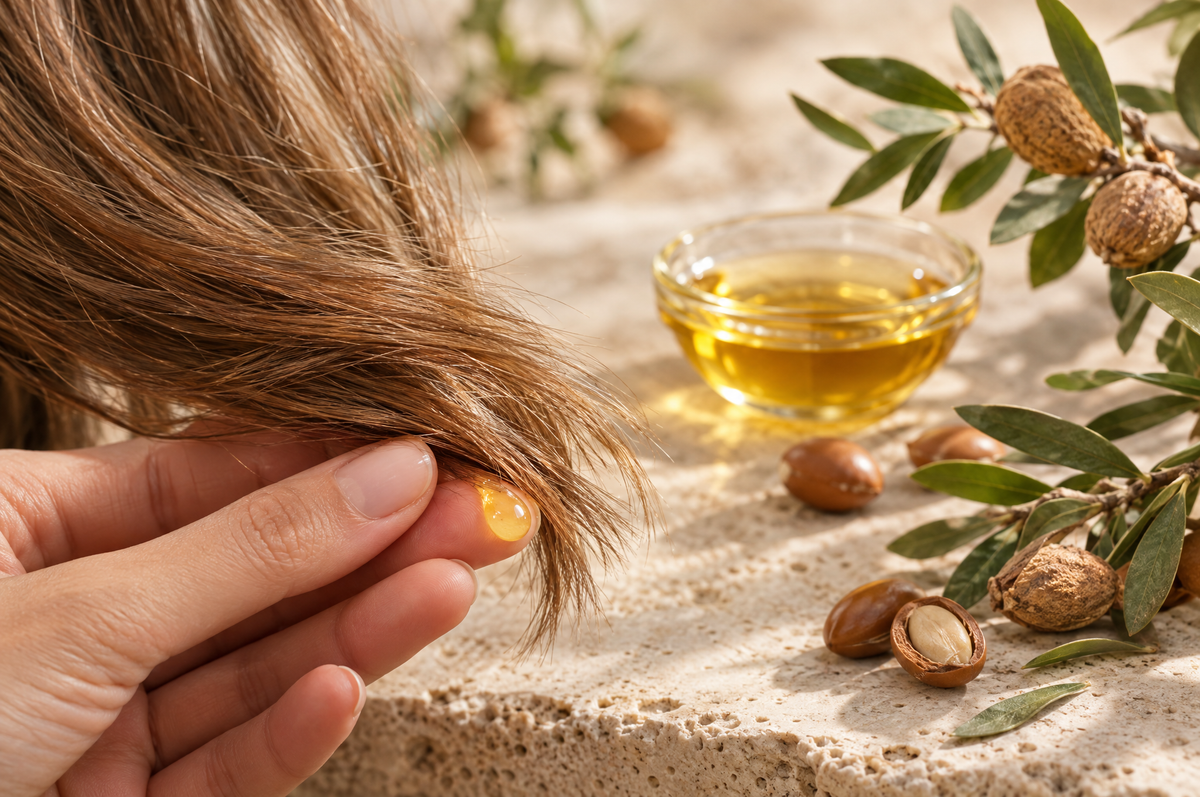
Argan oil cannot repair split ends. Once a hair has split, the only real fix is to trim it off. What argan oil can do is make ends softer and smoother, help them glide past each other instead of catching, and reduce the everyday friction that causes new splits. That makes it a useful habit for keeping ends in better shape between haircuts, as long as you know what it can and cannot do.
The short answer
No, argan oil does not repair split ends; nothing rejoins a hair once it has split, so trimming is the only fix. Argan oil can make ends look smoother and feel softer, and regular use on dry ends may reduce the friction and dryness that lead to new splits. Use one or two drops on the ends daily.
What a split end actually is
A hair strand is not living tissue. It is a fiber made mostly of keratin, wrapped in overlapping cuticle scales that protect the inner cortex. Every wash, brush stroke, blow-dry and color service wears that outer layer down a little. Dermatologists call this weathering, and it mainly affects the free end of the hair, which is why the tips of long hair often look duller and paler than the lengths near the scalp, with varying degrees of split ends.1
When enough cuticle has worn away, the exposed cortex fibers start to separate and the end splits in two or more directions. The medical term is trichoptilosis. Chemical services such as bleaching, coloring, perming and straightening make weathering worse because they lift and soften the cuticle, leaving it more vulnerable to abrasion.1
Does argan oil repair split ends?
No. A review of aging hair puts it plainly: conditioners protect the edges of the cuticle scales, but they cannot fix broken hairs where the cortex fibers have burst out, as in split ends.1 Oils are in the same position. A film of argan oil can coat a frayed tip and make it lie flatter for a while, which is why ends look better right after you apply it, but the split is still there and the effect washes out.
Products that claim to "seal" or "mend" split ends work the same way: they temporarily stick or smooth the fibers. And because weathering is a progressive wearing-down of the fiber, a frayed end left alone tends to keep deteriorating rather than recover.1
What argan oil can do for split ends and dry ends
Reduce friction
Much of the wear on ends comes from friction: combing, brushing, towel-rubbing and strands rubbing against each other and against fabric. A dermatology review of hair cosmetics notes that applying oil regularly can improve lubrication of the hair shaft and may help reduce breakage.2 In the same review, lab studies on hair tresses found that oil applications reduced the formation of split ends compared with hair that had no oil.2 Those were tests with other oils, including Brazil nut and mineral oil, not argan oil, but they show the principle.
Limit swelling from water
Hair swells when wet and shrinks as it dries. Researchers have suggested that repeated swelling and drying, known as hygral fatigue, is one cause of hair damage, and found that oil in the hair limits swelling.3 The review mentioned above adds that some oils can penetrate the hair and reduce the water it absorbs.2 That is one reason people oil their ends before washing.
Some lab support for argan oil specifically
Two small laboratory studies have looked at argan oil and hair damage directly. In one, excised hair tresses coated with argan oil before exposure to an oxidizing agent lost significantly less protein than unoiled hair, and traces of the oil were still detectable after washing.4 In another, a conditioner containing 1% argan oil reduced protein loss from hair colored with an ultra-blond oxidative dye, compared with the same conditioner without oil.5 Both were done on hair samples in a lab, not on people, and neither measured split ends directly.
On the clinical side, the evidence is thin. A 2022 systematic review of coconut, castor and argan oil for hair found no significant clinical evidence that argan oil improves hair growth or quality.6 So the honest summary is that argan oil is a reasonable, gentle way to lubricate and soften ends, with lab research suggesting it may offer some protection, but not a proven split-end solution.
How to use argan oil on split ends
Our main guide to how to use argan oil for hair covers every method. For ends specifically, these three habits matter most.
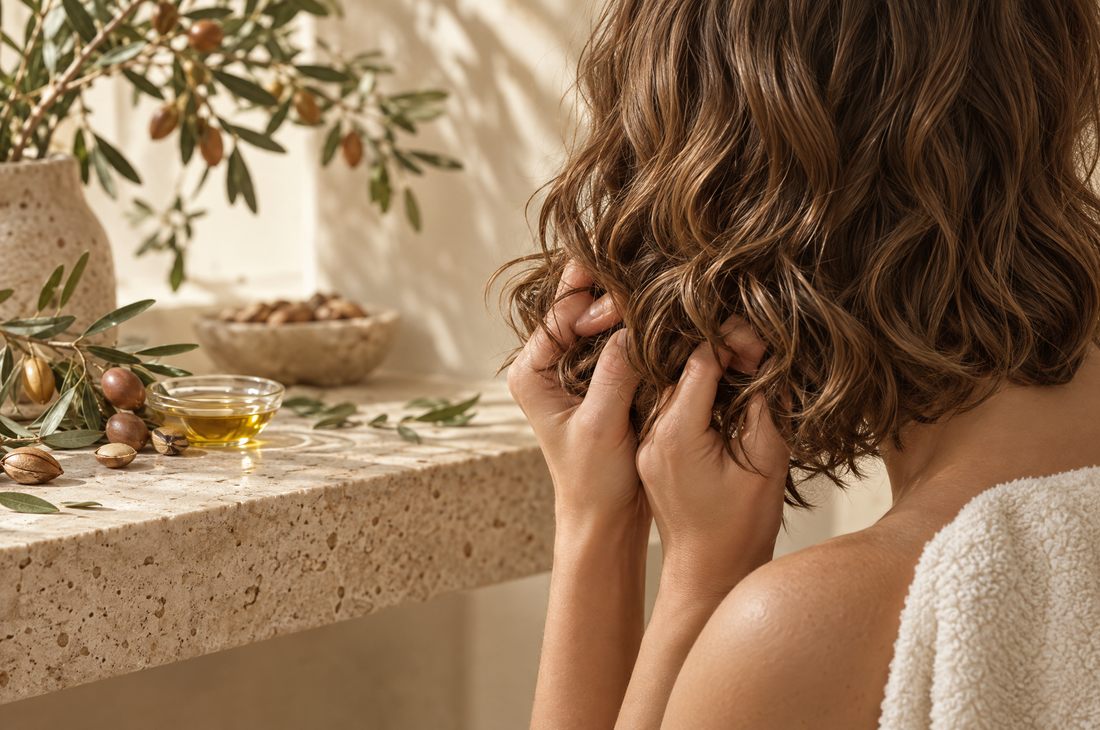
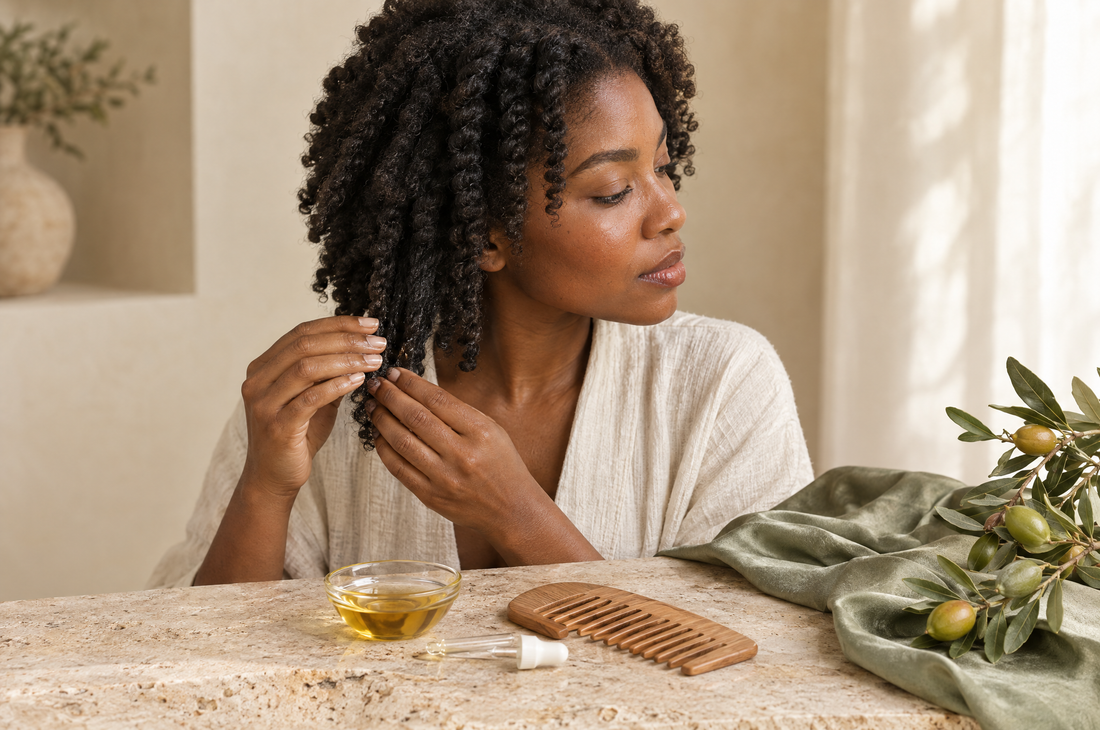
- Daily: one or two drops on dry ends. Warm the oil between your fingertips and pinch it onto the last few inches of hair. This is when ends are most exposed to friction from clothing, bags and pillowcases.
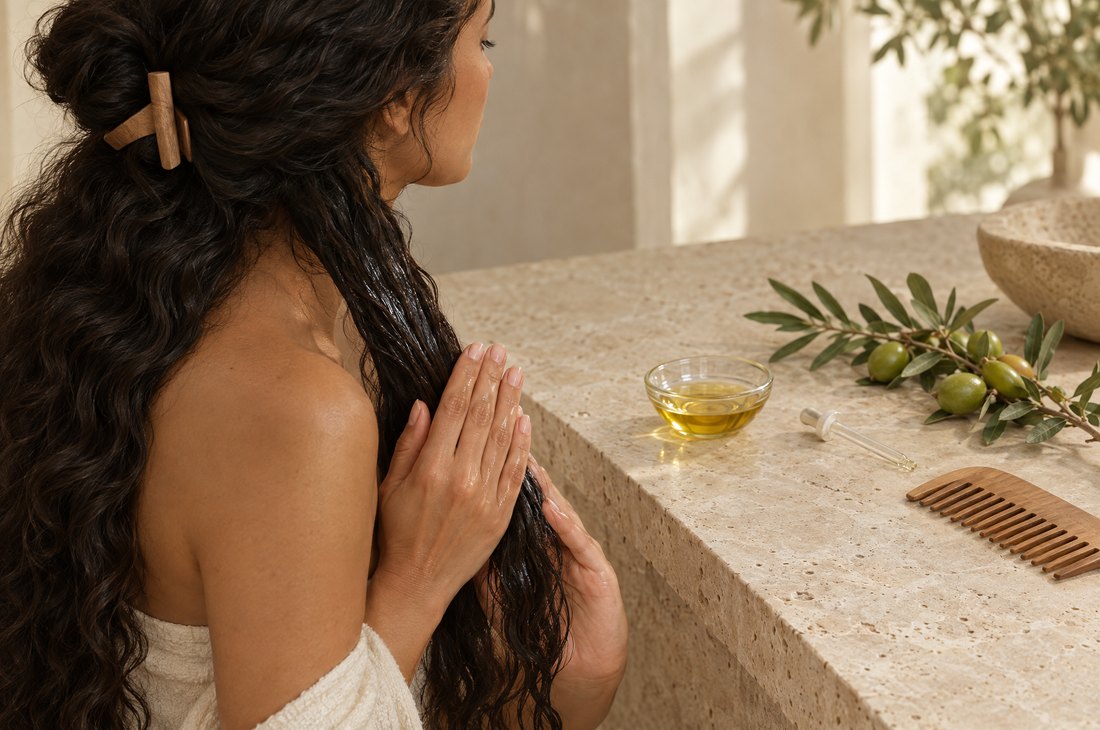
- Wash day: oil before you shampoo. Coat the lower half of your hair 20 to 30 minutes before washing to limit how much the ends swell with water.
- Weekly or as needed: a deeper session. A longer argan oil hair mask on the lengths and ends before washing gives very dry or colored ends extra slip and softness.
Our 100% organic argan oil is a single ingredient, cold-pressed oil with a dropper, so one or two drops for the ends is easy to measure.
How to avoid split ends naturally
Oil helps, but most split ends come from how hair is handled. The American Academy of Dermatology lists everyday habits that damage hair, along with simple fixes:7
- Do not rub hair with a towel. Wrap it to absorb water, then let it air dry.
- Be gentle with wet hair. Let straight hair dry a little before combing with a wide-tooth comb; comb textured or tightly curled hair while damp.
- Turn the heat down. Air dry when you can, use the lowest heat setting, and limit hot tools to about once a week or less. Our guide to argan oil before blow-drying covers how to use oil when you do style with heat.
- Space out chemical services. Stretch time between color or relaxer touch-ups to 8 to 10 weeks or longer, and have only one chemical service at a time.
- Loosen up. Tight ponytails and buns pull on hair. Wear styles loosely and use covered elastics.
- Skip the 100 strokes. Brush only to style, and remove tangles gently.
- Condition after every shampoo, focusing on the ends.
If your ends are colored or bleached, our guide to argan oil and hair color explains how to fit oil around dye appointments.
How often should you trim split ends?
There is no research-based schedule. Many stylists suggest a light trim every two to three months, and less often if your ends stay smooth. A practical test: twist a small section of dry hair and look at the ends in good light. If you see many forked or frayed tips, or ends that snap easily, it is time for a trim.
A "dusting," where a stylist removes only the very tips, is a good compromise if you are growing your hair out. Combined with oil and gentler handling, you may find you need to cut off less each time.
| What helps | What it does | What it cannot do |
|---|---|---|
| Trimming | Removes split ends completely | Stop new splits forming |
| Argan oil on ends | Softens, smooths and lubricates; may reduce new splits | Rejoin a split hair |
| Conditioner | Protects cuticle edges, eases detangling | Repair a split or broken strand |
| Gentler handling and less heat | Reduces the wear that causes splits | Reverse existing damage |
For broader damage beyond the ends, including breakage, roughness and frizz, see our guide to argan oil for frizzy hair and dry, damaged hair.
Frequently asked questions
Can argan oil repair split ends?
No. Once a hair splits, it cannot be rejoined by any oil or conditioner. Argan oil can make split ends look smoother temporarily, but trimming is the only way to remove them.
Does argan oil help with split ends at all?
It can help reduce new ones. Oil lubricates the hair shaft and reduces friction, and lab studies on hair tresses found oils reduced split-end formation. Clinical evidence for argan oil specifically is limited.
How do I use argan oil for split ends?
Pinch one or two drops onto dry ends daily, coat the lower lengths before washing, and use a longer pre-wash oil session weekly if your ends are very dry or colored.
How often should I trim split ends?
There is no research-based rule. Many stylists suggest every two to three months, or sooner if you see lots of forked or frayed tips.
What causes split ends?
Wear and tear on the oldest part of the hair: friction from brushing and towels, heat styling, and chemical services such as bleaching and coloring, which lift and weaken the cuticle.
Sources
- Trüeb RM. Pharmacologic interventions in aging hair. Clin Interv Aging. 2006;1(2):121–129. Link
- Gavazzoni Dias MFR. Hair cosmetics: an overview. Int J Trichology. 2015;7(1):2–15. Link
- Ruetsch SB, Kamath YK, Rele AS, Mohile RB. Secondary ion mass spectrometric investigation of penetration of coconut and mineral oils into human hair fibers: relevance to hair damage. J Cosmet Sci. 2001;52(3):169–184. Link
- Sharifi N, Hamedeyazdan S, Shokri J, Monajjemzadeh F. Argan oil as a pretreatment of human hair before exposure to oxidative damage: attenuated total reflectance and protein loss studies. J Cosmet Dermatol. 2022;21(10):5010–5017. Link
- Faria PM, Camargo LN, Carvalho RSH, Paludetti LA, Velasco MVR, da Gama RM. Hair protective effect of argan oil (Argania spinosa kernel oil) and cupuassu butter (Theobroma grandiflorum seed butter) post treatment with hair dye. J Cosmet Dermatol Sci Appl. 2013;3:40–44. Link
- Phong C, Lee V, Yale K, Sung C, Mesinkovska N. Coconut, castor, and argan oil for hair in skin of color patients: a systematic review. J Drugs Dermatol. 2022;21(7):751–757. Link
- American Academy of Dermatology. How to stop damaging your hair. Link