Argan Oil for Wavy Hair: Define Waves Without Flattening Them
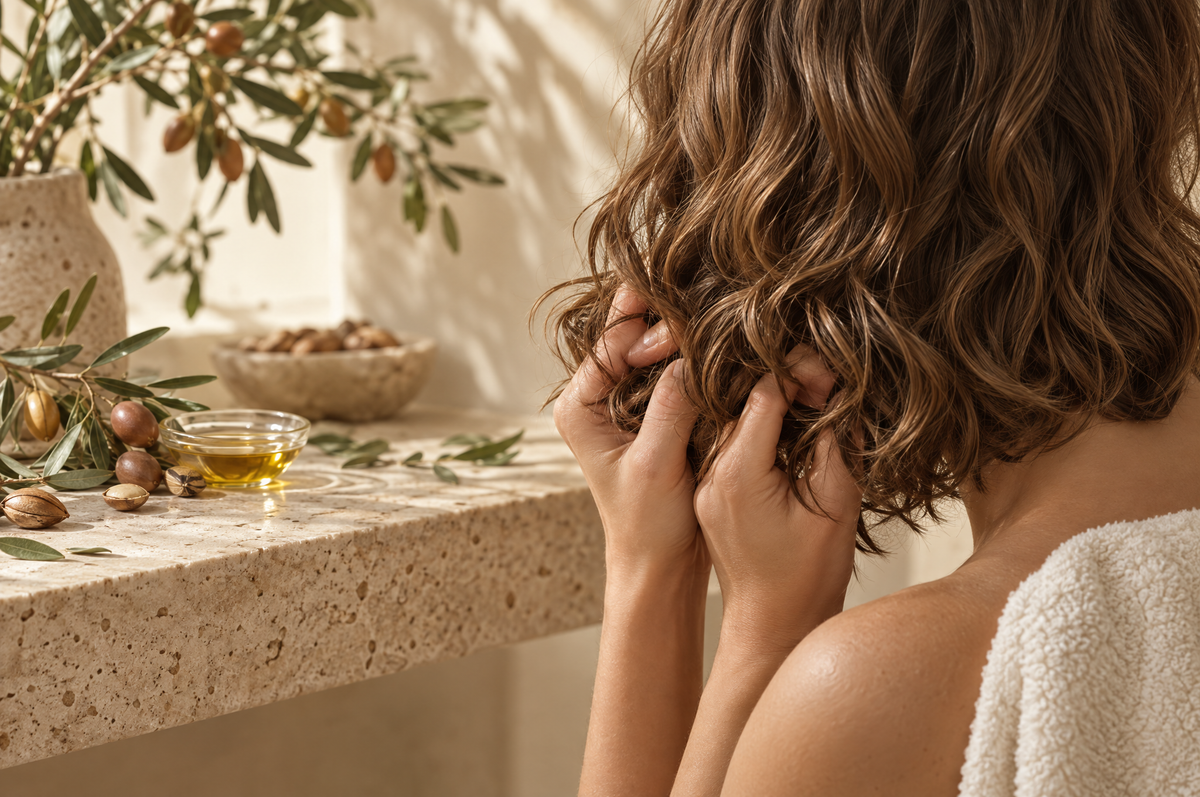
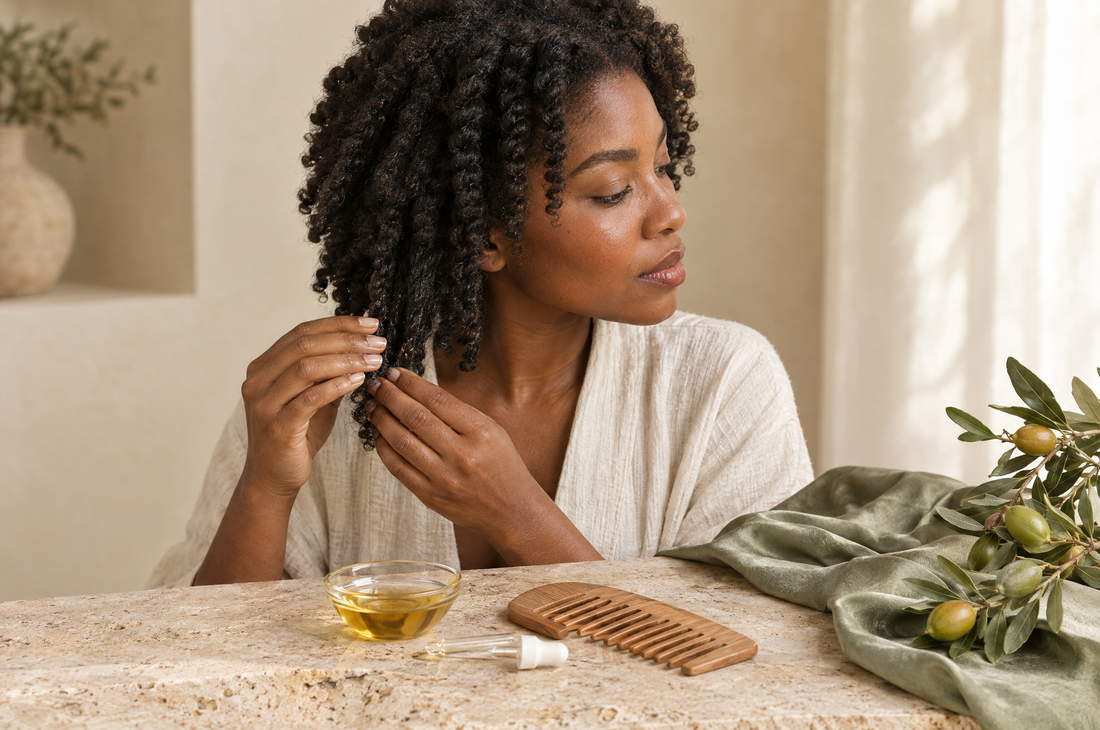
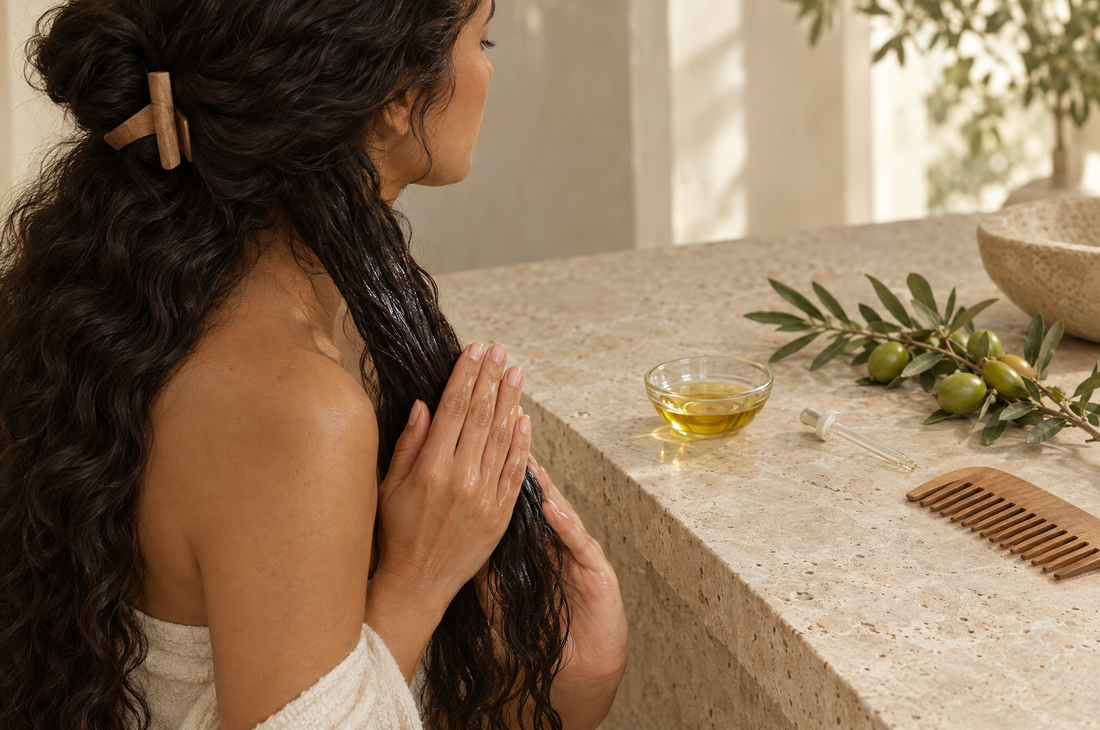
Argan oil works well for wavy hair as long as you use very little of it and put it in the right place: a drop or two on damp lengths to seal in moisture, and another drop on dry hair to scrunch out stiffness or calm frizz. Waves sit between straight and curly hair, which means they get dry enough to frizz but drop flat the moment they are overloaded. This guide is about finding that narrow middle.
The short answer
Yes, argan oil is good for wavy hair in small amounts. Warm one to three drops between your palms and press them into damp mid-lengths and ends after conditioning, then scrunch. Once waves are fully dry, use one more drop to scrunch out gel crunch or smooth frizz. Keep it off the roots.
Why wavy hair is so easy to weigh down
Wavy hair is often finer and lighter than tighter curl patterns, and a wave is a fragile shape: it is held up by its own weight and spring. Add a heavy film of oil and gravity wins, so S-shapes stretch into limp, separated strands. That is why the usual curly-hair advice to layer generously tends to backfire on waves.
Dermatologists make the same point about leave-in products generally: use the least amount that gets the job done, with fine hair needing less than thick hair, and keep product on the hair rather than the scalp, where it can build up.1 The American Academy of Dermatology also suggests that people with fine or straight hair put conditioner on the ends only, while dry or curly hair can take it along the full length.2 Most wavy hair falls somewhere between, which is a useful way to think about oil too.
What oil adds is a thin, water-resistant film. In lab tests, oil films on hair fibers lowered how much moisture the hair picked up from humid air and slowed water moving in and out of the fiber.3 That is the mechanism behind the main reason wavy-haired people reach for oil: frizz on humid days. A review of hair cosmetics adds a practical caution: thick films of oil can mask a rough cuticle but leave hair looking oily and heavy, so a thin layer that is reapplied as needed is preferable.4
Argan oil for 2A, 2B and 2C hair: how much to use
The 2A to 2C labels come from an informal hair typing system rather than science, but they are a handy shorthand for how much product waves can carry. Use these amounts as starting points for shoulder-length hair and adjust for length and thickness.
| Wave type | What it usually looks like | Damp hair | Dry hair touch-up |
|---|---|---|---|
| 2A | Loose, barely-there bends, often fine and easily flattened | 1 drop, ends only | Half a drop, rubbed nearly dry between palms |
| 2B | Defined S-waves from mid-length, some frizz at the crown | 1 to 2 drops, mid-lengths to ends | 1 drop, scrunched in |
| 2C | Deep waves that verge on loose curls, thicker and more frizz-prone | 2 to 3 drops, mid-lengths to ends | 1 to 2 drops |
If your waves feel stringy or your part looks greasy by the next morning, cut the amount in half before you give up on oil altogether. Porosity matters as well: if water beads on your hair and products seem to sit on top, read our guide to argan oil for low porosity hair, which covers how to avoid buildup.
How to use argan oil on wavy hair, step by step
Our general guide to how to use argan oil for hair covers every method. For waves, this order tends to give the most definition with the least weight.
- Wash and condition as usual. Shampoo the scalp and let the suds rinse through the lengths. Condition the mid-lengths and ends.
- Apply styler while hair is still wet. If you use a mousse, gel or light curl cream, rake or glaze it through soaking-wet hair first. Water-based products need to reach the hair before any oil does.
- Add a drop or two of oil. Warm one to three drops between your palms, then press and scrunch them into the mid-lengths and ends rather than raking through. Scrunching keeps wave clumps together.
- Remove water gently. Squeeze out excess water with a cotton T-shirt or microfiber towel. The AAD advises blotting or wrapping hair instead of rubbing it with a towel, which roughens the surface.5
- Dry without disturbing. Air dry, or diffuse on low heat. Keep heat low and use it sparingly, as dermatologists recommend for all hair types.5 If you blow-dry often, our guide on argan oil before blow-drying explains the timing.
- Scrunch out the crunch. Once waves are completely dry, rub one drop of oil between your palms and scrunch upward to soften the gel cast. Doing this while hair is even slightly damp can cause frizz.
Damp or dry: which works better for waves?
Both, for different jobs. Dermatologists note that leave-in products spread more evenly and are less likely to look greasy on slightly damp hair,1 so damp application is best for all-over conditioning and for sealing water in before your waves set. Dry application is best for precision: taming a frizzy halo, softening a stiff cast, or adding shine to the ends on day two or three.
A good rule for waves: put the bulk of your oil on damp hair, and use dry-hair touch-ups only where you can see the problem.
Oil for wavy, frizzy hair in humidity
Frizz in waves usually comes from two places: strands that pick up moisture from the air and swell unevenly, and a roughened cuticle at the ends where hair has been brushed, heat-styled or colored. A review of hair cosmetics describes how this kind of wear shows up as weathering of the hair shaft, which contributes to tangling and frizz.4
Oil helps with both in a modest, temporary way. The film slows moisture exchange with humid air,3 and it lubricates the surface so strands slide past each other rather than catching. For heavier damage, including heat and bleach, our guide to argan oil for frizzy hair and damaged ends goes further.
On sticky summer days, try this order: a light gel or mousse for hold on wet hair, one or two drops of oil scrunched on top, and nothing more until hair is fully dry. Then, if needed, smooth the halo with a palm that has barely any oil left on it.
What the evidence does and does not show
It is worth being straight about this: there are no clinical trials of argan oil on wavy hair specifically. A 2022 systematic review of coconut, castor and argan oil for hair found no significant clinical evidence that argan oil improves hair growth or quality.6 What we do have is lab research on how oil films behave on hair fibers,3,4 and long practical experience from people who use small amounts as a finishing oil.
So expect cosmetic, wash-out benefits: softer feel, more shine, less frizz, easier detangling. Argan oil will not change your wave pattern, make waves curlier or permanently repair rough ends.
Choosing an oil for wavy hair
For waves, lightness and purity matter more than anything else. Many hair products sold as "Moroccan oil" are blends in which argan is one ingredient among several, so it helps to understand Moroccan oil vs argan oil before you buy. A single-ingredient oil gives you control: you know exactly what you are layering over your gel or mousse.
Our 100% organic argan oil is cold-pressed, USDA-certified organic kernel oil with no added fragrance, and the glass dropper makes it easy to dose one drop at a time, which is exactly what waves need.
Common mistakes with wavy hair and oil
- Using it like a curly-hair product. Generous LOC-style layering suits tight curls and coils. Waves generally need a fraction of that.
- Applying at the roots. Oil at the crown flattens volume fastest. Start at mid-length.
- Raking oil through. Combing or raking separates wave clumps. Press and scrunch instead.
- Oiling before styler on wet hair. A layer of oil can stop water-based gels and mousses from spreading evenly. Styler first, oil second.
- Touching up while damp. Breaking a gel cast before hair is fully dry tends to bring frizz back.
Frequently asked questions
Is argan oil good for wavy hair?
Yes, in small amounts. A drop or two seals moisture into damp lengths and softens frizz, but wavy hair is easily weighed down, so keep it off the roots and start with less than you think you need.
Should I put argan oil on wet or dry wavy hair?
Use most of it on damp hair after your styler, where it spreads evenly. Save a single drop for dry hair to scrunch out gel crunch or smooth frizz once waves are fully set.
Will argan oil make my waves flat?
It can if you use too much or apply it near the scalp. Start with one drop for fine 2A waves, press it into mid-lengths and ends, and increase only if hair still feels dry.
Does argan oil help wavy hair with frizz in humidity?
It can help a little. Lab studies show oil films slow how quickly hair absorbs moisture from the air, which is one cause of frizz, though the effect washes out and needs reapplying.
Sources
- American Academy of Dermatology. Dermatologists' top tips for using leave-in conditioner. Link
- American Academy of Dermatology. Tips for healthy hair. Link
- Keis K, Huemmer CL, Kamath YK. Effect of oil films on moisture vapor absorption on human hair. J Cosmet Sci. 2007;58(2):135–145. Link
- Gavazzoni Dias MFR. Hair cosmetics: an overview. Int J Trichology. 2015;7(1):2–15. Link
- American Academy of Dermatology. How to stop damaging your hair. Link
- Phong C, Lee V, Yale K, Sung C, Mesinkovska N. Coconut, castor, and argan oil for hair in skin of color patients: a systematic review. J Drugs Dermatol. 2022;21(7):751–757. Link