Should You Put Argan Oil on Wet or Dry Hair?
You can put argan oil on wet or dry hair, and the best choice depends on what you want it to do. On damp, towel-blotted hair it spreads further and helps hold in water as hair dries; on dry hair it is better for targeted jobs like smoothing frizz, adding shine and softening rough ends. Most people get the best results using both, at different moments.
The short answer
Use argan oil on damp hair after washing to spread it evenly and seal in moisture before styling. Use it on dry hair for quick frizz control, shine and dry ends between washes. Damp application suits most routines; dry application suits touch-ups. Either way, use a few drops and keep it off the roots.
Wet or dry hair: a quick decision table
| Your goal | Best time | Why |
|---|---|---|
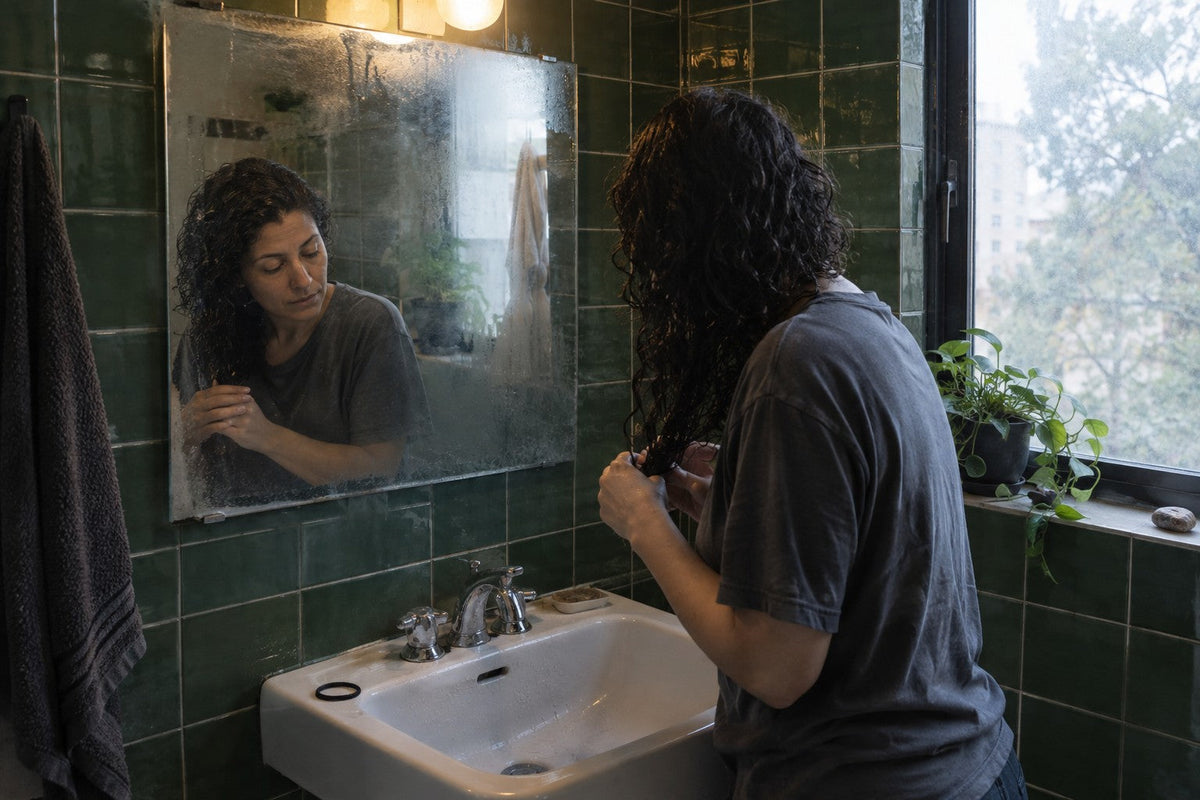
| All-over softness after washing | Damp | Oil spreads thinly and evenly through damp hair |
| Holding moisture in as hair dries | Damp | An oil film slows water leaving the fiber |
| Easier detangling | Damp | Lubrication helps a wide-tooth comb glide |
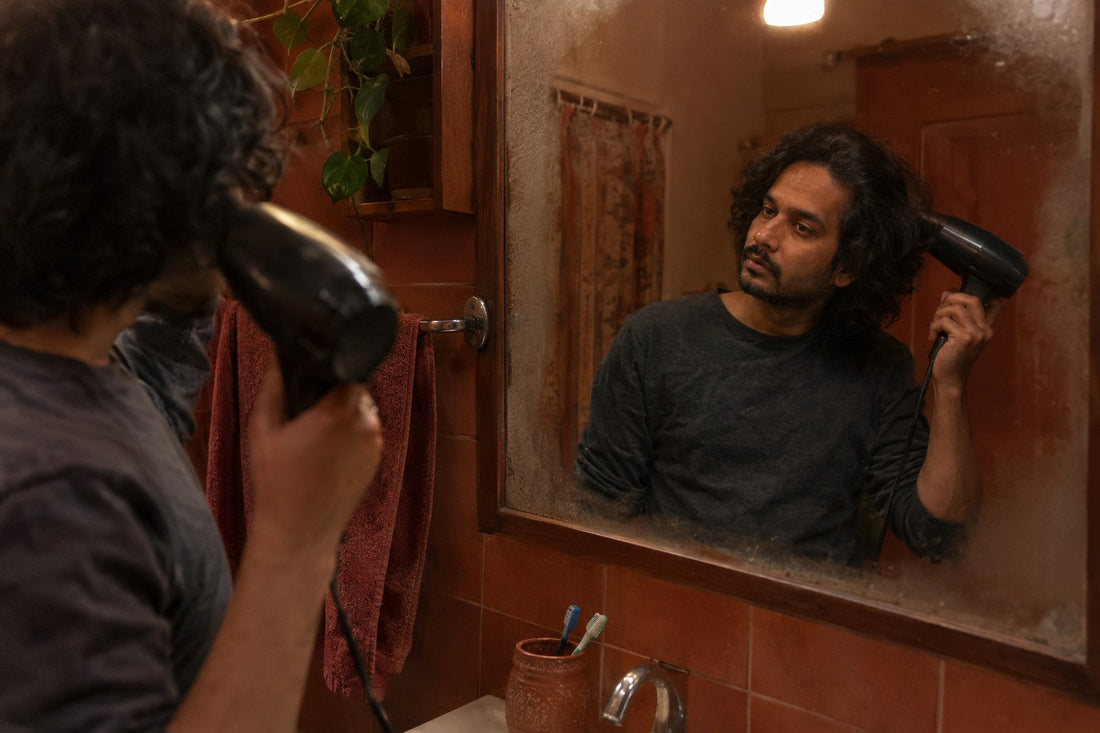
| Before blow-drying | Damp, sparingly | Smooths the surface as you style |
| Frizz halo on day two | Dry | Lets you place oil exactly where frizz shows |
| Shine and polish | Dry | A trace of oil on the surface reflects light |
| Dry, rough ends | Dry | Concentrates oil where hair is oldest |
| Pre-wash conditioning | Dry, before the shower | Coats lengths before shampoo |
Why argan oil works well on damp hair
It spreads further
Water helps products glide. Dermatologists recommend towel-drying and leaving hair slightly damp before applying leave-in conditioner, because product spreads more evenly on damp hair and is less likely to look greasy.1 Oil behaves the same way: two drops on damp hair cover far more length than two drops on dry hair.
It helps hold water in
In lab studies, oil films on hair slowed how quickly water moved in and out of the fiber, an effect the researchers likened to moisturizing hair.2 Applied to damp hair, a thin film may help hair dry feeling softer rather than parched. Research on coconut oil also found that oil limits how much hair swells with water; repeated swelling and drying, called hygral fatigue, is thought to contribute to damage over time.3
It makes detangling gentler
Wet hair is vulnerable. The American Academy of Dermatology lists brushing wet hair among habits that damage it, and suggests letting straight hair dry a little before gently using a wide-tooth comb, while textured or tightly curled hair can be combed damp.4 A review of hair cosmetics notes that applying oils reduced the force needed to comb wet hair in lab tests, partly through lubrication.5 A few drops of oil before combing makes that step easier on the hair.
How to apply argan oil to damp hair
These steps cover the everyday leave-in method. For masks, pre-wash oiling and scalp care, see our complete guide to how to use argan oil for hair.
- Wash and condition. Rinse well so conditioner is not left sitting under the oil.
- Remove excess water. Wrap or blot with a towel instead of rubbing, which dermatologists advise against.4 Hair should be damp, not dripping.
- Warm two to four drops between your palms. Use less for fine or short hair, more for thick or long hair.
- Start at the ends. Smooth the oil through the ends and mid-lengths, then use whatever is left on your hands over the surface. Keep it away from the roots.
- Comb and style. Detangle with a wide-tooth comb, then air dry or style as usual. If you use heat, see our guide on argan oil before blow-drying for the right amount.
How to apply argan oil to dry hair
Dry application is about precision. You can see exactly where hair is frizzy, dull or rough, and put oil only there.
- Use one or two drops. Dry hair does not dilute oil, so a little goes much further visually. Start with one.
- Rub your palms together until the oil is nearly invisible. This avoids greasy patches.
- Press or scrunch into the ends first. For curls and waves, scrunch upward. For straight hair, smooth downward.
- Skim the surface for frizz. Lightly pass your palms over the top layer to calm flyaways. Do not work oil into the crown.
This is the same approach our guide to argan oil for frizzy hair and damaged ends recommends between wash days.
Argan oil before or after the shower?
Both have a place. Before the shower, oil on dry lengths works as a pre-wash conditioner. The strongest evidence for this comes from coconut oil, which reduced protein loss from hair when used before washing, while sunflower and mineral oil did not;6 argan oil has not been tested in that study, so its pre-wash benefit is less certain. After the shower, oil on damp hair is a leave-in finish. If you only do one, after the shower is the more versatile habit.
Which hair types suit wet or dry application
- Fine or straight hair: mostly dry, on the ends only. The AAD suggests that fine or straight hair needs conditioner on the ends only,7 and fine hair needs less leave-in product overall.1 One drop on dry ends is often plenty.
- Thick or coarse hair: damp application for all-over softness, with dry touch-ups on the ends.
- Wavy and curly hair: damp, after your water-based leave-in or styler, then a drop on dry hair to soften gel. Our guide to argan oil for curly hair covers layering in detail.
- Colored or heat-styled hair: both. Ends tend to be the most weathered and benefit from targeted dry application.
Common mistakes
- Applying to soaking-wet hair. Too much water and the oil slides off or pools. Blot first.
- Using the same amount wet and dry. Dry hair needs about half what damp hair does.
- Starting at the roots. Oil collects fastest at the scalp and flattens volume.
- Layering too thickly. A review of hair cosmetics notes that thick oil films can leave hair looking oily and heavy, and that thin, reapplied layers are preferable.5
- Expecting a repair. Oil improves how hair looks and feels while it is on. It does not rebuild broken strands.
What the evidence can and cannot tell you
The research on oils and hair is mostly lab work on hair fibers, often with coconut or mineral oil, and none of it compares wet and dry application of argan oil head to head. A 2022 systematic review found no significant clinical evidence that argan oil improves hair growth or quality.8 The advice above combines that lab research with dermatologists' guidance on leave-in products, and the results you can expect are cosmetic: softer, shinier, less frizzy hair while the oil is on.
Does the oil itself matter?
For leave-in use, simpler is easier to judge. Many products sold as "Moroccan oil" are blends in which argan oil is only one ingredient, so read our explainer on Moroccan oil vs argan oil if you are comparing labels. Our pure argan oil is a single ingredient: USDA-certified organic, cold-pressed argan kernel oil with no added fragrance, in a dropper bottle that makes counting drops easy.
Frequently asked questions
Is it better to put argan oil on wet or dry hair?
Neither is better overall. Damp hair is best for spreading oil evenly and holding in moisture after washing; dry hair is best for targeted frizz control, shine and dry ends between washes.
Can I put argan oil on damp hair and then blow-dry?
Yes. Use a small amount on damp lengths, keep it off the roots, and use a low or medium heat setting. Too much oil can make hair look greasy once dry.
How much argan oil should I use on dry hair?
Start with one drop, rubbed between your palms until nearly invisible, and press it into the ends. Add a second drop only if hair still feels dry.
Should I use argan oil before or after the shower?
After the shower on damp hair is the most versatile option. Before the shower, oil can be used on dry lengths as a pre-wash conditioner, though the strongest pre-wash evidence is for coconut oil.
Sources
- American Academy of Dermatology. Dermatologists' top tips for using leave-in conditioner. Link
- Keis K, Huemmer CL, Kamath YK. Effect of oil films on moisture vapor absorption on human hair. J Cosmet Sci. 2007;58(2):135–145. Link
- Ruetsch SB, Kamath YK, Rele AS, Mohile RB. Secondary ion mass spectrometric investigation of penetration of coconut and mineral oils into human hair fibers: relevance to hair damage. J Cosmet Sci. 2001;52(3):169–184. Link
- American Academy of Dermatology. How to stop damaging your hair. Link
- Gavazzoni Dias MFR. Hair cosmetics: an overview. Int J Trichology. 2015;7(1):2–15. Link
- Rele AS, Mohile RB. Effect of mineral oil, sunflower oil, and coconut oil on prevention of hair damage. J Cosmet Sci. 2003;54(2):175–192. Link
- American Academy of Dermatology. Tips for healthy hair. Link
- Phong C, Lee V, Yale K, Sung C, Mesinkovska N. Coconut, castor, and argan oil for hair in skin of color patients: a systematic review. J Drugs Dermatol. 2022;21(7):751–757. Link