How to Use Argan Oil for Hair: 5 Methods That Work
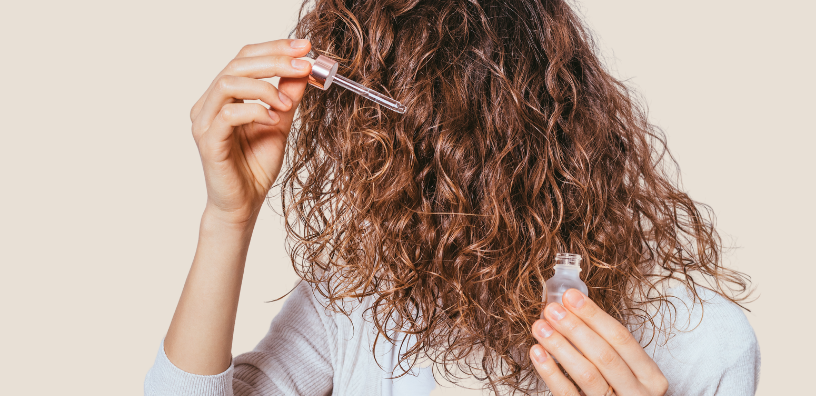
Argan oil is one of the simplest things you can add to a hair routine: a few drops, no mixing, and it works on almost every hair type. The trick is using the right amount in the right place. Too little and you won't notice much; too much and your hair looks greasy by lunchtime. Here are five ways to use it, how much to reach for, and an honest look at what it can and can't do.
The short answer
Use argan oil on the mid-lengths and ends rather than the roots. Smooth 1 to 2 drops through damp hair before styling, a drop over dry ends to tame frizz, or a generous coat as a pre-shampoo treatment for 30 minutes or more. Fine hair needs very little; thick, curly or coily hair can take more.
What does argan oil actually do for hair?
Argan oil is mostly oleic and linoleic acid, with small amounts of vitamin E compounds and plant sterols1. On hair, it works the way good hair oils generally do. Oils act as lubricants, so combing takes less force and causes less wear on the strand2. They can fill the tiny gaps between the overlapping cuticle cells on the hair surface2, and a thin film of oil slows how quickly hair absorbs moisture from the air3. That last point matters because repeated swelling and drying, sometimes called hygral fatigue, can weaken hair over time, and oils help limit it2.
In practice, that adds up to smoother, shinier hair, less frizz in humid weather, easier detangling and less breakage from brushing.
What the research does and doesn't show
Studies on argan oil and hair are thin. In one lab study on cut hair tresses, pretreating hair with argan oil before exposing it to an oxidizing agent significantly reduced protein loss, and some oil remained on the hair even after washing4. That is encouraging for people who color their hair, but it was done in the lab, not on people's heads.
A 2022 systematic review looking at coconut, castor and argan oil for hair found no significant evidence supporting argan oil for improving hair growth or hair quality5. The much better-studied oil for penetrating the hair shaft is coconut oil: in a classic study comparing coconut, sunflower and mineral oil, only coconut oil markedly reduced protein loss6. Argan oil wasn't tested in that study. So treat argan oil as a very good surface conditioner and finishing oil, not a repair treatment. If you are weighing the two, see argan oil vs. coconut oil for hair.
How much argan oil should you use?
Start smaller than you think. You can always add a drop.
| Hair type | Leave-in or finishing amount | Tips |
|---|---|---|
| Fine or straight | 1 drop | Ends only; skip the roots entirely |
| Medium or wavy | 1 to 2 drops | Mid-lengths to ends |
| Thick, curly or coily | 2 to 4 drops or more | Work through in sections on damp hair |
| Pre-shampoo treatment | Enough to coat lengths without dripping | Wash out thoroughly afterward |
Method 1: Pre-shampoo treatment for dry or rough hair
This is the most intensive way to use argan oil and the best fit for dry, coarse or chemically treated hair. Applying oil before washing helps protect the strand from the drying effect of shampoo, because oil in the cuticle gaps limits how much surfactant gets in2.
- Start with dry or slightly damp hair.
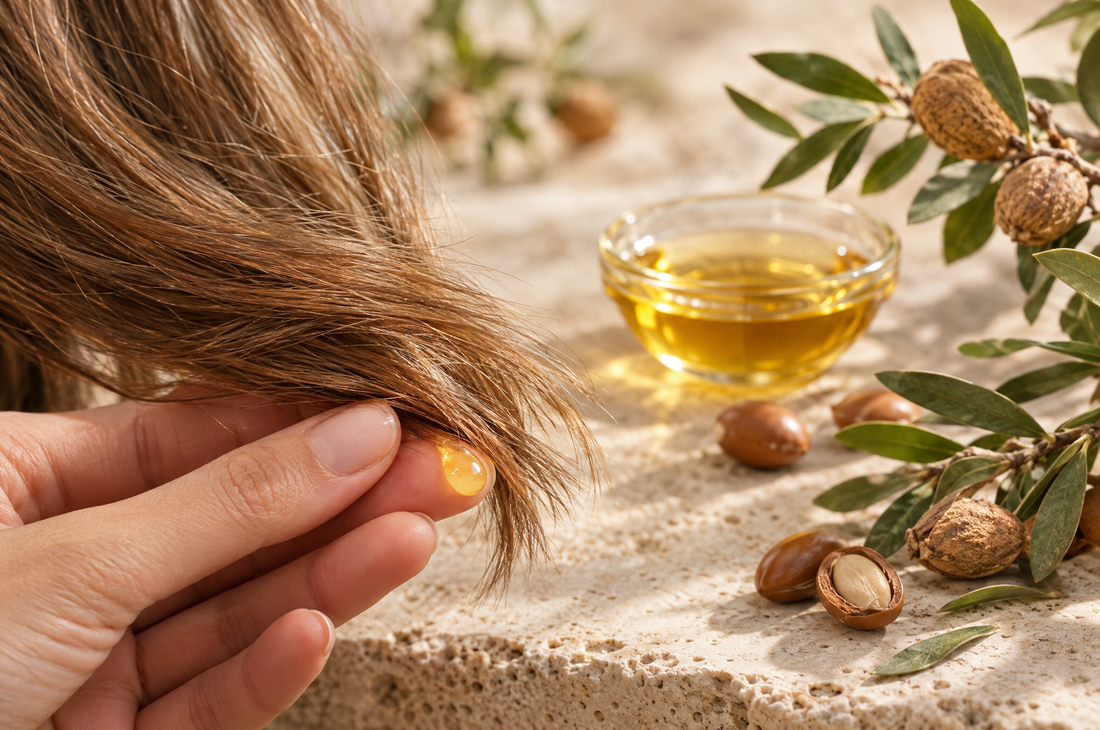
- Warm a few drops at a time between your palms and work them through the mid-lengths and ends until the hair is coated but not dripping.
- Comb through gently with a wide-tooth comb.
- Leave it on for at least 30 minutes, or overnight with a towel or old pillowcase underneath.
- Shampoo as usual, concentrating the shampoo on your scalp. You may need two rounds to remove all the oil.
- Follow with conditioner on the lengths.
Once or twice a week is plenty. For a longer version of this treatment, see how to use argan oil as a hair mask.
Method 2: Conditioner booster
If your hair is dry but you don't want a separate step, add oil to your conditioner.
- Squeeze your usual amount of conditioner into your palm.
- Add 2 to 3 drops of argan oil and rub your hands together.
- Apply to the lengths and ends and leave on for 3 to 5 minutes.
- Rinse well.
Dermatologists recommend using conditioner after every wash; fine or straight hair only needs it on the ends, while dry or curly hair benefits from conditioning the full length7.
Method 3: Leave-in on damp hair
This is the everyday method most people settle on.
- After washing, wrap your hair in a towel to absorb water instead of rubbing it, which roughs up the cuticle8.
- Warm 1 to 2 drops between your palms.
- Smooth over the mid-lengths and ends, then rake through with your fingers or a wide-tooth comb.
- Style or air-dry as usual.
If you blow-dry, use the lowest heat setting you can and a heat protectant; the American Academy of Dermatology (AAD) advises limiting heat styling and keeping it to low or medium settings7. Argan oil is not a heat protectant on its own. Our guide to argan oil before or after blow-drying covers timing in more detail.
Method 4: Frizz and flyaway finisher on dry hair
A tiny amount of oil on dry hair is one of the quickest frizz fixes there is, because the oil film slows how fast hair takes up humidity from the air3.
- Put a single drop on your fingertips and rub them together until they feel almost dry.
- Lightly smooth over frizzy sections, flyaways and the ends.
- Add a second drop only if needed.
Curly and coily hair often does better with oil applied to damp hair so it can help clump curls; see argan oil for curly hair.
Method 5: Scalp massage for a dry, tight scalp
A little oil can make a dry scalp feel more comfortable, and the massage itself is relaxing.
- Part dry hair into sections.
- Dot a drop or two of oil along each part and massage gently with your fingertips, not your nails.
- Leave it on for 10 to 30 minutes, then shampoo, focusing on the scalp.
Two cautions. First, there is no good evidence that argan oil makes hair grow faster or thicker5; if you are worried about shedding or thinning, see a dermatologist, and read does argan oil help hair grow. Second, flaking is not always dryness. Dandruff responds best to shampoos containing ingredients such as zinc pyrithione, salicylic acid, selenium sulfide or ketoconazole, and the AAD recommends seeing a board-certified dermatologist if it doesn't clear up9. Adding oil to an already oily, flaky scalp can make things worse.
Common mistakes to avoid
- Starting at the roots. Your scalp already makes oil. Begin at the ends and work up.
- Using too much. Lank, greasy hair almost always means too many drops. Halve the amount.
- Relying on it for heat. Use a proper heat protectant and lower temperatures7.
- Brushing aggressively. Even well-oiled hair breaks if it is tugged. Detangle gently with a wide-tooth comb8.
- Buying a blend by accident. Many "argan" hair products are mostly silicones and other ingredients with a little argan oil. Check that the ingredient list says only Argania spinosa kernel oil. More in argan oil vs. Moroccan oil.
If you'd like a single-ingredient option, our 100% organic argan oil is cold-pressed in Morocco with no added fragrance, silicones or dyes, and the 60 mL dropper bottle makes it easy to dose one drop at a time.
Frequently asked questions
Should I put argan oil on wet or dry hair?
Both work. Damp hair spreads the oil more evenly and is best for everyday conditioning; dry hair is best for a quick frizz fix with a single drop.
Can I leave argan oil in my hair overnight?
Yes. As a pre-shampoo treatment it can stay on overnight; protect your pillow and shampoo it out in the morning.
How often should I use argan oil on my hair?
A drop or two as a leave-in can be used daily. Heavier pre-shampoo treatments are usually enough once or twice a week.
Does argan oil help hair grow?
There is no good evidence that it does. It can reduce breakage by making hair easier to comb, which helps you keep length, but it doesn't change how fast hair grows.
Can argan oil make hair greasy?
Yes, if you use too much or apply it at the roots. Start with one drop on the ends and build up only if your hair needs it.
Sources
- Gharby S, Charrouf Z. Argan oil: chemical composition, extraction process, and quality control. Front Nutr. 2021;8:804587. Link
- Gavazzoni Dias MFR. Hair cosmetics: an overview. Int J Trichology. 2015;7(1):2–15. Link
- Keis K, Huemmer CL, Kamath YK. Effect of oil films on moisture vapor absorption on human hair. J Cosmet Sci. 2007;58(2):135–145. Link
- Sharifi N, Hamedeyazdan S, Shokri J, Monajjemzadeh F. Argan oil as a pretreatment of human hair before exposure to oxidative damage: attenuated total reflectance and protein loss studies. J Cosmet Dermatol. 2022;21(10):5010–5017. Link
- Phong C, Lee V, Yale K, Sung C, Mesinkovska N. Coconut, castor, and argan oil for hair in skin of color patients: a systematic review. J Drugs Dermatol. 2022;21(7):751–757. Link
- Rele AS, Mohile RB. Effect of mineral oil, sunflower oil, and coconut oil on prevention of hair damage. J Cosmet Sci. 2003;54(2):175–192. Link
- American Academy of Dermatology. Tips for healthy hair. Link
- American Academy of Dermatology. 10 hair care habits that can damage your hair. Link
- American Academy of Dermatology. How to treat dandruff. Link